
French director Bruno Dumont says his next feature, The End, an English-language science-fiction thriller, has been made entirely with generative AI, with no actors and no traditional film crew, Screen International reported in an exclusive on Friday 6 November 2026. The report says he began work in August and has finished production on a shoestring budget, with festival screenings and a cinema release planned for 2027.
Key facts
- Film: The End, an English-language sci-fi thriller written and directed by Dumont, set between Los Angeles and the Joshua Tree desert
- Method: Dumont says he generated the images, performances and sound himself at his Paris home, scene by scene, from his own shot breakdowns
- Status: work began in August 2026 and production is complete; festival rollout and theatrical release are planned for 2027
- Money and rights: budget not disclosed; produced independently, with no sales agent attached yet
- Sourcing: a single-source exclusive built on Dumont’s own account; no producer, sales company or festival has confirmed it
What Dumont says he has done
The film follows a Los Angeles police officer who investigates a crime while earthquakes and falling asteroids hit the city. Screen describes an apocalyptic thriller in which the investigation takes on mystical dimensions.
Dumont says he did not feed a whole screenplay into an AI system. He works scene by scene, from his own shot breakdowns, and keeps control of performance, staging and editing. He told Screen his crew is “a machine” that he instructs constantly. He says he can ask the virtual actors for more intense emotion or anger, and adjust sets, vehicles, costumes and hairstyles. For faces, he used figures from Flemish paintings as references and turned them into contemporary characters.
A script that has waited 25 years
Dumont says he wrote The End more than 25 years ago, after Humanity (L’Humanité, 1999), and shelved it because the disaster sequences made it too expensive. He made Twentynine Palms (2003), also set in California, instead.
Earlier coverage adds detail. In an IndieWire interview when Twentynine Palms opened in the US, Dumont described The End as a meditation on Hollywood cinema and said he shot Twentynine Palms while scouting for it because The End would take too long to set up. Variety reported on 23 May 2006, with Flanders (Flandres) in competition at Cannes, that Dumont was casting The End as a Los Angeles-set cop thriller written in English to attract a Hollywood star. Screen’s report does not mention these earlier attempts.
The finance argument
Dumont says costs with generative AI sit on a different scale from the traditional film economy. “It is becoming harder and harder to finance films in France,” he told Screen. He says he now has complete freedom.
Screen says Dumont struggled to find French backing for his previous film, Red Rocks (Les Roches rouges), and turned to other European territories. The festival listings fit that: the Quinzaine des cinéastes credits Portugal’s Rosa Filmes as producer, and the New York Film Festival lists Portugal, France, Italy, Spain and Qatar as countries of production.
The End is being produced independently. Dumont plans to seek festival premieres first, then distribution and international sales. Separately, he is developing a conventionally financed French live-action feature, with human actors and a crew, with Nicolas Anthomé’s Bathysphere Films, the company behind Arthur Harari’s Cannes competition title The Unknown, according to Screen.
The director behind the claim
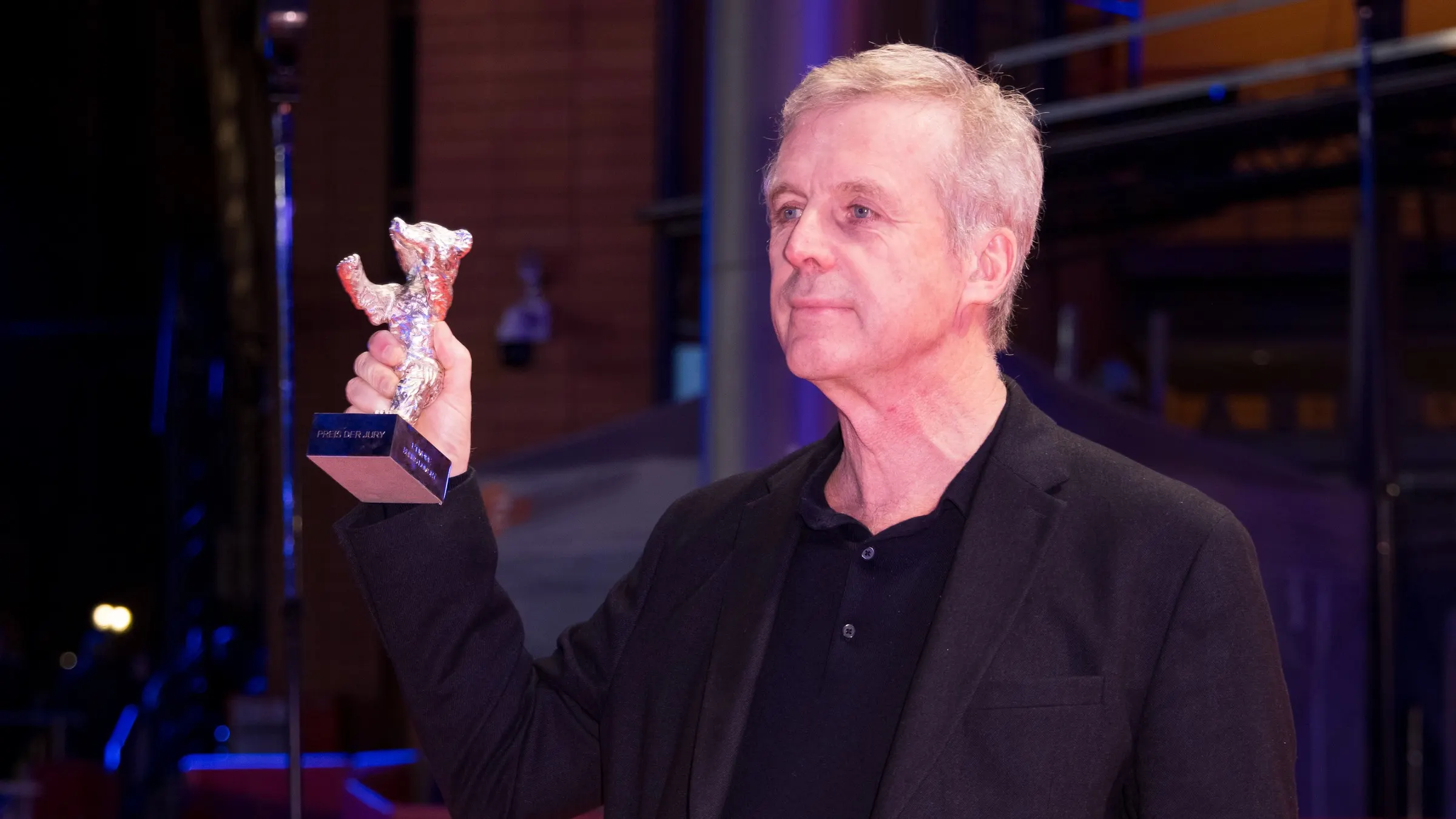
Dumont’s films have a long record at the festivals that matter for sales. Humanity and Flanders each won the Grand Prix at Cannes, in 1999 and 2006, according to the festival’s own pages. The Empire (L’Empire), a science-fiction satire shot on France’s Opal Coast with Lyna Khoudri, Anamaria Vartolomei, Camille Cottin and Fabrice Luchini, won the Silver Bear Jury Prize at the 2024 Berlinale. Memento International handled its world sales.
Red Rocks, a 91-minute film about children on the Côte d’Azur, had its world premiere at this year’s Directors’ Fortnight in Cannes. Les Films du Losange distributes it in France, Luxbox handles international sales, and the New York Film Festival listed it with KimStim as the US release. Screen says it also played San Sebastián.
Where it sits among AI announcements
Two other AI stories broke on Friday 6 November. Toei’s president said the Kamen Rider studio has written generative AI rules and already uses the technology on some film and video work, and Weta FX signed an AI memorandum with Taiwan’s TAICCA. Both are company-level moves. Dumont’s claim is of a different kind: one director saying he has replaced cast and crew. More in our generative AI coverage and under Money & Policy.
A recent comparable is Dreams of Violets, a drama about the January killing of Iranian civilians that Deadline reported on 27 May would screen at the Tribeca Festival on 10 June. Deadline said every image and person in it was generated with AI video tools, and that producer Ash Koosha of the AI production company Fountain O put the cost at $2,000 and the production time at about two months. Its directors, Ash and Pooya Koosha, are first-time filmmakers.
What is not known
Screen’s report names no production company, budget figure, running time or AI tools. No sales agent, festival or distributor has been announced, and the 2027 dates are Dumont’s plan, not a booking. FilmBunch found no second outlet, and no statement from a producer, sales company or festival, on the film as of the afternoon of 6 November. The next markers are a first festival selection, a sales agent and the first images.
Our reading
The claim carries weight because of the person making it, not because of the technology. A fully AI-generated feature from first-time directors is a claim festivals can take or leave. The same claim from a two-time Cannes Grand Prix winner, whose recent films went through Cannes, Berlin and New York with established sales and distribution partners, puts a harder question to programmers and buyers. Dumont’s own framing is finance: he presents AI as the way round the funding gap he describes in France.
Sales agents and distributors will want answers the report does not give. Which tools were used, on what terms, and who owns the result are the questions a buyer’s lawyers would ask before any rights are sold. The first evidence that settles it is a festival selection or a sales agent signing on, followed by a budget figure to test the “shoestring” description.
Sources
- Screen International, exclusive by Rebecca Leffler (6 November 2026; Dumont's account of The End, method, finance, Bathysphere project)
- Variety (23 May 2006; The End then being cast as a Los Angeles-set thriller written in English)
- IndieWire (Dumont interview on Twentynine Palms; origin of The End and why he shot Twentynine Palms first)
- Quinzaine des cinéastes, Les Roches rouges film page (Cannes 2026 world premiere, 91 minutes, producer, distributor, sales)
- Quinzaine des cinéastes, special screening notice for Les Roches rouges
- Film at Lincoln Center, Red Rocks at the 64th New York Film Festival (25 September–12 October 2026; countries, KimStim)
- Berlinale, awards 2024 (Silver Bear Jury Prize to L’Empire)
- Berlinale, L’Empire | The Empire programme page (cast, sales, filmography)
- Festival de Cannes, L’Humanité (Grand Prix 1999)
- Festival de Cannes, Flandres (Grand Prix 2006)
- Deadline (27 May 2026; Dreams of Violets, Tribeca, Fountain O)