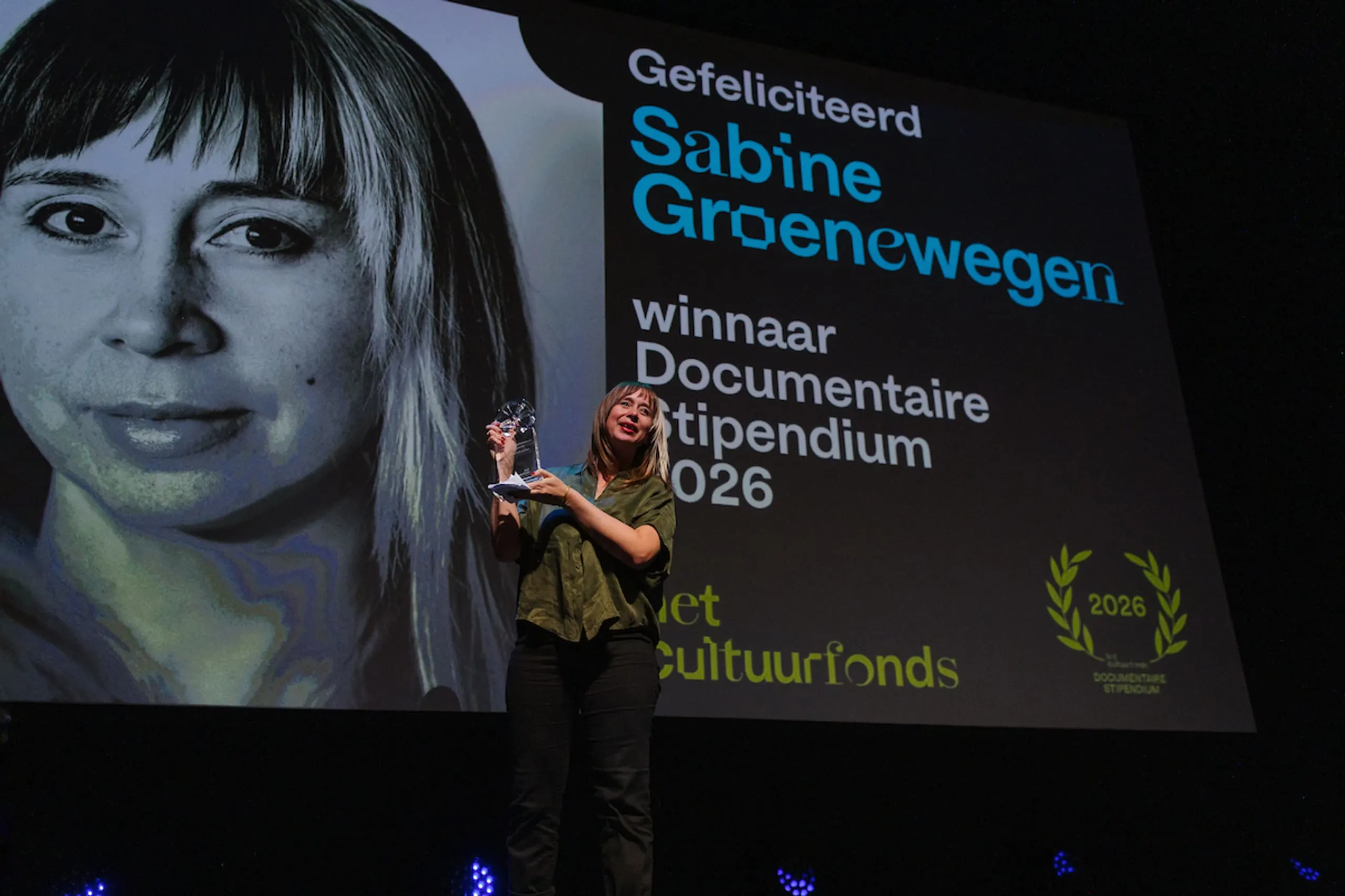
The Dutch documentary maker Sabine Groenewegen has won the Cultuurfonds Documentaire Stipendium, a €50,000 (about $55,300) award that pays for her next film. It was handed to her on Thursday 12 November at Royal Theatre Carré in Amsterdam, on the opening night of the 39th International Documentary Film Festival Amsterdam (IDFA), shortly before the world premiere of the opening film, White Tiger Column.
Screen International called the stipend IDFA’s “most mysterious and lucrative prize”. An anonymous donor funds it through the Cultuurfonds, the Dutch cultural foundation, and it is worth more than three times the €15,000 that goes with IDFA’s own top honour, the award for best film in the International Competition. Last year’s winner, Lidija Zelovic, presented it.
IDFA runs until 22 November with more than 250 films and new media projects from 80 countries; its industry programme, which expects more than 2,500 professionals, runs from 14 to 18 November.
Key facts
- Award: Cultuurfonds Documentaire Stipendium, €50,000, funded by an anonymous donor
- Winner: Sabine Groenewegen, director of The Clearing
- Opening film: White Tiger Column (Canada), by Robert Mentov, Dwight Jantzi and Bryan Dickie, world premiere
- Festival: IDFA, Amsterdam, 12–22 November 2026; 253 titles from 80 countries
- Competition winners: announced on Thursday 19 November
A prize for the next film
The money looks forward rather than back. The Cultuurfonds describes it as an incentive for documentary makers “with proven qualities”, meant to fund a new film. A jury picks the winner from a shortlist drawn up by IDFA.
The jury called Groenewegen a filmmaker who opens “new perspectives on history, identity and collective memory” in an idiosyncratic and convincing way, according to the Cultuurfonds. In the jury statement IDFA published in English, it added: “By bringing together archaeological material, family history and contemporary research, Groenewegen not only reveals what is missing from the historical record, but also examines the mechanisms behind these omissions.”
Her latest feature, The Clearing, is a Dutch-Indonesian documentary about the women workers exploited on Dutch colonial rubber plantations in Sumatra in the early 20th century, an exploitation IDFA’s synopsis calls “an open secret, masked by euphemism and carefully designed propaganda”. Groenewegen follows the trail of her great-grandmother Helena, who was never spoken of in her family, and of a female character cut from the 1936 Dutch film Rubber, setting archive footage against newly shot material.
The 89-minute film was produced by Manon Bovenkerk for near/by film, with Groenewegen’s own Rebel Research, and was backed by the Netherlands Film Fund, the Amsterdam Art Fund and the Cultuurfonds. Kino Rebelde handles world sales and Cinema Delicatessen will distribute it in the Netherlands. It premiered in the International Competition at FIDMarseille, won best film in DokuFest’s human rights competition in Kosovo and has since played Doclisboa and Cairo. At IDFA it has its Dutch premiere in the Best of Fests section.
The Cultuurfonds lists winners back to 2011: Lidija Zelovic (2025), Festus Toll (2024), Luuk Bouwman (2023), Pim Zwier (2022), Maasja Ooms and Stefan Pavlovic (2021), Aboozar Amini (2020), Marina Meijer (2019), Sophie Dros (2018), Reber Dosky (2017), Ester Gould (2016), Tom Fassaert (2015), Jessica Gorter (2014), Boris Gerrets (2013), Renzo Martens (2012) and Klaartje Quirijns (2011). The 2021 award was paid twice, €50,000 to each winner, because of the pandemic’s impact on artists.
The opening film
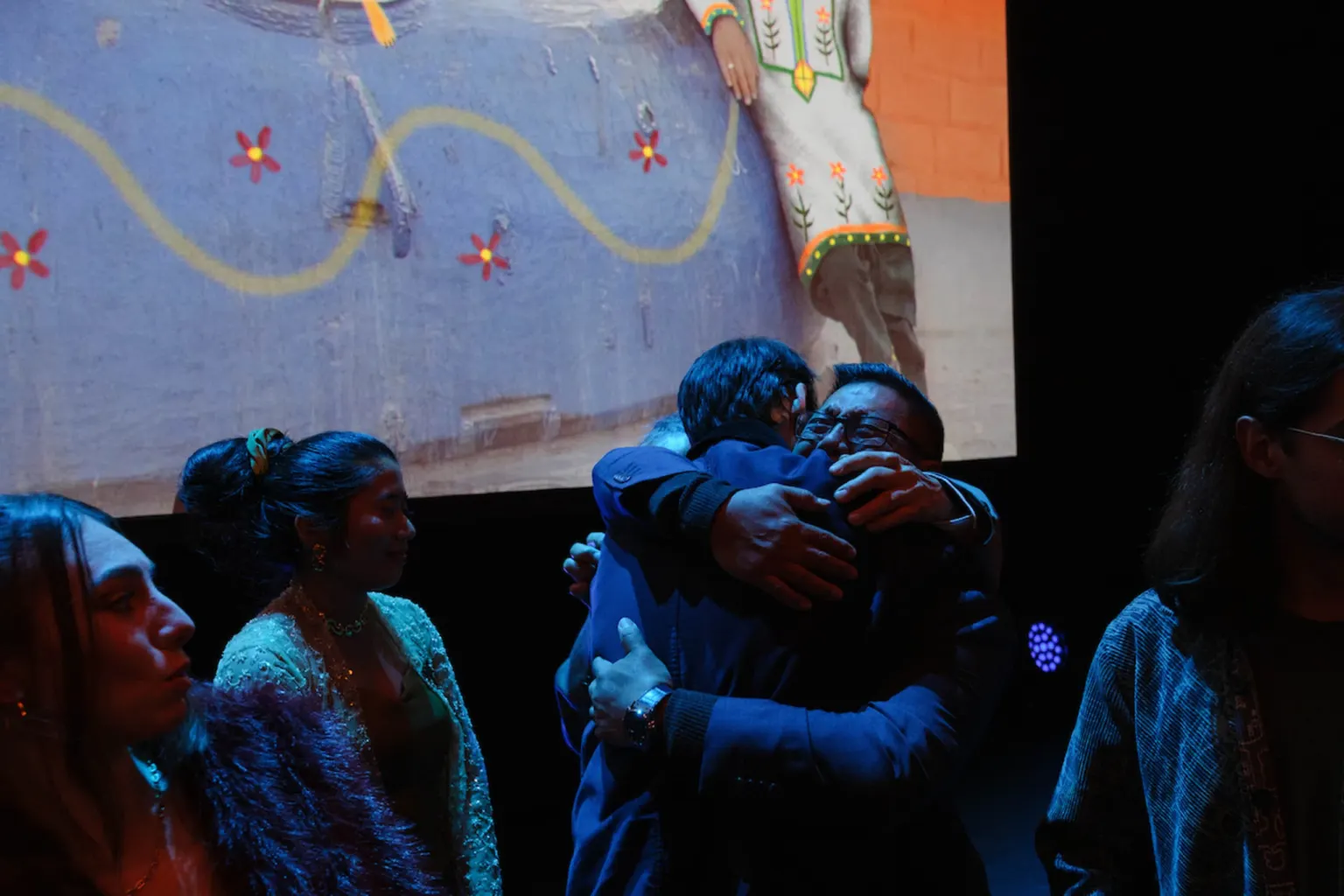
White Tiger Column spends 45 days inside a jungle training camp run by Myanmar’s People’s Defence Force, the armed resistance that took shape after the military seized power in a coup on 1 February 2021. The Canadian crew was embedded at the camp and filmed the young volunteers from their arrival until they left for the front. The 95-minute film, in Burmese, was produced by Tom Edgerton for Lightwood Green, which also handles world sales.
It is the trio’s first feature. It competes in the International Competition and is nominated for IDFA’s award for best first feature, worth €5,000 (about $5,500), which also makes it eligible for the FIPRESCI critics’ prize.
In her opening speech, IDFA’s artistic director Isabel Arrate Fernandez asked audiences to step out of the relentless flow of images and opinions. “An image, gesture or story created with awareness and care can invite us to look more closely and thoughtfully,” she said. Screen International reported that she called for a “gentler” festival and acknowledged that the past three editions had been riven with controversy, which Screen read as an oblique reference to the protests and arguments over Gaza and Ukraine.
The evening also marked 20 years of DocLab, IDFA’s new media strand, whose head, Caspar Sonnen, had the Carré audience play Hive Mind Pong, a collective game by Lisa Mantel, Neander Giljam and Titouan Millet, on their phones. The guest of honour, the filmmaker Tatiana Huezo, gets a retrospective.
International Competition 2026
IDFA’s main competition has 13 films. According to IDFA’s film pages, 11 are world premieres, one an international premiere and one a European premiere:
- Bardi, Tala Hadid (Morocco), European premiere
- Crack in the Head, Crack in the Sky, Mehran Tamadon (France), world premiere
- Down the River, Ruslan Fedotov (Germany), world premiere
- Hazara Town, Khadim Dai (Belgium, Australia, Germany), world premiere
- Here Where the Fire Burns, Juan Manuel Sepúlveda (Mexico), world premiere
- An Incomplete Day in the History of Georgia 10.06.93, Salomé Jashi (Georgia), world premiere
- Lonan Tché, Joël Richmond Mathieu Akafou (France, Italy, Ivory Coast, Senegal), world premiere
- Mangabangabaka, Michaël Andrianaly (France, Madagascar, Burkina Faso), world premiere
- Morro Grande, Isabel Joffily and Rita Toledo (Brazil, Netherlands), world premiere
- Still Night, Burning House, Carol Nguyen (Canada), international premiere
- White Tiger Column, Robert Mentov, Dwight Jantzi and Bryan Dickie (Canada), world premiere
- Women and War, Elwira Niewiera (Germany, Poland, Ukraine), world premiere
- The Year of the Ghost, Louis HotHotHot (Netherlands, China), world premiere
Four came through IDFA’s own development schemes: Bardi, Hazara Town and Morro Grande were supported by the IDFA Bertha Fund, and Still Night, Burning House went through the IDFA Project Space training programme.
A five-member jury awards best film, worth €15,000 (about $16,600), plus prizes for directing (€5,000), editing and cinematography. Across sections, IDFA gives €5,000 each for best first feature, best Dutch film and best creative use of archive, the last with the Dutch sound and vision institute Beeld & Geluid. All winners will be named on 19 November.
Our reading
The stipend’s real value lies less in its size than in what it pays for. Most festival money rewards a film that already exists; this sum, more than three times IDFA’s best-film prize, backs a proven maker’s next film rather than her last. That matters in a form whose theatrical economics are thin: documentaries made up 19% of films released in cinemas over the past decade but sold 0.6% of tickets, according to a European Audiovisual Observatory study published as the festival opened.
The competition shows how much IDFA now feeds its own programme: four of the 13 titles passed through its fund or training scheme. The same pipeline runs on at the IDFA Forum co-financing market, from 15 to 18 November, where 47 projects were picked from 859 entries. Across the Atlantic, the awards season is already sorting the year’s documentaries: You Can See Everything and American Doctor lead the Cinema Eye Honors nominations. More IDFA coverage is on our IDFA page.
Sources
- IDFA, IDFA 2026 kicks off at Royal Theater Carré, 12–13 November 2026
- Cultuurfonds, Cultuurfonds Documentaire Stipendium (2026 winner, jury statement, previous winners since 2019)
- IDFA, Main competition selections now revealed, 15 October 2026
- IDFA, International Competition 2026 (section page)
- IDFA, White Tiger Column (2026) film page
- Screen International, IDFA head calls for a gentler festival as mysterious €50,000 prize awarded on opening night, 13 November 2026
- SEE NL, Sabine Groenewegen receives Cultuurfonds Documentary Stipend Award, 13 November 2026
- Sabine Groenewegen, The Clearing (credits, festivals, awards)
- IDFA, The Clearing (2026) film page
- IDFA Professionals, Juries & Awards 2026 (prize money)
- IDFA Professionals, IDFA Forum unveils a diverse slate of 47 projects
- European Central Bank, euro reference rate, 13 November 2026 (US$1.1052)