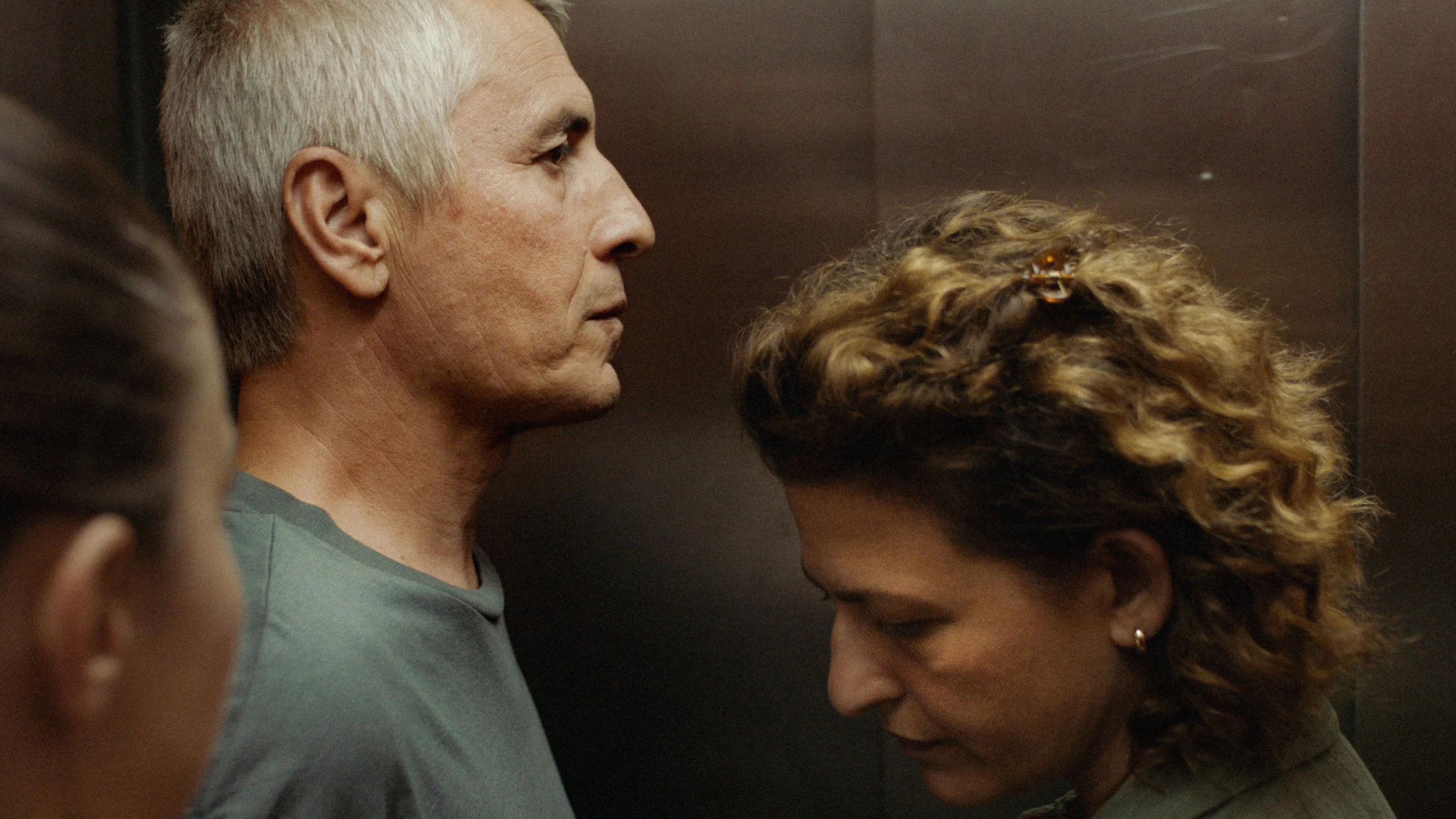
Shame and Money, Visar Morina’s drama about a Kosovar farming family pushed into the capital in search of work, has won the Ulivo d’Oro – Premio Cristina Soldano for best film at the 27th Festival del Cinema Europeo in Lecce, southern Italy. The festival’s juries announced their awards on Saturday 14 November, the closing day, ahead of the evening ceremony; Cinecittà News and the Lecce daily Corriere Salentino published the full palmarès.
Lecce’s competition is small, 11 European features, but both of its top jury prizes went to films already in the race for the international feature Oscar. The special jury prize, and the best actress award for its lead, went to How to Divorce During the War, Lithuania’s official submission. Shame and Money entered the race by another route.
Key facts
- Event: 27th Festival del Cinema Europeo, Lecce, Italy, 7–14 November 2026; artistic director Alberto La Monica
- Ulivo d’Oro for best film: Shame and Money, Visar Morina (Germany, Kosovo, Slovenia, Albania, North Macedonia, Belgium)
- Special jury prize and SNGCI best actress (Žygimantė Elena Jakštaitė): How to Divorce During the War, Andrius Blaževičius (Lithuania, Luxembourg, Ireland, Czech Republic)
- Kosovo’s film centre says the country has two films in the Oscar race: its official entry Dua, and Shame and Money, which qualified through its Sundance prize
- Both winners were on the European Film Academy’s fiction shortlist; neither is among the nominations announced the same day
The winners
The feature jury, chaired by Frédéric Boyer, included the director Giacomo Abbruzzese, the critic Angela Prudenzi, Miroljub Vučković and Claudia Bedogni. It praised Shame and Money for telling a deeply human story “with sobriety and concreteness”, helped by superb performances, and for showing that dignity must be preserved even in the hardest circumstances, so that shame does not become a luxury.
Astrit Kabashi and Flonja Kodheli play a couple in their forties who lose their farm after a family dispute and move to Pristina, where work is scarce and help from better-off relatives comes at a price. Morina co-wrote the film with Doruntina Basha. It is produced by Schuldenberg Films in Germany and sold internationally by The Yellow Affair.
Blaževičius’s film is set in Vilnius in February 2022: an advertising executive tells her husband she wants a divorce the day before Russia launches its full-scale invasion of Ukraine. The jury of the SNGCI, the Italian film journalists’ union, chaired by Laura Delli Colli, gave Jakštaitė its award for best European actor or actress for that role.
The critics spread their prizes more widely. The FIPRESCI jury chose Julien Gaspar-Oliveri’s French drama The Blow (La Frappe). The SNCCI, Italy’s film critics’ union, picked The Boatman by the Portuguese director Simão Cayatte, which also won the audience vote. Mari Sanders’s Dutch-Greek Stand Up took both the Cineuropa prize and the award from MEDIA Salles’ jury of women cinema owners. Matteo Incollu’s L’estate che finì due volte, the only Italian title in competition, won best cinematography, and Joscha Bongard’s German social-media drama Babystar best screenplay.
Where the winners stand
Shame and Money won the Grand Jury Prize in Sundance’s World Cinema Dramatic Competition in January. Under the Academy’s new rules, that prize makes a non-English-language film eligible for the international feature Oscar without a national submission. On 10 November the Kosovo Cinematography Centre (QKK) said its committee had unanimously chosen Blerta Basholli’s Dua as the country’s official entry, so Kosovo will be represented by two films. Some listings still describe Shame and Money as Kosovo’s entry, including The Yellow Affair’s own film page and Cineuropa’s Italian preview of the Lecce line-up; the QKK statement makes clear it qualified on its own.
The film is selling steadily. Oscilloscope Laboratories bought North American rights in October and plans a cinema release in early 2027, Variety reported at the time. The same report listed deals by The Yellow Affair for France (Arizona Distribution), Spain (Mirror Audiovisual), Switzerland (Trigon), Turkey (Filmarti) and Indonesia (Falcon). Eksystent Filmverleih released it in Germany in September. This month it has played in the official competition at Rome’s MedFilm Festival, where the top prize went to the Egyptian drama Al Baraneya, and it is in the International Panorama at the Cairo International Film Festival and in IFFI’s line-up in Goa.
How to Divorce During the War won the directing award in the same Sundance competition. Zeitgeist Films, in association with Kino Lorber, released it in US cinemas on 21 August, and New Europe Film Sales handles world sales.
Both films were on the European Film Academy’s fiction shortlist, and neither made the European Film Awards nominations announced in Thessaloniki on the same Saturday, which Fatherland leads with 11.
Full list of winners
European feature competition (Ulivo d’Oro) – Ulivo d’Oro (Premio Cristina Soldano), best film: Shame and Money, Visar Morina – Special jury prize: How to Divorce During the War, Andrius Blaževičius – Best cinematography: L’estate che finì due volte, Matteo Incollu – Best screenplay: Babystar, Joscha Bongard
Other awards to competition films – SNGCI award for best European actor or actress: Žygimantė Elena Jakštaitė, How to Divorce During the War – FIPRESCI prize: The Blow (La Frappe), Julien Gaspar-Oliveri – SNCCI critics’ prize: The Boatman, Simão Cayatte; special mention ex aequo to The Lost Son, Darko Štante, and The Fatigued, Yura Dunay – Cineuropa prize: Stand Up, Mari Sanders – MEDIA Salles jury of women exhibitors: Stand Up, Mari Sanders – Audience award: The Boatman, Simão Cayatte
Puglia Show (shorts) – CNC prize and Augustus Color prize for best short: Sueña ahora, Gabriele Licchelli, Francesco Lorusso and Andrea Settembrini – Special mention: François, Jean et moi, Marco Bortune – Unisalento student jury prize: François, Jean et moi, Marco Bortune
Other awards – Premio Mario Verdone: Tienimi presente, Alberto Palmiero; special recognition to Notte prima degli esami 3.0, Tommaso Renzoni – Premio Emidio Greco (shorts): Il mio nemico, Andrej Chinappi – Cinecittà News special mention, Cinema&Realtà: Lo spazio vuoto, Stefano P. Testa and Alberto Ceresoli – Premio Rotary Club Lecce: L’ora di tutti, Stefania Rocca
Honorary awards (Ulivo d’Oro alla Carriera, presented during the festival) – Enzo d’Alò (8 November), Luigi Lo Cascio (11 November), Jeremy Irons (12 November)
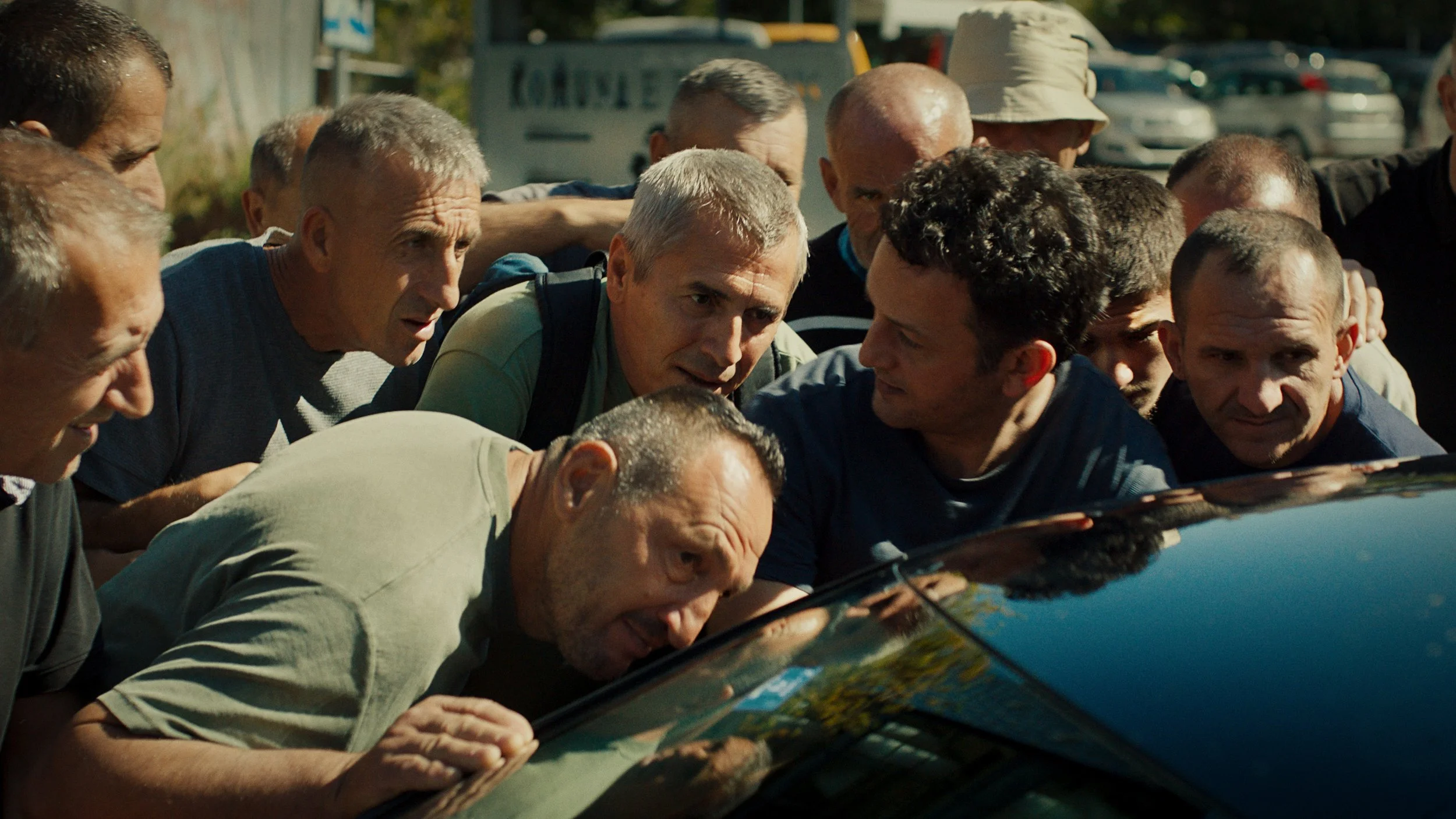
The competition (11 films) – Babystar, Joscha Bongard (Germany) – Earth Song (Strana axê), Erol Mintaş (Finland, Germany) – How to Divorce During the War (Skyrybos karo metu), Andrius Blaževičius (Lithuania, Luxembourg, Ireland, Czech Republic) – L’estate che finì due volte, Matteo Incollu (Italy) – Shame and Money, Visar Morina (Germany, Kosovo, Slovenia, Albania, North Macedonia, Belgium) – Stand Up, Mari Sanders (Netherlands, Greece) – The Blow (La Frappe), Julien Gaspar-Oliveri (France) – The Boatman (O Barqueiro), Simão Cayatte (Portugal) – The Fatigued (Vtomleni), Yura Dunay (Ukraine) – The Last Goodbye (Azken agurra), Koldo Almandoz (Spain) – The Lost Son (Izgubljeni sin), Darko Štante (Slovenia, Greece, Croatia, Italy, North Macedonia)
The festival did not say whether any of the prizes carries cash.
Our reading
For the sellers of both films, Lecce adds a European jury prize a month before the Academy publishes its 15-film international feature shortlist on 15 December. Having missed the European Film Award nominations, both now depend on that list for their next campaign milestone, and Shame and Money goes into it without the backing of its own country’s submission.
Sources
- Cinecittà News, Ulivo d’oro Miglior Film a ‘Shame and Money’ di Visar Morina, 14 November 2026
- Corriere Salentino, Sipario sulla 27ª edizione del Festival del Cinema Europeo, 14 November 2026
- Festival del Cinema Europeo, official programme, 27th edition (PDF)
- Kosovo Cinematography Centre (QKK), Dua to represent Kosovo at the 99th Academy Awards, 10 November 2026
- Variety, Oscar contender Shame and Money acquired in North America by Oscilloscope, 28 October 2026
- LRT, Lithuania selects How to Divorce During the War as its Oscar contender
- Festival del Cinema Europeo, Concorso Ulivo d’Oro and competition pages (titles, directors, countries)
- European Film Academy, European Film Awards 2027 nominations and shortlists
- Academy of Motion Picture Arts and Sciences, 99th Oscars key dates
- Zeitgeist Films, How to Divorce During the War (US release 21 August 2026)
- The Yellow Affair, Shame and Money film page
- Cineuropa (Italian edition), 11 titoli in concorso al Festival del cinema europeo di Lecce, 6 November 2026