
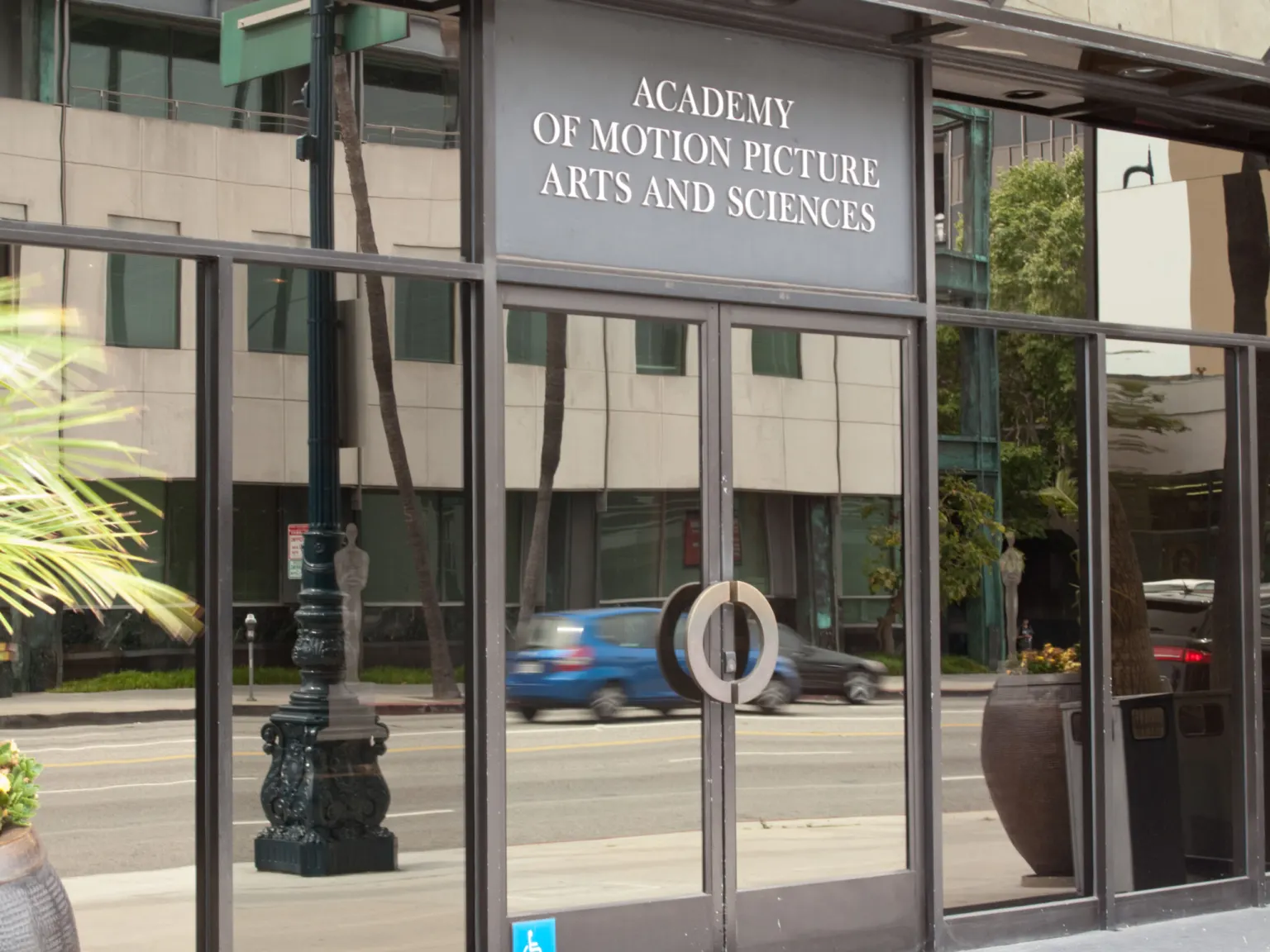
The Academy of Motion Picture Arts and Sciences has named a record 104 films eligible for the best international feature Oscar at its 99th ceremony, after removing New Zealand’s entry, Taratoa Stappard’s Mārama, from the race. The Academy published the list on 23 November. TheWrap reports that the Academy ruled Mārama did not meet the rule that an international feature must have mostly non-English dialogue.
Key facts
- 104 films are eligible: 100 submitted by countries or regions and four that qualified by winning a designated festival prize.
- The previous record was 93 films, according to TheWrap; last year’s race had 86 eligible submissions, according to Screen.
- Mārama, a gothic horror film in English and Māori, had been assigned to voters with the other entries in viewing group 1 before it was removed.
- Preliminary voting runs from 7 to 11 December, the 15-film shortlist is due on 15 December and nominations on 21 January 2027.
- The ceremony is on 14 March 2027 at the Dolby Theatre in Los Angeles.
Why Mārama was removed
The rule requires a feature of more than 40 minutes, produced outside the United States, with a dialogue track that is more than 50% in languages other than English. Mārama follows a young Māori woman summoned from New Zealand to Victorian-era Yorkshire, where she uncovers the truth of her colonial heritage. Most of it is set in England. We found no statement on the decision from the New Zealand Film Commission or the producers at the time of writing.
The New Zealand Film Commission announced the film as its official submission on 12 October. Its chief executive, Annie Murray, called it “fearless filmmaking”. Mārama premiered in the Discovery programme at Toronto in 2025 and won the Official Competition Grand Jury Prize at the Seattle International Film Festival, according to the commission. Its New Zealand producer is The Sweetshop.
TheWrap reports that the eligible films were split into nine viewing groups on 16 October, when 105 titles were still in the race, and that voters must watch every film in their group before casting a ballot. Group 1 now has 11 films instead of 12. Five other groups have 12 and three have 11.

The new festival route
This is the first year in which a non-English film can also qualify by winning one of six festival prizes: the Golden Bear in Berlin, the Busan Award for best film, the Palme d’Or at Cannes, Sundance’s World Cinema Grand Jury Prize, Toronto’s Platform Award and the Golden Lion in Venice. Four films came in that way: Yellow Letters (Berlin), Shame and Money (Sundance), Midday Meal (Busan) and Angh (Toronto). The Palme d’Or winner, Fjord, appears on the list as Romania’s official submission rather than through the festival route.
Where the films come from
By FilmBunch’s count of the Academy list, 42 of the 100 country entries come from Europe, including Turkey and the three South Caucasus countries, 17 from Latin America and the Caribbean, 11 from Africa, eight from the Middle East outside Africa and 20 from the rest of Asia; Canada and Australia make up the other two. Nine entries come from Arab countries: Algeria, Egypt, Iraq, Jordan, Lebanon, Morocco, Palestine, Saudi Arabia and Syria. Australia, with First Light, is now the only entry from Oceania. Several entries arrive with momentum from the autumn circuit. Poland’s Fatherland won Camerimage’s Golden Frog for its cinematographer, Łukasz Żal, and Shame and Money, one of the four festival-route films, took the Ulivo d’Oro in Lecce. Morocco’s Strawberries, Laïla Marrakchi’s drama about Moroccan strawberry pickers in Spain, has reportedly sold to the US distributor Artmattan.
The Academy also said 38 animated features, a record, and 190 documentary features are eligible in those categories.
The 104 eligible films
The full list as published by the Academy, in its alphabetical order. Films that qualified through a festival prize are marked with the award.
- Abel, Kazakhstan
- Adult Supervision, Sweden
- All of a Sudden, Japan
- Angh, festival route: Toronto International Film Festival, Platform Award
- Aontas, Ireland
- Becoming Human, Cambodia
- Ben’Imana, Rwanda
- Broken Vein, Greece
- Chichero, Panama
- Child, Luxembourg
- Citizen Osama, Palestine
- The Condor Daughter, Bolivia
- Cordillera de Fuego, Guatemala
- Coward, Belgium
- Dear Ajayi, Nigeria
- Death Has No Master, Venezuela
- The Dreamed Adventure, Bulgaria
- Dua, Kosovo
- Elephants in the Fog, Nepal
- Everytime, Germany
- Fantasy, Slovenia
- Fatherland, Poland
- Filipiñana, Philippines
- First Light, Australia
- Fjord, Romania
- Flood, Slovakia
- A Foggy Tale, Taiwan
- Four Seasons in Java, Indonesia
- The Fox King, Malaysia
- Furies, Lebanon
- God Will Not Help, Croatia
- Gondhal, India
- The Ground beneath Our Feet, Iceland
- Growth of the Soil, Norway
- Gugu’s World, Brazil
- Guria, Georgia
- Hanging by a Wire, Pakistan
- Hold onto Me, Cyprus
- How to Divorce during the War, Lithuania
- If Pigeons Turned to Gold, Czech Republic
- If We Don’t Burn, How Do We Light Up the Night, Costa Rica
- In the Land of Arto, Armenia
- Independence: The Keeper of the Decree, Mongolia
- The Ivy, Ecuador
- Kassandra, Kyrgyzstan
- La Bola Negra, Spain
- Land of Angels, Iran
- Like a Limbless Tree, Turkey
- Liti Liti, Senegal
- A Loose End, Uruguay
- Mabanda, Cameroon
- Malecón, Cuba
- A Matter of Life and Death, Saudi Arabia
- Melodrama, Dominican Republic
- The Meltdown, Chile
- Midday Meal, festival route: Busan International Film Festival, Busan Award for best film
- Minotaur, France
- Narciso, Paraguay
- Night Has Come, Peru
- Nina Roza, Canada
- 9 Temples to Heaven, Thailand
- No Paradise If You Are Killed by a Woman, Iraq
- On the Road, Mexico
- Once upon a Time in the Middle East, China
- One Woman One Bra, Kenya
- The Other Side of the Sun, Syria
- Our Erika, Estonia
- Paikar, Netherlands
- Possible Love, South Korea
- Rains over Babel, Colombia
- Rehearsals for a Revolution, United Kingdom
- Riverstone, Sri Lanka
- Roid, Bangladesh
- Roqia, Algeria
- Rose, Austria
- Rumba Royale, Democratic Republic of the Congo
- The Scent of Things Remembered, Portugal
- 17, North Macedonia
- Shame and Money, festival route: Sundance Film Festival, World Cinema Grand Jury Prize (Dramatic)
- Silent Friend, Hungary
- Sink, Jordan
- Sons of the Neon Night, Hong Kong
- Soumsoum, The Night of the Stars, Chad
- The Spiral, Italy
- Spirit Guardians: The Last Secret of the First Emperor, Vietnam
- The Squirrel, Finland
- State Film, Albania
- The Stories, Egypt
- Strawberries, Morocco
- Taghiyev: School, Azerbaijan
- Tell Me Everything, Israel
- To Hold a Mountain, Montenegro
- Traces, Ukraine
- Ulya, Latvia
- Variations on a Theme, South Africa
- Vertices, El Salvador
- The Virgin of the Quarry Lake, Argentina
- Wanderlust, Serbia
- We Are All Strangers, Singapore
- Who Is Still Alive, Switzerland
- The Widower, Bosnia and Herzegovina
- Woman Unknown, Denmark
- Yellow Letters, festival route: Berlin International Film Festival, Golden Bear
- Żejtune, Malta
Our reading
The Academy’s change of rules has added four festival winners and taken the field above 100 for the first time, while the language rule still removed one country’s entry at the last stage. For New Zealand, the ruling ends its Oscar campaign for this year; for voters, required viewing stays at 11 or 12 films each in a field of 104.
The next evidence will be the 15-film shortlist on 15 December, and whether the New Zealand Film Commission or the producers respond to the ruling.
Sources
- TheWrap, New Zealand’s Oscar entry declared ineligible, dropping international category to 104 entries, 23 November 2026
- The Hollywood Reporter, A record number of international, animated features are Oscar-eligible, 23 November 2026
- Variety, Oscars 2027 eligibility lists: 38 animated, 104 international, 190 docs, 23 November 2026
- New Zealand Film Commission, Mārama named New Zealand’s official submission, 12 October 2026
- Screen International, Oscars best international feature 2027: all the films submitted, 16 November 2026