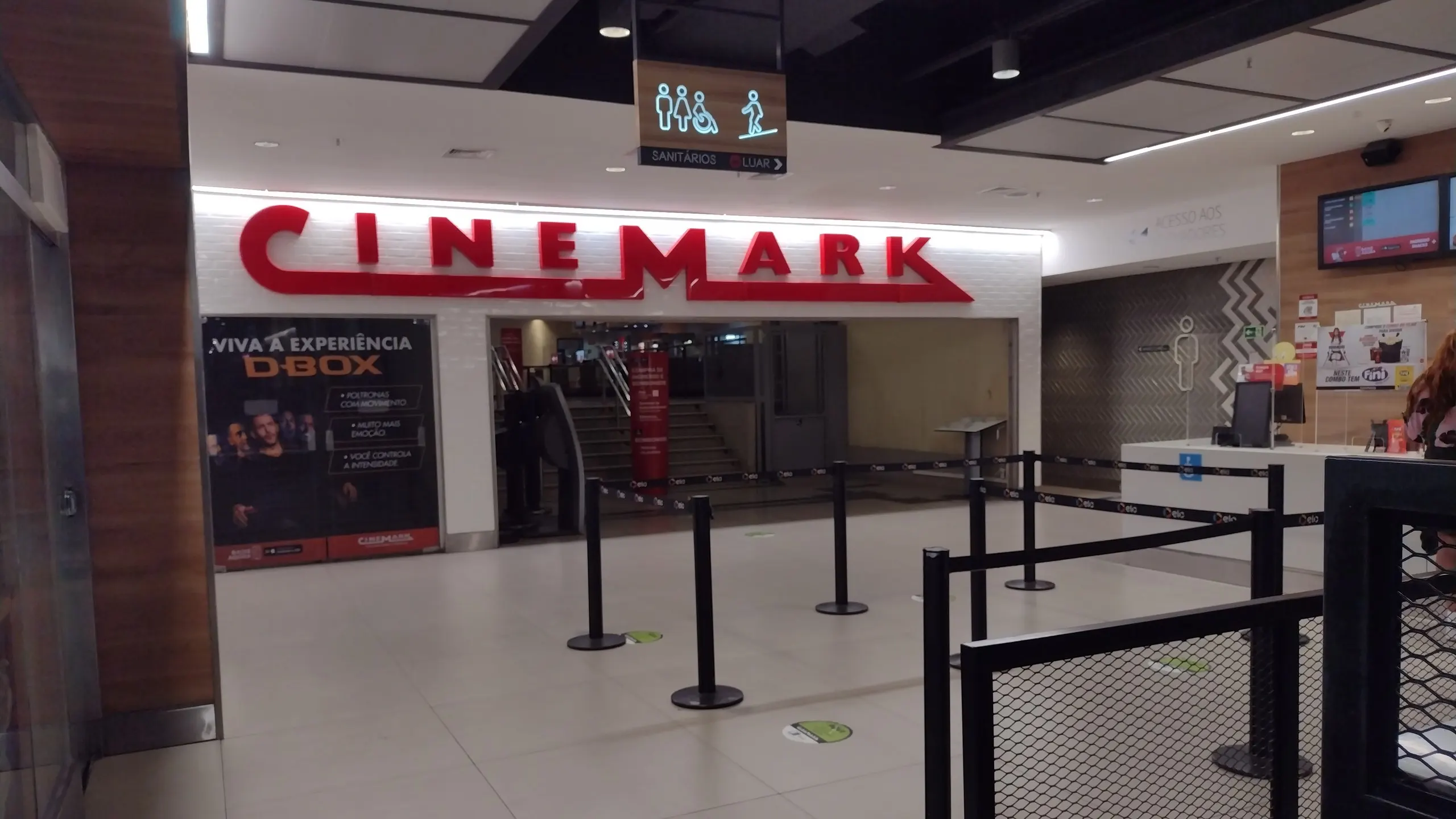

Brazil has 3,571 commercial cinema screens in operation, more than at any time on record, according to the open-data cinema register kept by the national film agency, ANCINE. Those screens are in 898 complexes spread across just 477 municipalities. The other 5,094 of the country’s 5,571 municipalities, 91% of the total, have no commercial cinema at all.
The newspaper O Globo first reported the total on Sunday 15 November. It is 27 screens above ANCINE’s end-2025 count of 3,544 and 64 above the pre-pandemic peak of 3,507 in 2019. A FilmBunch count of the register, in its 6 November version, shows where the recovery has landed: the 27 state capitals hold 42% of all screens, and two chains run 29% of them.
Key facts
- 3,571 commercial screens in 898 complexes, a record, in ANCINE’s cinema register dated 6 November 2026
- 477 municipalities have a commercial cinema; 5,094 of 5,571 (91%) have none
- The Southeast holds 1,848 screens (51.8%); São Paulo state alone has 1,115, Acre has seven
- FilmBunch count: Cinemark runs 620 screens and Cinépolis 414, together 29% of the total
- Ticket sales to 11 November: R$2.54bn ($457m) from 119.7m admissions, according to ANCINE figures cited in the press
Where the screens are
The Southeast has 1,848 screens, just over half the national total. The Northeast follows with 601 (16.8%) and the South with 580 (16.2%), ahead of the Centre-West with 309 and the North with 233, or 6.5%. Acre, on the border with Peru and Bolivia, has seven screens for the whole state; Roraima has 13 and Amapá 15.
Inside the richest state, the pattern repeats. São Paulo’s 1,115 screens, almost a third of the country’s, are spread over 117 of its 645 municipalities. The city of São Paulo has 371 screens and Rio de Janeiro 209, so two cities account for 16% of Brazil’s capacity. Across the 27 capitals there are 1,502 screens; the other 2,069 are in 450 municipalities in the interior. At the thin end, 98 municipalities are served by a single screen.
Against the population figure ANCINE uses, 213.4m, that is one screen for every 59,800 people, a marginal improvement on the 60,220 recorded at the end of 2025. ANCINE’s 2025 market report found that 86.6m people, 40.6% of the population, lived in a municipality with no cinema at the end of last year, when 466 municipalities had one. The register now shows 477.
Who runs them
Cinemark is the largest operator in the register, with 620 screens, or 17.4% of the total. Cinépolis has 414, Kinoplex 190, Cinesystem 168, Araújo 161, UCI 144 and Cineflix 129. The four largest chains together run 1,392 screens, 39% of the market, while 377 screens belong to independent operators outside any of the 67 exhibition groups named in the register.
Independents account for a third of this year’s openings. Of the screens operating today, 92 opened in 2026, and 31 of those belong to operators outside any group. São Paulo state added 24, Rio de Janeiro 12 and Tocantins, in the North, 11. The register also lists 77 commercial screens that closed during the year. ANCINE compiles its year-end count and its live register differently, so these openings and closures do not reconcile exactly with the 27-screen rise.
The 3,571 figure covers commercial screens only. The register lists another 146 non-commercial screens in operation, mostly film clubs and cultural centres; counting them, Brazil has 3,717 working screens in 510 municipalities. The commercial screens hold 682,296 seats, against 677,264 at the end of 2025.
How the count recovered
ANCINE’s annual series shows the collapse and the climb back. Brazil had 3,507 screens in 2019 and 1,860 in 2020, when the pandemic closed cinemas for months. The count passed the 2019 mark in 2024, reaching 3,510, and ended 2025 at 3,544. The number of municipalities with a cinema rose from 439 in 2019 to 466 in 2025, and last year towns of up to 100,000 people accounted for 61.7% of new screens. Public credit has helped: in November 2024 ANCINE said loans from the Fundo Setorial do Audiovisual were financing more than 156 new screens, which would bring cinemas to 21 municipalities that had none.
Audiences have grown faster than the screen base. Brazil’s cinemas took R$2.54bn ($457m) from 119.7m admissions between 1 January and Wednesday 11 November, according to ANCINE data published by O Globo and reported by Pipoca Moderna, nearly 20m more tickets than in the same period of 2025. The 116.8m tickets sold by October had already passed the whole of 2025. Brazilian titles have had their own push through the R$12 ticket week, and private money is being raised for production, such as the R$50m fund sought by FSB Holding and ARK Entertainment.
The official 2026 year-end total will appear in ANCINE’s next annual market report; the 2025 edition came out in June.
Our reading
Brazil’s exhibitors have rebuilt capacity, but mostly in places that already had it. For a distributor, the practical reach of a wide release is still defined by fewer than 500 municipalities, and about two in five screens are in state capitals. Growth of 27 screens in ten months does not change that map.
The more telling figures are the smaller ones: 11 new municipalities with a cinema since December, and 98 that depend on one screen. Those towns are where independent operators and public credit have been most active, and where a Brazilian title can find screens outside the big chains’ circuits. ANCINE’s 2026 year-end count will show whether the number of municipalities served is growing faster than the number of screens.
More box-office and exhibition coverage is in our Box Office section.
Sources
- ANCINE, Salas de exibição e complexos (open-data register of cinemas, CSV), file dated 6 November 2026, FilmBunch tally
- ANCINE / OCA, Informe Mercado Cinematográfico 2025 (published 3 June 2026, revised 23 June 2026)
- ANCINE / OCA, Evolução do número de salas de exibição em funcionamento, 1971 a 2025
- ANCINE, Número recorde de salas de cinema no Brasil, November 2024
- O Globo (Lauro Jardim column), Brasil nunca teve tantas salas de cinema em funcionamento, mas 91% das cidades não têm nenhuma, 15 November 2026
- Pipoca Moderna, Brasil bate recorde de salas de cinema, mas 91% das cidades não têm nenhuma, November 2026
- European Central Bank, euro reference rates for BRL and USD, 11 November 2026