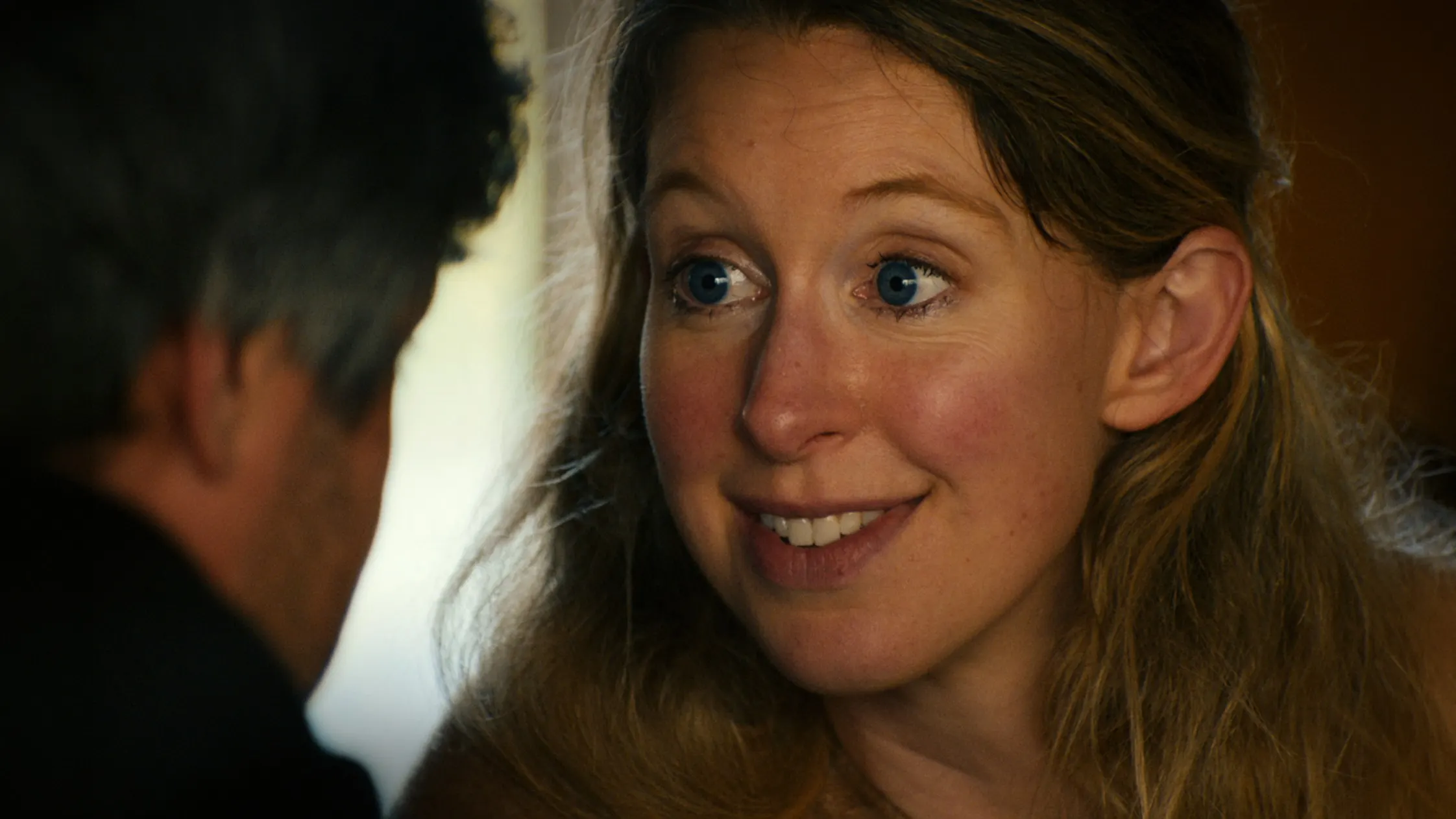
You Can See Everything, Nathan Fielder and Lance Oppenheim’s documentary about the Theranos founder Elizabeth Holmes, won every award it was up for at the 11th Critics Choice Documentary Awards in New York on Sunday 8 November. The A24 release took best documentary feature, best director, cinematography, editing and score, five wins from five nominations, according to the Critics Choice Association’s winners announcement.
The sweep lands on a film that is also a genuine commercial hit. After four weeks in cinemas it is about to cross $80m in North America, Screen International reported on Monday. Few documentaries open an awards season with critics and audiences on the same side.
Key facts
- Event: 11th Critics Choice Documentary Awards, New York, Sunday 8 November 2026, a gala the association had billed for The Edison Ballroom in Manhattan; host Ross Mathews
- Best documentary feature: You Can See Everything (A24), five wins from five nominations
- Once Upon a Time in Harlem (Neon) won three, including best first documentary feature for David Greaves
- On the association’s distributor credits, A24 and Neon took five awards each; the nominations leader, Ava DuVernay’s 14th (Netflix), won none of its six
- Honorary awards: Ron Howard (Critics Choice Impact Award) and Jehane Noujaim (Pennebaker Award)
Fielder, best known for Nathan for You and The Rehearsal, and Oppenheim, who made Some Kind of Heaven, share the directing award. David Bolen won for cinematography, Adam Locke-Norton for editing and Ari Balouzian for the score. The film follows Holmes through the 34 days before she reported to prison to serve a sentence of more than 11 years for defrauding Theranos investors. It premiered as the surprise screening at Telluride and played the New York Film Festival before A24 opened it in cinemas on 16 October.
The evening’s other multiple winner was David Greaves’s Once Upon a Time in Harlem, which took best first documentary feature, best historical documentary and best archival documentary. Neon, its US distributor, also won with Yuval Abraham and Rachel Szor’s NAZA in the political category and Baz Luhrmann’s EPiC: Elvis Presley in Concert for music. That is five awards across three films, the same total A24 reached with one. The association’s lists and Screen’s winners report both give Neon as the US distributor of NAZA; Deadline’s nominations list had credited the film to The Guardian and mk2 films.

The shut-out and the near-misses
The nominations, announced on 13 October, were led by 14th, DuVernay’s documentary about threats to the 14th Amendment, with six. Set against the winners list, it converted none of them. It lost best feature and best director to You Can See Everything, editing to Locke-Norton, score to Balouzian, and the political and historical categories to NAZA and Once Upon a Time in Harlem.
Nuisance Bear, Gabriela Osio Vanden and Jack Weisman’s Mubi release about polar bears in an Arctic town, entered with five nominations, the same number as You Can See Everything, and won one, for science and nature documentary. John Wilson’s The History of Concrete (Magnolia Pictures), which had four, won best narration for Wilson, who wrote and performs it.
Netflix, which had the most-nominated film, still took two awards: best short documentary for The Baddest Speechwriter of All, and a share of the true crime prize for The Idaho Murders: College Nightmare, which tied with Investigation Discovery’s Lost Women of Alaska. National Geographic also won twice, for Everest: The Other Side in sports and Lion in limited series.
Ron Howard received the Critics Choice Impact Award from Frank Oz. Jehane Noujaim, director of The Square, received the Pennebaker Award, the association’s career honour (formerly its lifetime achievement award), from Chris Hegedus, D A Pennebaker’s widow and collaborator.
The winners
The complete list, as published by the Critics Choice Association, with distributors as the association credits them:
Best documentary feature: You Can See Everything (A24)
Best director: Nathan Fielder and Lance Oppenheim, You Can See Everything (A24)
Best first documentary feature: David Greaves, Once Upon a Time in Harlem (Neon)
Best cinematography: David Bolen, You Can See Everything (A24)
Best editing: Adam Locke-Norton, You Can See Everything (A24)
Best narration: The History of Concrete (Magnolia Pictures), written and performed by John Wilson
Best score: Ari Balouzian, You Can See Everything (A24)
Best music documentary: EPiC: Elvis Presley in Concert (Neon)
Best political documentary: NAZA (Neon)
Best historical documentary: Once Upon a Time in Harlem (Neon)
Best biographical documentary: Musk (Bleecker Street)
Best archival documentary: Once Upon a Time in Harlem (Neon)
Best science/nature documentary: Nuisance Bear (Mubi)
Best sports documentary: Everest: The Other Side (National Geographic Documentary Films)
Best true crime documentary (tie): The Idaho Murders: College Nightmare (Netflix) and Lost Women of Alaska (Investigation Discovery)
Best short documentary: The Baddest Speechwriter of All (Netflix)
Best limited documentary series: Lion (National Geographic)
Best ongoing documentary series: 30 for 30 (ESPN)
Critics Choice Impact Award: Ron Howard
Pennebaker Award: Jehane Noujaim
That is 18 competitive categories and, because of the tie, 19 winners. By distributor: A24 five, Neon five, Netflix two, National Geographic two (one under its documentary films label), and one each for Magnolia Pictures, Bleecker Street, Mubi, Investigation Discovery and ESPN. Eligibility covers documentaries first released commercially in the US during 2026, in cinemas or on television and streaming.
Our reading
The Critics Choice Association is a voting body of more than 500 critics and entertainment journalists, not an industry guild, so its documentary prizes are a signal of critical consensus rather than a forecast of how Academy members will vote. The signal here is unusually clean. A film that wins every category it enters, while the most-nominated title wins nothing, gives A24 a simple argument to take into the rest of the season.
The open question, already in the air when the film was booked into the Torino Film Festival, is whether a documentary with this kind of box-office run is campaigned for the documentary category alone or for best picture as well. No documentary has yet been nominated for best picture. Sunday’s result does not settle the matter, but it gives A24 critical support to match the grosses. Neon leaves with the deeper slate: three different winners, and Once Upon a Time in Harlem placed as the debut to beat. The main Critics Choice Awards follow on 3 January 2027.
Sources
- Critics Choice Association, winners of the 11th annual Critics Choice Documentary Awards, 8 November 2026
- Critics Choice Association, nominations for the 11th annual Critics Choice Documentary Awards, 13 October 2026
- Deadline, nominations report with per-film counts, 13 October 2026
- Screen International, winners report, 9 November 2026