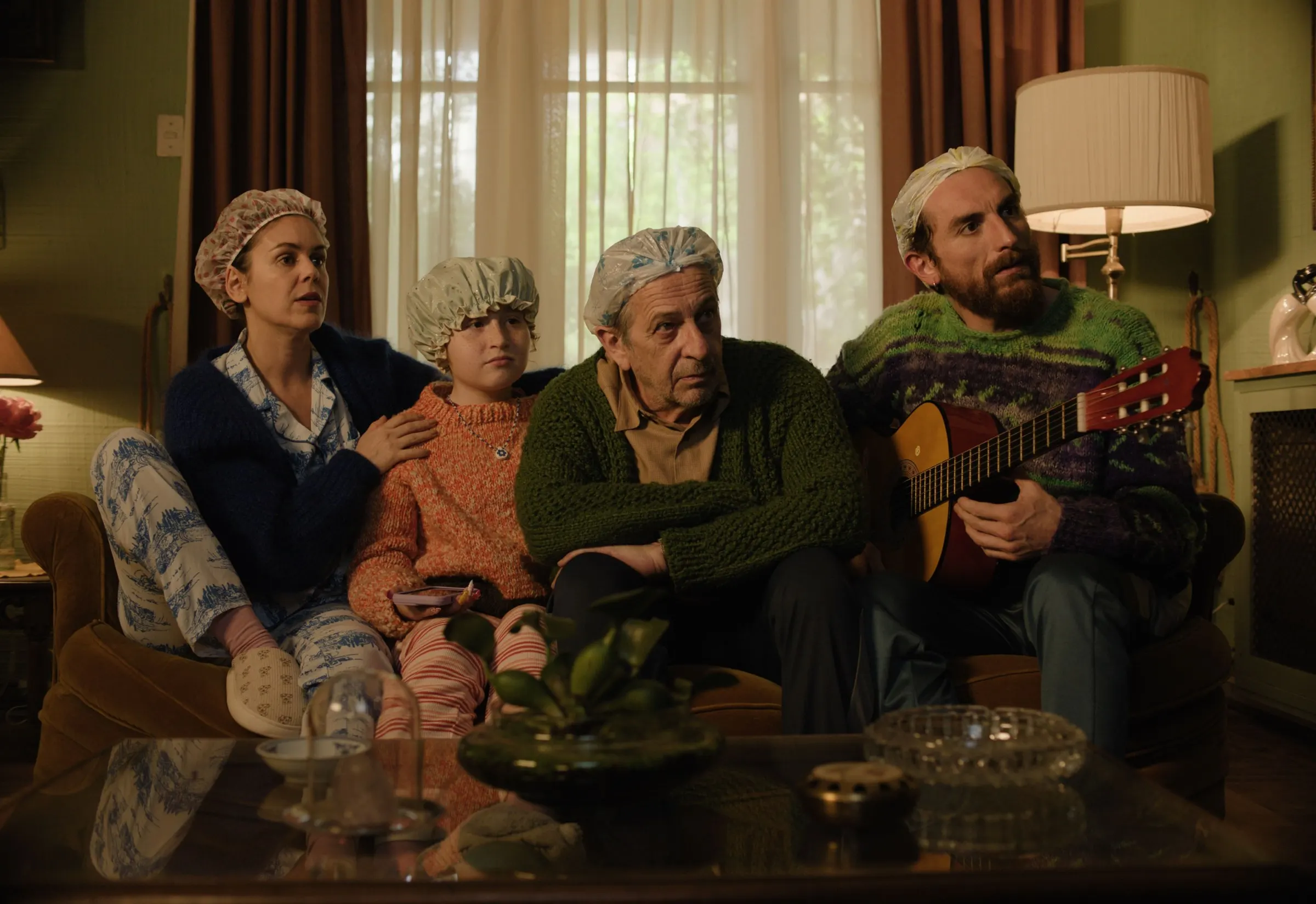
Después de Elena, Shawn Garry’s family comedy from Chile, Colombia and Italy, won the Colón de Oro for best film at the 52nd Festival de Huelva de Cine Iberoamericano. The official jury of Remedios Malvárez, Ana Luísa Oliveira and Moisés Rodríguez announced the awards at the closing gala in the Palacio de Congresos of Casa Colón on 21 November, the festival said the next day. The prize is worth €20,000, split equally between the producer who entered the film and its Spanish distributor. Under the competition rules, none of it is paid until the film opens in Spanish cinemas, which must happen before next year’s 53rd edition.
Alfredo Castro, who plays a 70-year-old widower whose three adult children move back into the family house, also won the Colón de Plata for best actor. The 85-minute film previously played Toronto’s Centrepiece section and the Rio de Janeiro festival. It is Garry’s second feature, after Desierto Sur (2008).
Key facts
- Después de Elena (Chile, Colombia, Italy) wins the Colón de Oro, worth €20,000 once it is released in Spain, plus best actor for Alfredo Castro and a parallel prize for best screenplay.
- Official competition: 12 features in competition, 2 out of competition, 106 titles in the whole programme, according to the festival.
- FilmBunch count: 9 of the 12 competition features won at least one prize; 6 of them won the 7 official jury and public prizes.
- Other cash prizes in the regulations: best Spanish direction €5,000, best Andalusian direction €3,000, each official short prize €1,500, best Andalusian short €1,000.
Official competition
The official feature competition had 12 films, plus two shown out of competition: Manuela Martelli’s El deshielo and Fernanda Tovar’s Chicas tristes.
Sharon Kleinberg’s Mexican first feature Soy Mario won the special jury prize. Lucía Puenzo won best director for the Argentine film Pepita, la pistolera. Duda Santos won best actress for Aly Muritiba’s Brazilian film Funk, and Rubén Ochandiano won best supporting performance for Lorena Villarreal’s Mexican film La vida es. The official public prize went to Allan Deberton Nogueira’s Brazilian film El mundo de Gugu (O mundo de Gugu).
Javier Calvo and Javier Ambrossi’s La bola negra won best Spanish direction in the Acento section, a prize worth €5,000 including tax, according to that section’s rules. Elías Pérez’s Plus Ultra won best Andalusian direction in the Talento Andaluz section, worth €3,000 including tax. Paulina García received the Premio Ciudad de Huelva, a career prize; she also appeared in two official-section films, the festival said.
Full list of prizes
Official feature competition (jury: Remedios Malvárez, Ana Luísa Oliveira, Moisés Rodríguez)
- Colón de Oro, best film (€20,000): Después de Elena, Shawn Garry (Chile, Colombia, Italy)
- Colón de Plata, special jury prize: Soy Mario, Sharon Kleinberg (Mexico)
- Colón de Plata, best director: Lucía Puenzo, Pepita, la pistolera (Argentina)
- Colón de Plata, best actor: Alfredo Castro, Después de Elena
- Colón de Plata, best actress: Duda Santos, Funk (Brazil)
- Colón de Plata, best supporting performance: Rubén Ochandiano, La vida es (Mexico)
- Colón de Plata, official public prize: El mundo de Gugu, Allan Deberton Nogueira (Brazil)
Other official sections
- Colón de Plata, best Spanish direction, Acento section (€5,000): Javier Calvo and Javier Ambrossi, La bola negra
- Colón de Plata, best Andalusian direction, Talento Andaluz section (€3,000): Elías Pérez, Plus Ultra
- Premio Ciudad de Huelva: Paulina García
Shorts (young jury, announced 15 November)
- Best Ibero-American short, official section (€1,500): Marga en el DF, Gabriela Ortega (Mexico, Dominican Republic, United States)
- Best national short, official section (€1,500): Montecarlo 67, Rubén Guindo Nova (Spain)
- Best Andalusian short, Talento Andaluz (€1,000): ¿Qué comen los dragones?, Álvaro León
Pantalla Huelva (local shorts)
- Best short, young jury: Los reyes no son los padres, Alberto Leal
- Public prize: Aura, Luis Suan
Parallel prizes
- Premio Manuel Barba, best screenplay (Asociación de la Prensa de Huelva): Después de Elena
- Premio Radio Exterior de España (the film that best reflects Ibero-American reality) and Premio Queer Camilo 2026 (FOC Cultura con Orgullo): A margem do rio, Matheus Farias and Enock Carvalho (Brazil, Germany)
- Best cinematography, feature (Escuela de Arte León Ortega): Funk, Aly Muritiba
- Best cinematography, short (Escuela de Arte León Ortega): Beauty, for the work of José del Corral
- Premio Corazón Roto (ANNCO): Las flores de Julia, Cris Tapia Marchiori (Argentina, Chile)
- Premio de la Prensa Iberoamericana (PIC): El mundo de Gugu
- Casa de Iberoamérica de Huelva prize: Quatro Meninas, Karen Suzane (Brazil, the Netherlands)
- IES Pablo Neruda jury: national short Montecarlo 67; international short Para los contrincantes, Federico Luis; feature Pepita, la pistolera
The festival also gave career prizes during the edition: the Premios Luz to Amaia Salamanca and Patrick Criado at the opening gala, and the Premio RTVA for best Andalusian filmmaker to Sebastián Haro.
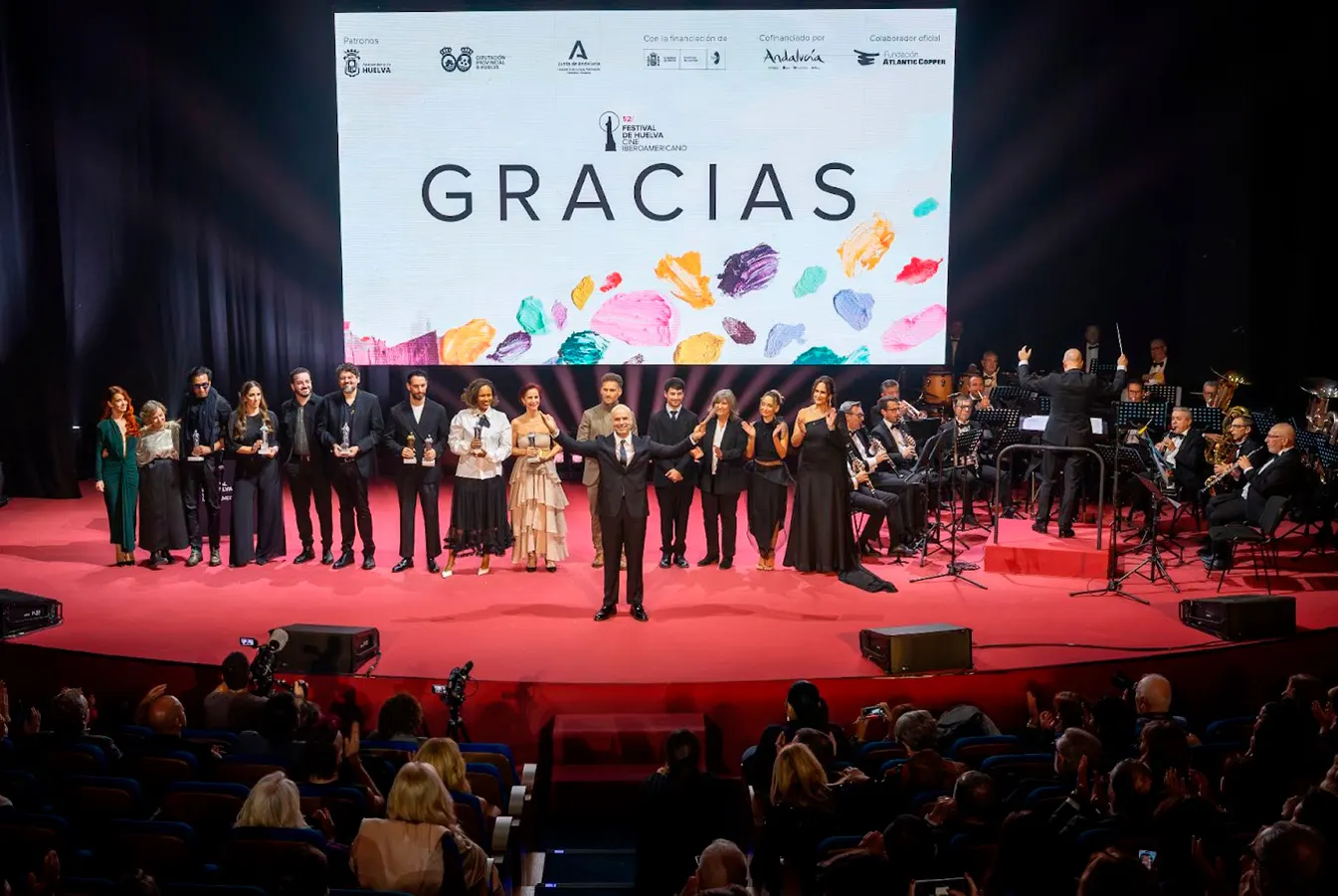
The 12 official-competition features were A margem do rio; Después de Elena; Omar E. Ospina Giraldo’s El bovino de los cuernos curvos (Colombia); El mundo de Gugu; Funk; La vida es; Las flores de Julia; Lucila Mariani’s Los días libres (Argentina, Brazil, Mexico, France); Diego “Mapache” Fuentes’s Matapanki (Chile); Pepita, la pistolera; Quatro Meninas; and Soy Mario. Three left Huelva without a prize of any kind: El bovino de los cuernos curvos, Los días libres and Matapanki.
For other recent festival results, see our reports on the Thessaloniki winners, the Seville European Film Festival and the Mostra de València.
Our reading
The official jury spread its six prizes across five films, while Brazil, the lead country on four of the 12 competition features, left with the best actress and public prizes. The Colón de Oro carries a condition that matters more than its size: the festival pays the €20,000 only after Después de Elena opens in Spanish cinemas, and before the 53rd edition. The film’s Spanish distributor and release date, neither announced by the festival, are the next things to watch.
Sources
- Festival de Huelva, official awards announcement, 22 November 2026
- Festival de Huelva, official competition features, 52nd edition
- Festival de Huelva, official competition feature regulations, 52nd edition (Colón de Oro cash prize)
- Festival de Huelva, Acento section regulations (Spanish-direction prize)
- Festival de Huelva, Talento Andaluz feature regulations
- Festival de Huelva, official shorts prizes, 15 November 2026
- Festival de Huelva, official shorts regulations (cash prizes)
- Festival de Huelva, Pantalla Huelva winners, 20 November 2026
- Festival de Huelva, Después de Elena film page