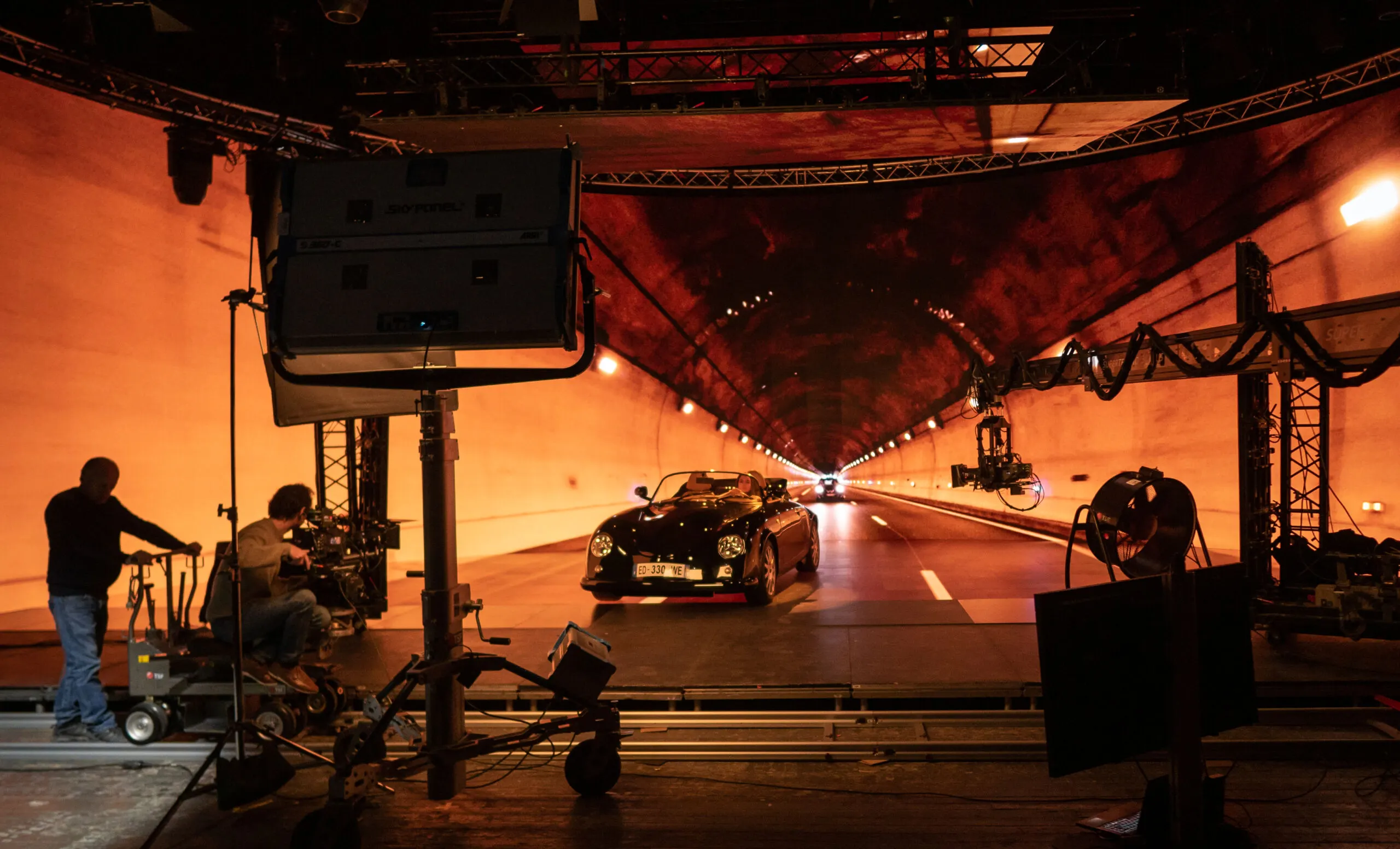
Yamaha Corporation has agreed to buy Disguise, the London company whose software and media servers drive LED-wall film stages, stadium screens and concert tours, for £215m ($285m). The Japanese instrument and audio group announced the deal on Friday 13 November. It is buying Butterfly Topco, the holding company that owns Disguise, from shareholders led by Carlyle, the private equity firm.
Neither company put the price in its press release. It appears in Yamaha’s disclosure to the Tokyo Stock Exchange, which also sets out three years of Disguise’s group accounts. They show a business whose sales fell 11% last year and which has lost money in each of the past three years.
Key facts
- Buyer: Yamaha Corporation (Tokyo Stock Exchange Prime, code 7951)
- Target: Butterfly Topco Limited, which indirectly owns all of Disguise Technologies Limited, London
- Price: £215m ($285m), about ¥46.1bn, for the shares and shareholder loan notes; final figure set at closing
- Largest sellers: CETP IV Investment 7 (58.16%) and Livingbridge Enterprise (5.64%); other shareholders hold 36.20%
- Completion: scheduled for December 2026
The terms
Yamaha’s filing converts the price at ¥214 to the pound, giving about ¥46.1bn. Advisory and other fees add an estimated ¥1.6bn ($10m), for a total of about ¥47.7bn, and Yamaha expects to pay a further ¥3.2bn ($20m) or so to repay bank borrowings taken on in connection with the transaction. The final consideration will be fixed on the closing date. Completion is subject to customary conditions, and Yamaha says the effect on its results is still under review.
The filing says Carlyle effectively holds a majority of the voting rights; the biggest single shareholder is CETP IV Investment 7, a Luxembourg holding company with 58.16%. Butterfly Topco was set up in February 2021, and Disguise says it has had “more than five years of high growth” under Carlyle’s ownership.
What Disguise does
Disguise builds the systems that design, play back and control video across giant screens and sets, in sync with sound and lighting. It calls itself the global leader in visual technology for three markets: live events, location-based experiences and virtual production. Its credits, the company says, run from Project Hail Mary and Top Gun: Maverick to tours by Beyoncé, Taylor Swift and Bad Bunny, Netflix House, the Burj Khalifa in Dubai and Tottenham Hotspur Stadium, and Yamaha’s filing says it sells in more than 100 countries through over 400 partners.
Under Fernando Küfer, chief executive for the past decade, it has grown from a media-server specialist for concert touring into a business spanning software, hardware and creative and technical services, according to Disguise.
What the accounts show
| Year to December | Net sales | EBITDA | Net loss | Net liabilities |
|---|---|---|---|---|
| 2023 | £67.2m ($85.4m) | £7.6m ($9.7m) | £35.5m ($45.1m) | £86.3m ($110m) |
| 2024 | £67.2m ($84.3m) | £5.2m ($6.5m) | £38.6m ($48.4m) | £123.9m ($155m) |
| 2025 | £60.0m ($80.8m) | £4.6m ($6.2m) | £36.4m ($49.0m) | £160.2m ($216m) |
Group accounts under UK GAAP, from Yamaha’s filing. Net loss is the loss attributable to owners of the parent. Dollar figures at ECB year-end rates for each year.
Sales were flat at £67.2m in 2023 and 2024, then fell about 11% in 2025. EBITDA, which the filing defines as operating profit plus depreciation and amortisation of goodwill and intangible assets, dropped by almost 40% over the two years. The bottom line is far worse than the trading result. Before goodwill amortisation, the group made an adjusted operating profit of £0.7m ($0.9m) in 2023 and losses of £1.2m ($1.4m) in 2024 and £0.8m ($1.0m) in 2025; after it, and after items below operating profit that the filing does not itemise, losses totalled about £110m ($142m) over the three years. Net liabilities nearly doubled over the period.
By FilmBunch’s calculation, £215m is about 3.6 times Disguise’s 2025 sales and about 47 times its 2025 EBITDA. That price covers the shares and the shareholder loan notes but not the roughly ¥3.2bn of bank debt Yamaha will also repay, so the full cost against earnings is higher still.
Why Yamaha is buying
Yamaha wants to grow beyond instruments and audio equipment into what it calls emotionally engaging experiences across entire spaces, with sound as the starting point: sports arenas, concert venues and entertainment built on creators and intellectual property, including its Vocaloid singing-synthesis software. It calls Disguise “an important strategic acquisition” for growth beyond its current medium-term plan, “Rebuild & Evolve”, which runs from April 2025 to March 2028, and says the business will become a new pillar alongside instruments and audio. It plans to sell Disguise’s products in Japan and elsewhere in Asia, cross-sell the two ranges and develop products that bring audio, video and lighting closer together.
“People are seeking richer and more immersive experiences from live entertainment,” said Atsushi Yamaura, Yamaha’s president, adding that the company would respect “the brand, technology, and global relationships Disguise has built with customers and partners”. Küfer said Yamaha “is committed to investing in our people, platform, and partners”. Customers will keep working with the same Disguise teams, the company says, with more news on a combined roadmap in 2027.
Our reading
Film is not why Yamaha is buying. Its disclosure lists Disguise’s markets as live events, sports facilities, theme parks and immersive venues, and frames the deal entirely around arenas, concerts and venues; film, television and virtual production do not appear. Disguise’s own announcement calls it “the leader in live music and venue technology”. Producers and stage operators who build shoots around Disguise systems should watch the 2027 roadmap, which will show how much of the company’s development stays pointed at film stages inside a group buying for stadiums. The price, about 47 times EBITDA for a company that has lost money three years running, says Yamaha is paying for strategic fit rather than current earnings. The deal also comes at a hard time for the studio business: UK film production spend fell 37% in January–September, the BFI is still paying film schools to test AI and virtual production, and in Los Angeles the Radford Studio Center lot, sold for $1.85bn in 2021, goes to a foreclosure auction on 24 November.
Sources
- Yamaha Corporation, Notice concerning making Disguise Technologies Limited a wholly owned subsidiary (TSE disclosure), 13 November 2026
- Yamaha Corporation news release page, 13 November 2026
- Disguise, Yamaha Corporation to acquire Disguise, 13 November 2026
- Yamaha Corporation via Business Wire, Yamaha to acquire Disguise, expanding its capabilities in integrated audio, video, lighting and media, 13 November 2026
- European Central Bank, euro reference rates, 12 November 2026 (USD 1.1081, GBP 0.83595, JPY 176.96); 29 December 2023 (USD 1.1050, GBP 0.86905); 31 December 2024 (USD 1.0389, GBP 0.82918); 31 December 2025 (USD 1.1750, GBP 0.8726)