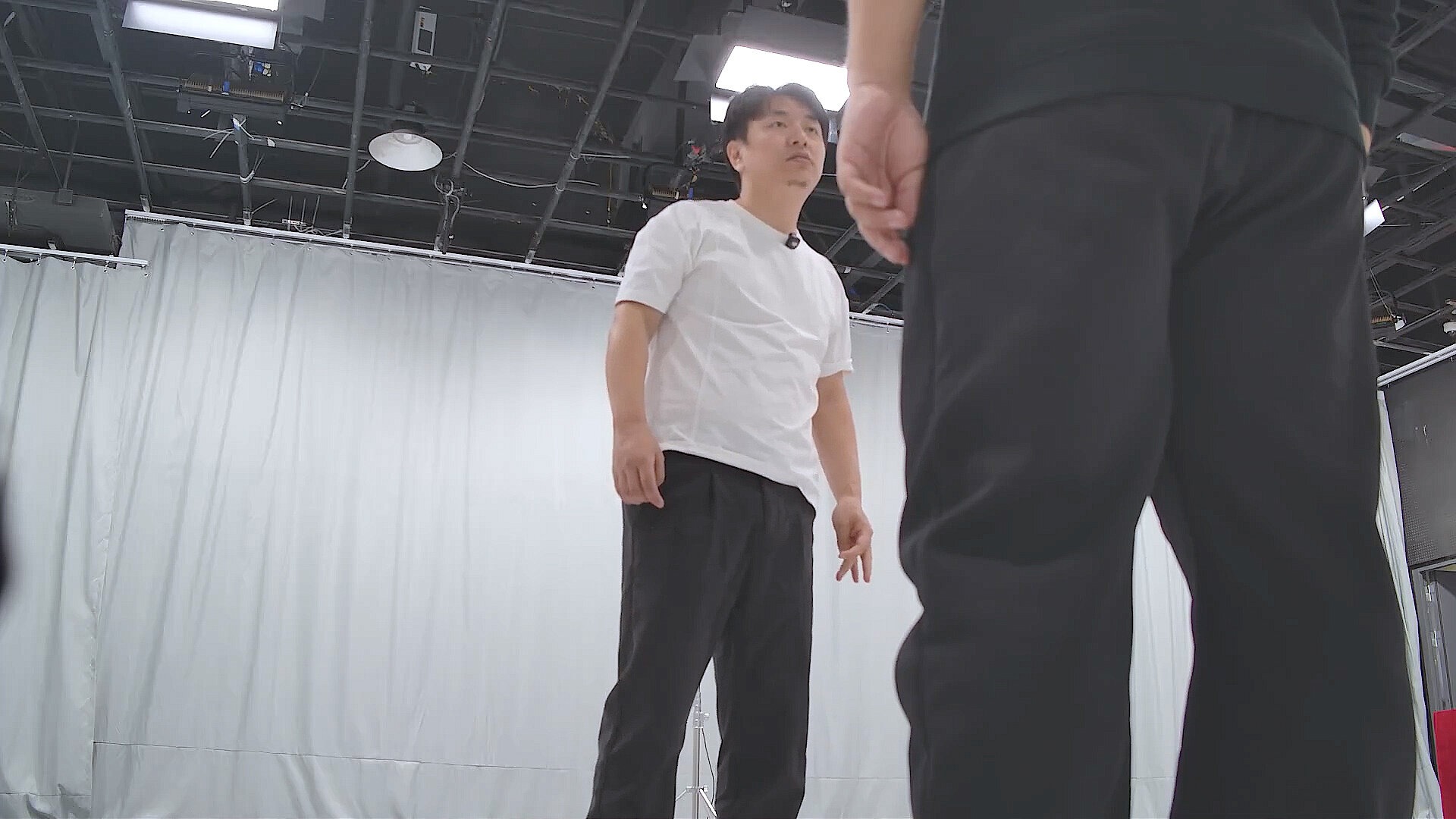
Chinese streaming platform iQIYI has opened what it calls China’s first AI film studio, a stage of about 110 square metres at its Creative Center in Shanghai, and began shooting its first project there, the online feature Cop in Trouble, on 28 October. The company announced the studio in a release on its press site dated 30 October, distributed internationally through PR Newswire on 1 November. The studio records actors on a bare stage and builds settings, lighting and other visual details afterwards with generative AI.
Key facts
- Studio: iQIYI AI Film Studio, about 110 square metres, at the iQIYI Creative Center Shanghai
- First production: online feature Cop in Trouble, shooting since 28 October 2026
- Pipeline: footage syncs automatically to NadouPro, iQIYI’s AI production platform, with access to nearly 30 AI models including Seedance 2.5 and Kling 4.0
- Earlier step: iQIYI says its virtual production stage at Hengdian raised efficiency by more than 30%
- Not disclosed: budget, director, cast, release date and terms with the model providers
For producers, the pitch is a change in when a film’s look gets decided. On a conventional shoot, sets, costumes and lighting are fixed before the camera rolls. iQIYI says its stage lets a director keep an actor’s recorded performance and change the set, light, costume, make-up and props later in post-production, which it says reduces timeline constraints and raises efficiency.
How the studio works
According to iQIYI, the stage has multi-camera shooting, synchronised high-resolution picture and sound recording, digital continuity logging and playback of takes on set. Footage uploads automatically to NadouPro, which gives the production nearly 30 AI models and what the company describes as hundreds of production agents and skills. The release names two of the models: Seedance 2.5, released by TikTok owner ByteDance in July, and Kling 4.0, which short-video platform Kuaishou launched on 15 October.
Liang Zhu, iQIYI vice-president and head of intelligent production, said in the release that “an actor’s performance is the core of any film or series” and that the studio lets directors adjust the physical elements of a scene with more flexibility.
In the company’s synopsis of Cop in Trouble, a low-ranking constable named Jian Zhang enjoys fame and money until the lies he has told to catch a notorious outlaw start to come apart. iQIYI calls it an internet feature film, the Chinese category of features made to premiere on streaming platforms rather than in cinemas. iQIYI says the studio’s on-set recordings serve as the reference for the AI generation, covering how characters look, where they stand and how the light falls.
From LED walls to generated sets
iQIYI presents the Shanghai stage as the next step after its virtual production work at Hengdian, the studio base in Zhejiang province. iQIYI said in August 2022 that it had built a 2,400 square metre virtual production studio there for Fox Spirit Matchmaker: Red Moon Pact, and in October 2024 upgraded stage 13 at the Hengdian Film & TV Industry Park to a 516 square metre LED volume, according to its virtual production site. On the company’s first-quarter call in 2023, iQIYI chief executive Yu Gong said virtual production had raised directors’ shooting efficiency by more than 30% and cut crew on set by a third in some scenes of two of its series, as its press site reported. The same report names the series as Fox Spirit Matchmaker: Red Moon Pact and My Journey to You. The new release credits the Hengdian studio with efficiency gains of over 30%.
The new stage is about a fifth of the size of that LED volume. The release describes no LED wall: the environment is generated after the shoot rather than displayed on set. NadouPro has also gone abroad. In September iQIYI ran a Global AI Creator Challenge on the international version of the platform with Alibaba’s Wan3.0 model, offering a prize pool of more than $10,000, and said the international version supports English, Korean, Thai and Arabic in more than 20 countries and regions.
Under measures issued by the Cyberspace Administration of China and three other agencies, including the broadcast regulator, AI services and the platforms that distribute their output have had to add visible labels to AI-generated video since 1 September 2025. iQIYI has not said how Cop in Trouble will be labelled.
AI-made features are already reaching Chinese audiences. Bona Film Group’s Sanxingdui, which its makers describe as made with AI, took an estimated RMB1.59m ($239,000) in its first nine days in cinemas, as we reported in our report on the AI-made Sanxingdui. The wider question of how AI models are trained on film and television is in front of a US court, as covered in our piece on the Hollywood unions’ briefs in the OpenAI case. The studio opens as China’s box office shrinks: Shanghai Film’s nine-month profit dropped 87%.
What is not known
iQIYI has not named the director or cast of Cop in Trouble, or said what it costs, how long the shoot runs or when the film will stream. The release gives no figure for savings at the Shanghai stage itself; the 30% number comes from the earlier LED work. It also does not say whether outside producers can rent the studio, or on what terms iQIYI uses the ByteDance and Kuaishou models.
Our reading
iQIYI pitches the studio at emerging directors and resource-constrained teams, and Cop in Trouble is an online feature, a format made for streaming rather than cinemas. The release gives no cost or schedule comparison for the film. The only efficiency figure it cites, more than 30%, comes from LED-wall work at Hengdian, where the environment is displayed during the shoot rather than generated afterwards.
The evidence that would show whether the approach works at feature length is the finished film: its running time, how much of the frame is generated, how it is labelled under the 2025 rules and how it performs on iQIYI against comparable online features. iQIYI has not said when any of that will be public.
Sources
- iQIYI, iQIYI Launches China’s First AI Film Studio in Shanghai, with Inaugural Title “Cop in Trouble” in Production (press kit, 30 October 2026)
- PR Newswire, same release (1 November 2026)
- China Daily, iQIYI opens AI film studio in Shanghai, starts first production (2 November 2026)
- iQIYI Virtual Production, Hengdian stage 13 (company page)
- iQIYI, interview with Zhu Liang on virtual production efficiency (22 May 2023, Chinese)
- PR Newswire, iQIYI Global AI Creator Challenge with Alibaba’s Wan3.0 (10 September 2026)
- iQIYI, iQIYI Introduces China’s First Extended Reality (XR) Virtual Production Series (PR Newswire, 26 August 2022)
- ByteDance Seed, Introducing Seedance 2.5 (31 July 2026)
- Kuaishou Technology, Kling AI officially launches Kling 4.0 (16 October 2026)
- Cyberspace Administration of China, Measures for Labelling AI-Generated Synthetic Content (14 March 2025, Chinese)