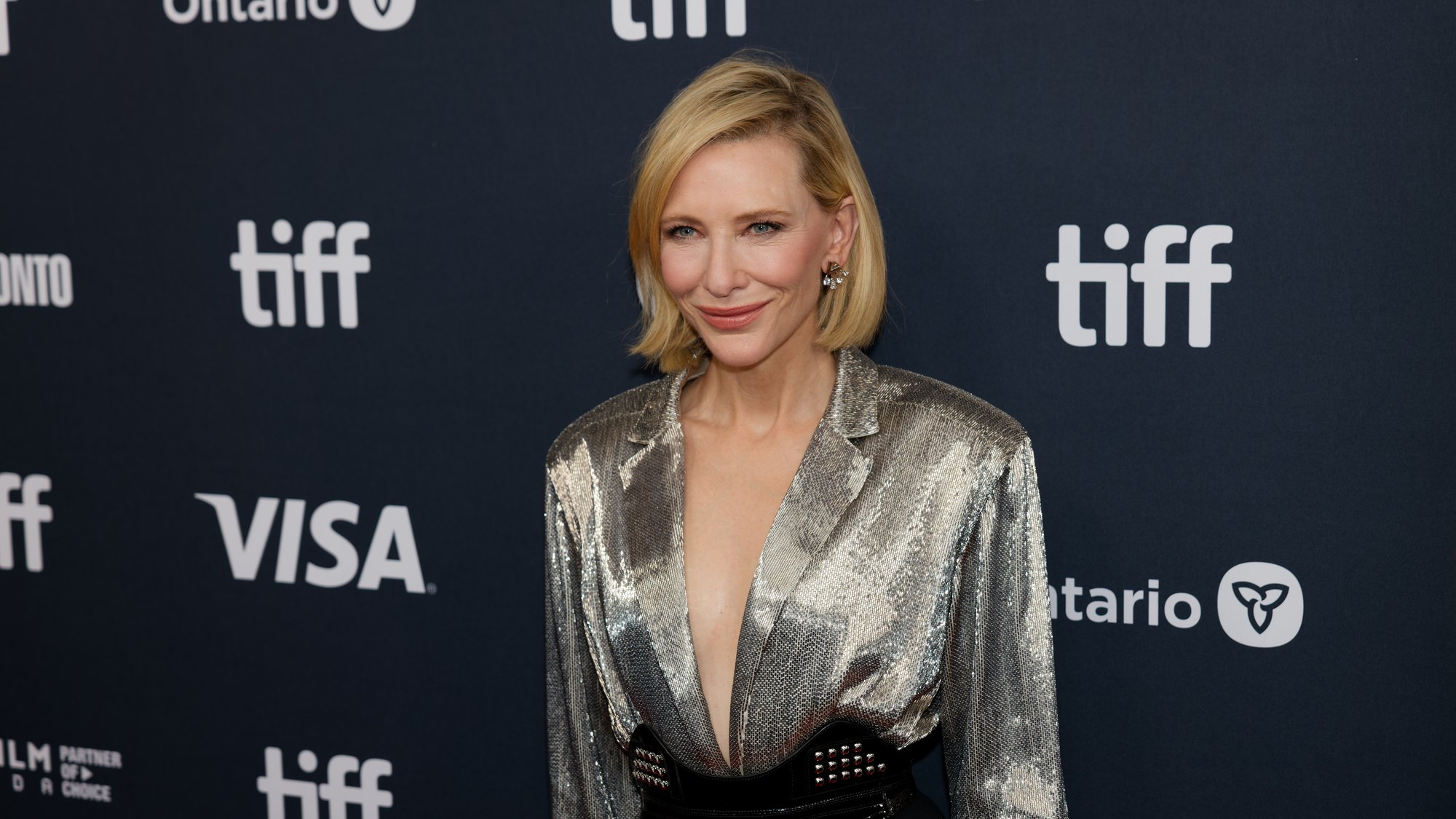

Hollywood’s biggest unions, the talent agency CAA and Cate Blanchett have asked the federal judge in the copyright case against OpenAI and Microsoft to hear that AI training can be licensed, in proposed amicus briefs that still need the court’s leave to be filed.
Key facts
- Case: In re OpenAI, Inc. Copyright Infringement Litigation, No. 25-md-3143 (SDNY), Judge Sidney H. Stein and Magistrate Judge Ona T. Wang
- 29 October: SAG-AFTRA, the American Federation of Musicians (AFM), WGA West and WGA East (more than 250,000 workers, they say) seek leave to file a brief backing the plaintiffs
- 30 October: Human Consent Foundation, Creative Artists Agency (CAA), Music Artists Coalition, National Association of Voice Actors, the enterprise AI company Writer, Creators Coalition on Artificial Intelligence, Blanchett, Nick Hexum and Steven Soderbergh submit a 31-page proposed brief
- Amicus briefs on summary judgment: 6,000-word cap, 30 October deadline
The unions’ brief
The case joins suits by authors and news publishers led by The New York Times, which sued in December 2023. Both sides seek summary judgment on whether AI training is fair use.
The unions’ 34-page brief asks for a case-by-case test, based on what a model is built to do and produces, not a blanket fair-use ruling. Their members are paid from licensing through residuals, royalties and pension and health contributions, so a training-data market is theirs too. SAG-AFTRA has more than 160,000 members, AFM more than 80,000 and the Writers Guilds about 18,000, the unions say.
SAG-AFTRA’s and the WGA’s 2026 deals, whose talks focused on the emerging AI licensing market, give a notice-and-bargaining right when employers license covered work to third parties to train public-facing, commercial generative AI systems, it says. “A ruling here that training is categorically fair use would render moot the terms the Unions and the industry agreed to at the bargaining table,” it says. The US government’s statement of interest for the defendants, as the brief quotes it, calls licence fees “large subsidies for old mainstream media companies”. The unions call such payments wages and health care.
The CAA and Blanchett brief
It disputes the defendants’ claim that clearing rights for AI ingestion, training and grounding is too expensive, technically unworkable and has no market or way to value it. Its leave memo says it takes no position on the outcome.
Creative industries have licensed scattered rights in bulk for more than a century, it argues, citing CISAC (more than 5 million creators, 228 societies, 111 countries) and AGICOA (more than 1.6 million audiovisual works, more than 23,000 rights holders). The class plaintiffs’ papers, it says, document more than 120 AI licences and spending “well-north of $1 billion”.
It sets out the Human Consent Standard, co-written by Blanchett and the musician Nick Hexum, a machine-readable way for people and rights holders to say whether AI may use their work, voice or likeness. The foundation runs a public registry of these declarations; Soderbergh sits on its founding board. It was founded as RSL Media in May and opened the registry in June, Variety reported.
Blanchett’s statement in the brief reads: “If someone wants to use my face, my voice or my image, they ask me first. There is a contract. There is a conversation.” Its appendix lists 26 supporters, including Anne Hathaway, Robert De Niro, Scarlett Johansson, Ron Howard and the Stan Lee Foundation, but is submitted only for the named amici.
The other side
The Electronic Frontier Foundation, Authors Alliance and a group including the American Library Association, the Consumer Technology Association and the Business Software Alliance submitted briefs backing the defendants. On 30 October OpenAI posted excerpts from some of them and from the US government, saying the Times’s suit asks everyone to “toss aside the longstanding principle of fair use in their own narrow pursuit of an undeserved payday”. Microsoft didn’t respond to Variety’s request for comment.
AI terms already feature in SAG-AFTRA’s new TV animation contracts, and AI-made films such as Sanxingdui: Past Events of the Future have reached cinemas.
Our reading
Both briefs try to show that the licensing market fair use protects already exists. A ruling from Stein on this record would give studios, agencies and guilds a reference point for pricing libraries for AI training.
Sources
- SAG-AFTRA, AFM, WGAW and WGAE, motion and proposed amicus brief, In re OpenAI, Inc. Copyright Infringement Litigation, No. 25-md-3143 (SDNY), Dkt 2332-2333, docketed 29 October 2026
- Human Consent Foundation, CAA et al., proposed amicus brief, Dkt 2417-1, docketed 30 October 2026
- Human Consent Foundation, CAA et al., memorandum in support of motion for leave, Dkt 2430, docketed 30 October 2026
- Writers Guild of America West, press release on the unions’ brief
- OpenAI, “Fair use benefits everyone” (30 October 2026)
- Electronic Frontier Foundation, amicus brief in support of defendants, Dkt 2407-1
- Variety (30 October 2026)
- Deadline (29 October 2026)