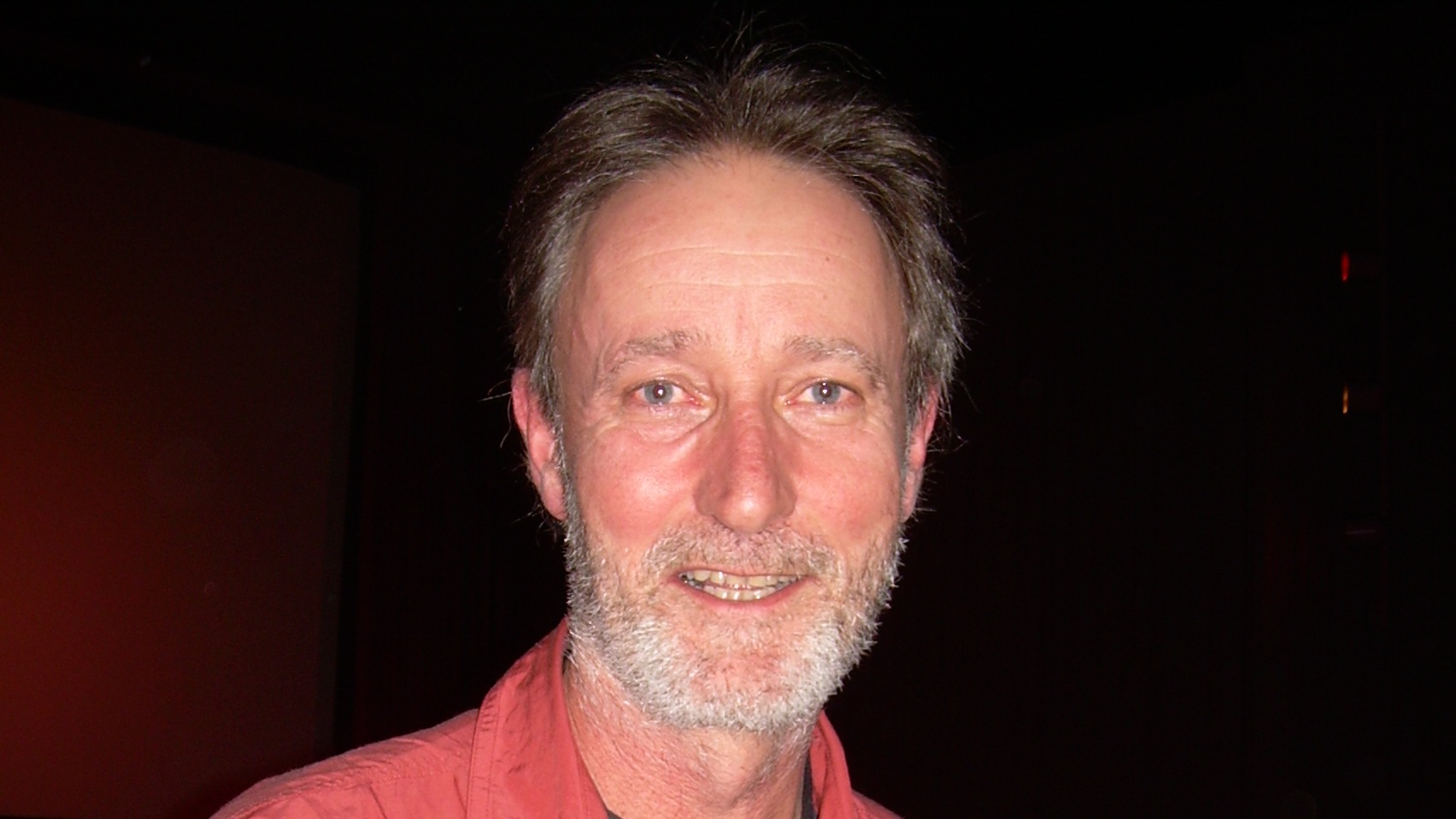

TOKYO – Rolf de Heer, the Australian director who chairs the competition jury of the 39th Tokyo International Film Festival, said on Tuesday 27 October that Tokyo’s new status as an official “A-Festival” of the International Federation of Film Producers’ Associations (FIAPF) makes little practical difference to an event most festivalgoers already counted in that tier. He spoke at the jury’s press conference at TOHO Cinemas Chanter in Hibiya, according to the festival’s own report and accounts in Variety, The Hollywood Reporter and Deadline.
Key facts
- Jury: Rolf de Heer (president), producers Alex Lo and Oh Jungwan, actor Watanabe Makiko and colourist Yov Moor
- Task: the Tokyo Grand Prix and the other competition prizes, chosen from 15 films representing 31 countries and regions
- Festival dates: 26 October–4 November 2026; awards and the closing film, Yeon Sang-ho’s Colony (Gunche), on 4 November
- FIAPF reform, 11 March 2026: one list of 49 accredited festivals in 29 countries, 17 of them classed as A-Festivals, Tokyo among them
The question put to the jury was whether the classification mattered or was a redundant system. De Heer said the label may help Tokyo secure films while changing little about the festival itself.
What de Heer said about the A-list
People who attend festivals had long treated Tokyo as an A-list festival, de Heer told reporters, so official confirmation changes the event very little. He allowed that such categories increasingly shape which films a festival can secure, and said the label may help Tokyo on that front. Pressed on whether the tiers were redundant, he said the label mattered “a great deal” to some and nothing to others, which he thought was right.
Oh Jungwan, the Korean producer who founded Bom Film Productions and is on a Tokyo jury for the second time, said audiences do not choose festivals by rank. Bom made Kim Jee-woon’s A Tale of Two Sisters (Janghwa, Hongryeon) and A Bittersweet Life (Dalkomhan insaeng).

What FIAPF changed in March
FIAPF published the changes on 11 March. In its biggest accreditation reform since 2007, it replaced its four-category system (competitive, specialised competitive, non-competitive, and documentary and short film festivals) with a single accredited list of 49 festivals across 29 countries. Six festivals joined the list. Within it, 17 events are designated A-Festivals: Cannes, Berlin, Venice, Locarno, San Sebastián, Karlovy Vary, Warsaw, Tallinn Black Nights, Annecy and Clermont-Ferrand in Europe; Toronto and Mar del Plata in the Americas; Cairo; and Shanghai, Busan, IFFI Goa and Tokyo in Asia. Variety noted that Busan and Toronto are in the A group for the first time.
Tokyo announced its designation on 13 March. The festival said FIAPF assessed it on its 2024 and 2025 editions, using quantitative and qualitative data supplied by each festival, and that FIAPF will now collect such data every year. The federation publishes the figures on its accredited festivals page.
Co-productions, and the jury’s own task
Asked why Australia and Japan rarely co-produce despite state support on both sides, de Heer said a Japanese film has no reason to shoot in Australia, or the reverse. Europe, he said, is good at co-productions assembled purely for financing; Australia is not. The ones that work, in his view, start from a story that needs both countries, and those will happen “if the scripts come and if they are right”.
Alex Lo, a producer based in New York and Tokyo, said producers in Europe, the US and elsewhere are seeking more co-productions, mainly because of the link to local public funding, Deadline reported. Lo said he had not noticed more co-productions in this year’s line-up, but several competition titles are multi-country productions. Qiu Jiongjiong’s Fuxi: Four Tales of Feasting is a Hong Kong, Taiwan, Japan, Saudi Arabia and Qatar production; Lisandro Alonso’s Double Freedom (La Libertad Doble) lists Chile, Argentina, Luxembourg, Germany and the UK; Jelena Maksimović’s Until the Day Ends (Do kraja dana) lists six countries.
The line-up also carries new films by Bahman Ghobadi, Milcho Manchevski and Garin Nugroho, and three Japanese titles. Across a programme of 204 films, the festival counts 35 world premieres, or 17%, against 22.5% last year; competition submissions fell to 1,892 from 1,970. Three titles in its Asian Future section have their first Tokyo screenings on Tuesday, after the section opened on Monday.
On the prospect of a split vote, de Heer said he expected the five to find their way to “a really interesting film that maybe some of us don’t like” rather than “some sort of lesser compromise film”. Yov Moor, a French colourist based in Tokyo for about two years, said juries rarely invite colourists.
Who is judging
De Heer, who lives in Tasmania, has directed “15 and a half” features, in his festival biography’s phrase. Bad Boy Bubby (1993) won the Special Jury Prize and the FIPRESCI Prize at Venice; Ten Canoes (2006) won the Un Certain Regard Special Jury Prize at Cannes; The Survival of Kindness (2022) took the FIPRESCI Prize at the Berlinale. That film screens in Tokyo’s Australia Spotlight, part of the World Focus section, programmed with the Australian Embassy in Japan. According to the festival, he was first invited to Tokyo for about four days for that screening and accepted the longer trip once the jury role was offered. Asked about his next film, he said he had not yet decided, according to The Hollywood Reporter.
TIFFCOM, the festival’s market, runs alongside it from Wednesday 28 to Friday 30 October.
Our reading
As de Heer said, a certificate does not change how Tokyo runs. The people it changes things for are producers and sellers deciding where to spend a world premiere, and Tokyo’s falling premiere share and submission count suggest why the label matters to the festival. Busan, now in the same tier, courts many of the same Asian titles earlier in the autumn, as our report on Busan’s ACFM set out.
His co-production remark is the more practical point for financiers. He described partnerships that follow a story, not a finance plan, and the Australian business news we have covered this month points the same way: producers building domestic routes to market, such as the new distributor Baby Jane. The test of the A-list label comes in 2027: whether Tokyo’s 40th edition reverses the fall in world premieres, and what the next round of FIAPF’s annual festival data shows about each festival’s reach.
Sources
- Tokyo International Film Festival, competition jury press conference report (Japanese), 27 October 2026
- Tokyo International Film Festival, 39th TIFF jury page
- Tokyo International Film Festival, “39th TIFF Announces Rolf de Heer as Jury President”, 24 September 2026
- Tokyo International Film Festival, “39th TIFF Announces Full Lineup”, 1 October 2026
- Tokyo International Film Festival, “Distinguished as ‘A-Festival’ by FIAPF”, 13 March 2026
- FIAPF, Accredited Festivals 2026 calendar, 11 March 2026
- FIAPF, accredited festivals
- Variety, 26 October 2026 (PT)
- The Hollywood Reporter, 26 October 2026 (PT)
- Deadline, 26 October 2026 (PT)
- Screen International, 11 March 2026