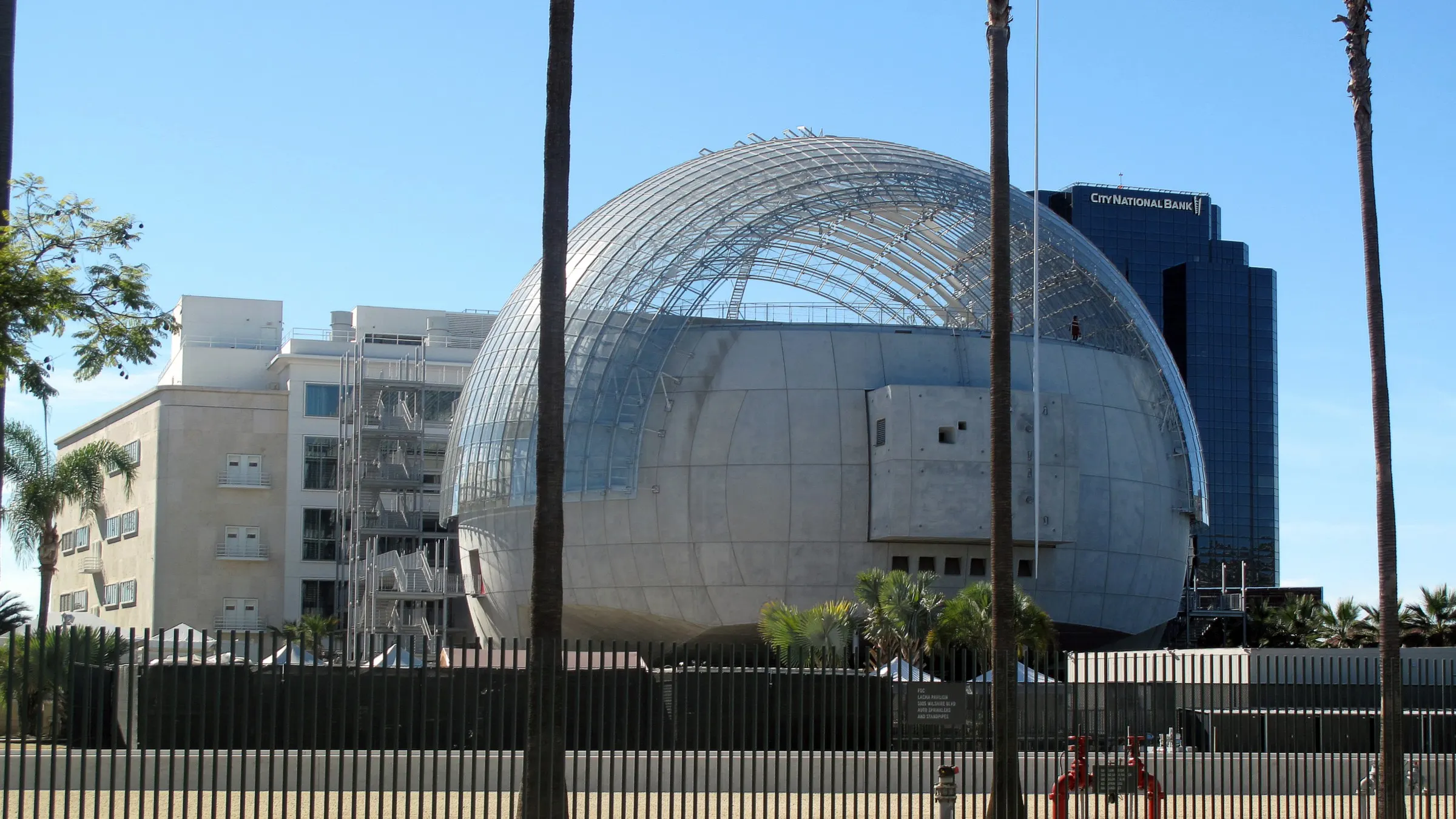

In one week, an awards body, a European festival and three productions set out different working limits on AI in feature films. The Academy of Motion Picture Arts and Sciences published a record list of 38 eligible animated features. Gods Don’t Give Gifts, described by IndieWire as made entirely with generative AI, is not on the list. Les Arcs has scheduled a case study on Michel Hazanavicius’s The Third Hand, which, Deadline reported, used AI in parts of development and post-production while shooting on traditional sets. David Fincher has described, as reported from a podcast interview, using AI to match actors’ mouth movements across takes on The Further Mis-Adventures of Cliff Booth. In Mumbai, Beta Builder is being shot as live action with AI augmentation.
Key facts
- On 23 November the Academy named a record 38 animated features as eligible for the 99th Oscars. Gods Don’t Give Gifts is not on the official list.
- Rule Seven defines animation as movement created “by any human means”, and requires animation of the main subjects in at least three-quarters of the running time, excluding credits, in a film of more than 40 minutes.
- The official site dates Les Arcs to 12-19 December, and the Industry Village to 12-15 December. The official press kit bills a case study on the “sur mesure” use of AI in The Third Hand. Deadline and Screen International say Hazanavicius and Digital District will present footage and explain their tools.
- Variety and Eiga.com report that, on The Big Picture podcast, Fincher said AI was used to “re-lip” a take so the best line reading and the best visual performance could be combined. FilmBunch has not independently heard the episode.
- Beta Builder, directed by Hridaye A. Nagpal for Abundantia AiOn and InVideo, began shooting in Mumbai on 29 October. The producers describe it as a hybrid of live action and AI-driven production.
Four cases, 23-28 November 2026, plus a shoot already under way The figures attached to these films do not describe the same use of AI The 38 and the 75% are official Academy figures. The 4-5 days and the 5% ADR share are as reported from a podcast interview this desk has not heard. The $10.5m figure is Deadline’s conversion of ₹100 crore. Sources: Academy press release and PDFs, 23 November 2026; Variety, 25 November 2026; Eiga.com, 28 November 2026; Deadline and Bollywood Hungama, both 29 October 2026. Compiled by FilmBunch.
These cases are not equivalent. The Academy’s rules set a threshold for what qualifies as an animated feature; they are not a general test of whether AI use is acceptable. The other three accounts describe specific, and different, production tasks. Those distinctions matter when a debate about AI risks collapsing eligibility, post-production tools and the generation of a film into a single question.
The Academy’s list and the human-means test
Gods Don’t Give Gifts, directed by the YouTuber Zack London, known as Gossip Goblin, and described by IndieWire as made entirely with generative AI, is not on the list. FilmBunch previously reported that the film is not on the list and published the full list. IndieWire reported that it understands the Animation Branch Executive Committee found the film did not meet the Academy’s definition of an animated film. Edward Saatchi of Fable Studios, a producer on the film, told IndieWire that he and London plan to appeal, and that a theatrical release was still planned for 4 December.
The finding, as reported, turns on who creates the movement on screen, not on whether AI was used at all. That leaves room for films that use AI tools inside a human-animated pipeline, and it is a different question from whether a live-action feature may use AI in post-production. The issue has already come up in other forms: Bruno Dumont said his science-fiction feature The End was made entirely with generative AI, and Toei has set its own rules for AI in production.
Les Arcs and The Third Hand
The official site puts the festival on 12-19 December. The Industry Village, its professional programme, is listed for 12-15 December. The official press kit, under the thread “L’IA, l’humain et le vivant”, lists a case study of the “sur mesure” (tailored) use of AI in Hazanavicius’s next film, La troisième main (The Third Hand).
Deadline reported on 26 November that Hazanavicius and the post-production company Digital District would present footage and explain their method and tools. That report, which Screen International later corroborated on the case study itself, also said AI was used in parts of development and post-production, and that the filming was done on conventional sets by ordinary means. The detail about the shoot is Deadline’s; Screen’s account does not repeat it. Cineuropa said Hazanavicius was “putting the finishing touches” to the film in post-production.
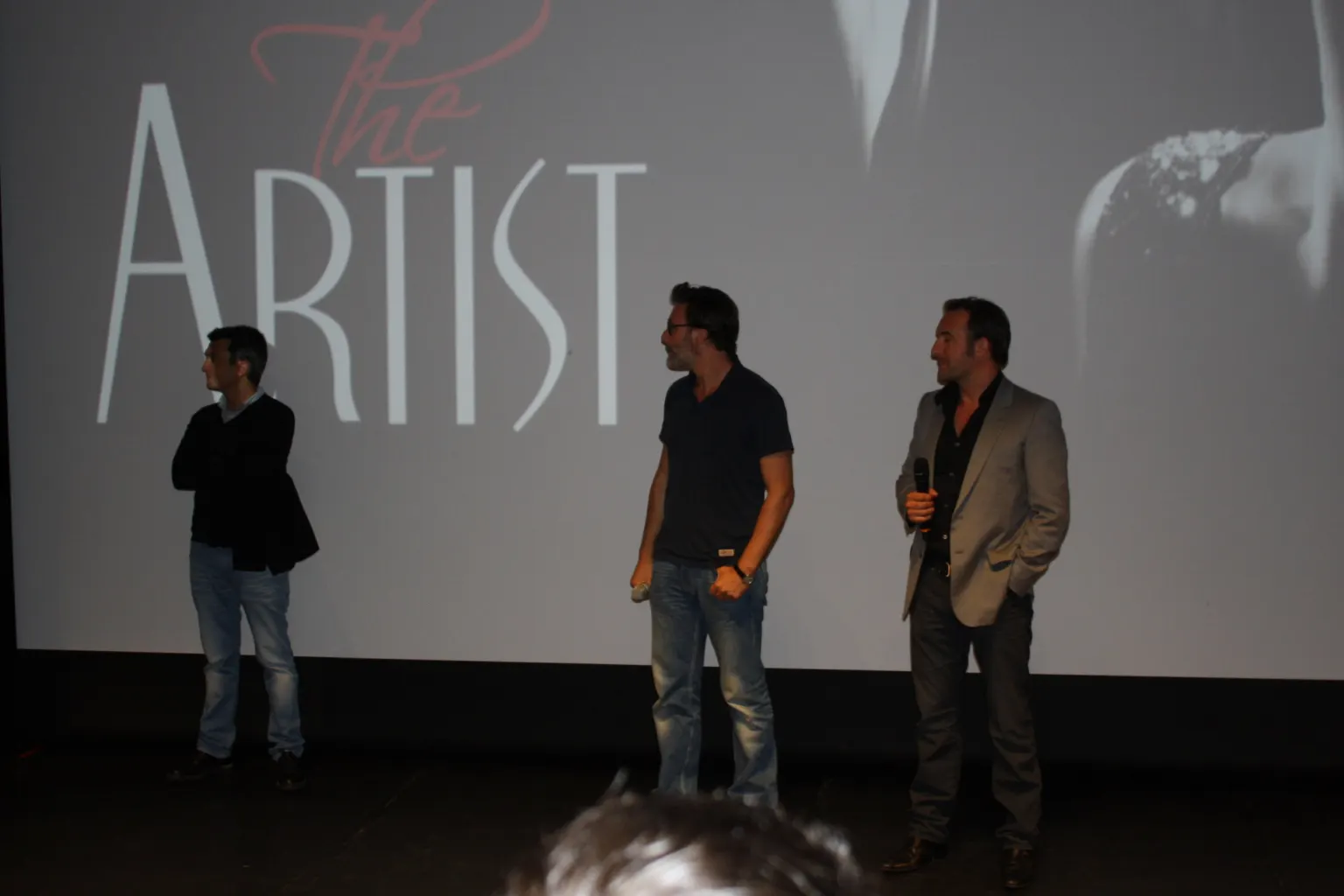
The film, a colour silent billed as a “fantastique”, is Hazanavicius’s second silent after The Artist. François Civil plays a First World War soldier who, after being wounded, comes round in a laboratory where a German hand has been attached to his abdomen. Bérénice Bejo, Rebecca Marder and Michel Fau are also in the cast. After the case study, David Cormand, a Member of the European Parliament, is due to discuss how Europe can set rules for AI while protecting creators’ rights and cultural sovereignty.
That account, if it holds, draws a boundary around the reported use: AI in some development and post-production work, not a shoot described as AI-generated. The Les Arcs session may supply the missing detail.

Fincher and lip-sync on Cliff Booth
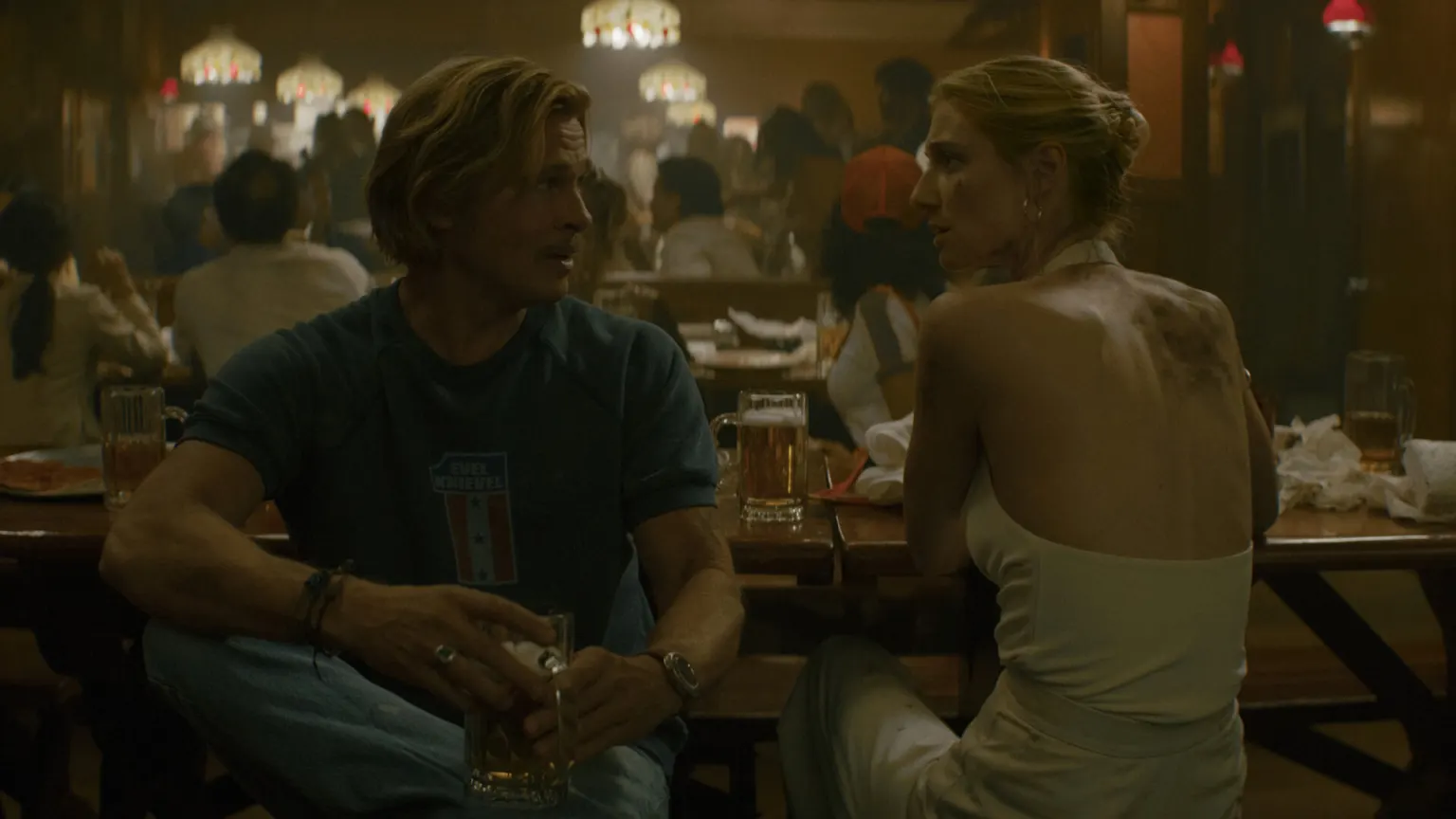
On 25 November, The Big Picture, a podcast from The Ringer hosted by Sean Fennessey, published an episode with Fincher as a guest. The official page lists a chapter on “the use of artificial intelligence in the movie” and Fincher’s interview later in the running time. There is no official transcript on that page, and FilmBunch has not independently heard the audio. The quotations below are as reported by Variety the same day and by Eiga.com on 28 November.
Variety said Fincher told Fennessey that, when the preferred delivery of a line and the preferred piece of acting were not in the same take, AI was used to bring the two together on screen. Variety quoted him using “re-lip” for that fix, and comparing the work to plasticine rather than marble, so that what looked best and what sounded best could both be kept. Eiga.com’s account is consistent on the method: if the favoured reading and the favoured performance sat in separate takes, the production laid one take’s sound over the other take’s picture and used AI so the lips fitted the borrowed audio.
Variety also wrote that actors spent four or five days re-recording dialogue, and that Fincher said only about 5% of the film used automated dialogue replacement, with the rest “all AI”. That wording, as Variety presents it, sits in a discussion of dialogue and ADR, not a claim that most of the film’s images were generated with AI. Both reports should be read as accounts of a dialogue workflow, not as a census of every shot.
There is a further limit. Variety said Fennessey noted that the interview was recorded before allegations about generative AI use on the film emerged, so he did not ask about other possible instances. Eiga.com likewise said the interview does not address specific shots raised after early screenings. Variety said Fincher and Netflix had not commented on those instances. Fincher also described a future workflow, still “based on real human beings”, in which a crew would shoot a master repeatedly and use AI to derive coverage. That was a possible approach, not an account of how Cliff Booth was made.
The film had a limited Imax run from 25 November and, Eiga.com reports, is due on Netflix on 23 December. Regal and Cinemark were earlier reported to have declined the Imax booking.
Beta Builder, a hybrid still being shot
On 29 October, Deadline reported that principal photography was beginning in Mumbai on Beta Builder, “the first AI-driven feature film from the pact between India’s Abundantia Entertainment and video tech firm InVideo”. Bollywood Hungama, the same day, said the film “went on floors in Mumbai on October 29, 2026, and will combine live-action filming with generative AI technology”. Hridaye A. Nagpal, InVideo’s global creative lead, is directing. Mayur More and Ashlesha Thakur were named as the leads.
Deadline said Abundantia is producing through its AiOn division and that the companies had partnered, in a collaboration Hungama dates to February 2026, on a slate of five AI-powered films over three years, with a ₹100 crore ($10.5m) commitment. The dollar figure is Deadline’s conversion. Nagpal, in a statement published by both outlets, called the film “our bet on that future, with a live-action shoot and AI working side by side”.
The story follows Jai, a self-taught architect from Dharavi who enters a virtual-reality world. On 28 November, The Hollywood Reporter India reported, in an exclusive, that Koël Purie Rinchet had joined the shoot. It described the sets as blending “traditional live-action production with AI-powered augmentation”, and Rinchet described a minimal “grey box” with eight high-velocity cameras. Those details are so far reported only by THR India. How much of the finished film will be generated, augmented or only cleaned up with AI has not been independently verified.
These cases do not add up to one trend
The temptation is to treat the week as evidence of a single shift. The record does not support that. These are disclosed cases, chosen and described by the people putting them forward, or, in the Academy’s case, by an official eligibility list. Undisclosed use is not counted. Lip-sync or VFX clean-up is a long way from generating a film, and a hybrid still being shot is not the same as a finished work already considered under awards eligibility rules.
“No rules” is the wrong frame as well. The Academy already has a written test for animation, and, IndieWire reported, recent changes that limit acting categories to human performances given with consent and require screenplays to be human-authored. In the EU, Article 50 of the AI Act already imposes transparency duties on providers of systems that generate or manipulate synthetic audio, image, video or text, and on deployers of “deep fakes”, with a narrower duty for artistic or fictional works. The Commission’s FAQ says outputs used only in a closed-loop film-production workflow need not be marked unless they are the final output, and that AI used for effects or technical pre- and post-processing in standard movie production is “not likely” to be treated as a deep fake. The rules exist; they do not require a public label for every assistive pass. Guild agreements have started to set terms too: SAG-AFTRA’s television animation contracts, ratified in October, include AI provisions.
What became public, and what is still ahead The announcements landed in one week; the tests of them come in December Dates of official lists, reported interviews and scheduled screenings or sessions 29 Oct 2026 Beta Builder starts shooting Principal photography begins in Mumbai on the first film in the Abundantia-InVideo pact, described as live action with AI-driven production 23 Nov 2026 Academy list of 38 The Academy publishes a record list of eligible animated features. Gods Don’t Give Gifts is not on it 25 Nov 2026 Fincher on The Big Picture The Ringer publishes the episode. Variety reports Fincher’s account of AI lip-sync and limited studio ADR. Cliff Booth opens a limited Imax run the same day 26 Nov 2026 Les Arcs case study billed Deadline reports that Hazanavicius and Digital District will present footage of The Third Hand at Les Arcs. The festival’s own press kit already listed the case study 28 Nov 2026 Eiga.com and THR India Eiga.com reports the same podcast remarks in Japanese. THR India reports that Koël Purie Rinchet has joined the Beta Builder shoot 4 Dec 2026 (ahead) Planned US release, Gods Don’t Give Gifts The date IndieWire said the producers still planned for an awards-qualifying theatrical run. The producers also told IndieWire they plan to appeal the reported ruling 12-15 Dec 2026 (ahead) Les Arcs Industry Village Scheduled case study on the tailored use of AI in The Third Hand, then a session with MEP David Cormand. The official dates continue to 19 December 23 Dec 2026 (ahead) Cliff Booth on Netflix Reported streaming date, and the point Fincher, as quoted by Variety, said remaining shots would be “getting there” by Future dates are as scheduled or reported on 28 November 2026 and may change. The podcast quotations are as reported; FilmBunch has not heard the episode. Sources: Academy; Les Arcs; The Ringer; Variety; Eiga.com; Deadline; The Hollywood Reporter India; IndieWire. Compiled by FilmBunch.See the data
Date Event 29 Oct 2026 Beta Builder starts shooting: Principal photography begins in Mumbai on the first film in the Abundantia-InVideo pact, described as live action with AI-driven production 23 Nov 2026 Academy list of 38: The Academy publishes a record list of eligible animated features. Gods Don’t Give Gifts is not on it 25 Nov 2026 Fincher on The Big Picture: The Ringer publishes the episode. Variety reports Fincher’s account of AI lip-sync and limited studio ADR. Cliff Booth opens a limited Imax run the same day 26 Nov 2026 Les Arcs case study billed: Deadline reports that Hazanavicius and Digital District will present footage of The Third Hand at Les Arcs. The festival’s own press kit already listed the case study 28 Nov 2026 Eiga.com and THR India: Eiga.com reports the same podcast remarks in Japanese. THR India reports that Koël Purie Rinchet has joined the Beta Builder shoot 4 Dec 2026 (ahead) Planned US release, Gods Don’t Give Gifts: The date IndieWire said the producers still planned for an awards-qualifying theatrical run. The producers also told IndieWire they plan to appeal the reported ruling 12-15 Dec 2026 (ahead) Les Arcs Industry Village: Scheduled case study on the tailored use of AI in The Third Hand, then a session with MEP David Cormand. The official dates continue to 19 December 23 Dec 2026 (ahead) Cliff Booth on Netflix: Reported streaming date, and the point Fincher, as quoted by Variety, said remaining shots would be “getting there” by
Our reading
Our finding: the week does not show one industry line on AI in features. It shows four different limits, only some of them written down. The Academy has a written test for animation and has published a record eligibility list of 38 animated features, which does not include Gods Don’t Give Gifts. A European festival has scheduled a case study of disclosed use in development and post, on a film whose shoot was described, in one trade report, as traditional. A director has, as reported, described AI as a way to combine two human takes, not to invent a performance. A Mumbai production is still shooting a hybrid. Treating those as a single trend, or as proof that no rules exist, overstates the evidence.
Next milestone: the Les Arcs case study, during the Industry Village from 12 to 15 December, is the first of these cases in which the production has promised to show footage and explain its tools. For Cliff Booth, the test is what appears on Netflix on 23 December. For Gods Don’t Give Gifts, it is whether an appeal is lodged and whether the 4 December release goes ahead. For Beta Builder, it is a finished film, not a description of the set.
Sources
- Academy of Motion Picture Arts and Sciences, Animated, documentary and international feature films eligible for 99th Oscars announced, 23 November 2026
- Academy of Motion Picture Arts and Sciences, 99th Academy Awards: eligible for consideration in the Animated Feature Film category (PDF)
- Academy of Motion Picture Arts and Sciences, Rule Seven: special rules for the Animated Feature Film award, 99th Awards (PDF)
- Les Arcs Film Festival, official site, festival dates 12-19 December 2026 and Industry Village page
- Les Arcs Film Festival, 2026 press kit (dossier de presse)
- Deadline, Michel Hazanavicius to present exclusive footage of The Third Hand in an AI case study at Les Arcs, 26 November 2026
- Screen International, Les Arcs Talent Village ambassador Michel Hazanavicius to present exclusive footage of AI-assisted The Third Hand, 27 November 2026
- Cineuropa, Michel Hazanavicius will mentor Les Arcs Talent Village, 26 November 2026
- The Ringer, The Big Picture: The Further Mis-Adventures of Cliff Booth, with David Fincher, 25 November 2026
- Variety, David Fincher explains AI use in Cliff Booth, 25 November 2026
- Eiga.com, Fincher discusses how AI was used on Cliff Booth, 28 November 2026
- The Hollywood Reporter India, Exclusive: Koël Purie Rinchet joins AI-driven hybrid film Beta Builder in Mumbai, 28 November 2026
- Deadline, Mayur More and Ashlesha Thakur to lead Beta Builder, debut hybrid AI feature from Abundantia AiOn and InVideo, 29 October 2026
- Bollywood Hungama, Abundantia Entertainment and invideo begin production on AI-assisted film Beta Builder, 29 October 2026
- IndieWire, AI film Gods Don’t Give Gifts deemed ineligible by Academy for best animated feature Oscar, 23 November 2026
- European Commission AI Act Service Desk, Article 50 of Regulation (EU) 2024/1689
- European Commission, Transparency obligations under Article 50 of the AI Act (FAQ)
- FilmBunch, AI film Gods Don’t Give Gifts is not on the Academy’s record list of 38 animated features, 24 November 2026