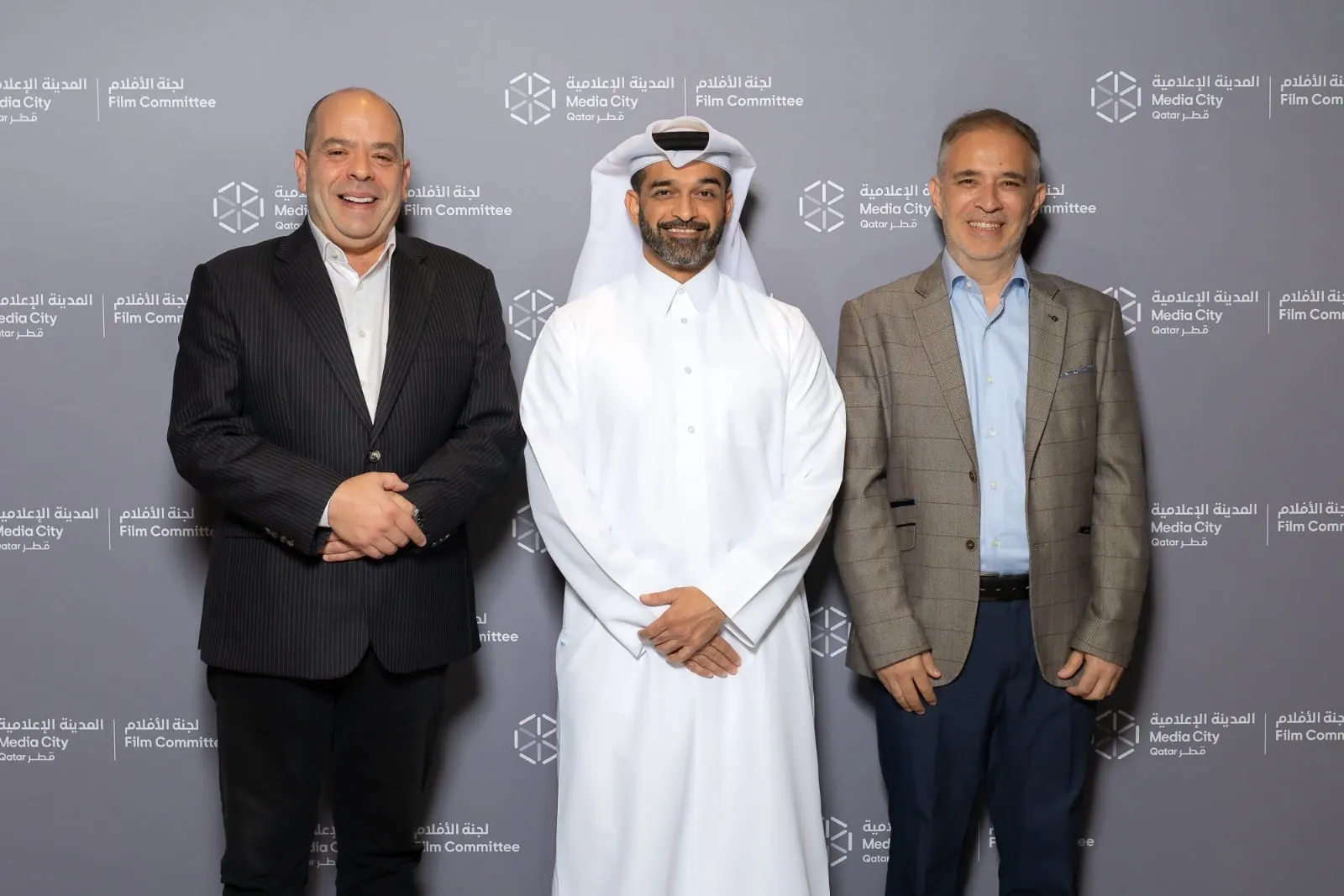
The Gulf film rebates offered by Saudi Arabia, Abu Dhabi and Qatar now all have ceilings of 50% or more. The Saudi Film Commission’s rebate goes up to 60% of eligible spending in the kingdom since May 2026, Abu Dhabi’s reaches 50% since January 2025, and Qatar’s scheme, launched in November 2025, pays 40% plus up to 10%. The three are built differently, and the differences in base rates, uplift rules, caps and eligible costs change what a production can expect to receive.
The top rates have moved together as the three compete for the same international and regional shoots, so for a producer the choice now turns on how each scheme reaches its maximum.
Key facts
- Saudi Arabia: up to 60% of eligible spending in the kingdom since 15 May 2026, up from 40%; minimum SAR750,000 ($200,000) for a feature (Saudi Film Commission)
- Abu Dhabi: 35% base plus a points-based uplift of 2.5 to 15 percentage points, to a maximum of 50%, from 1 January 2025; feature cap raised to $10m (Abu Dhabi Media Office)
- Qatar: 40% base plus up to 10%; up to 25% of qualifying spending may be incurred in approved partner countries (Film Committee at Media City Qatar)
- Qatar’s Film Committee announced five agreements at Doha Industry Days, 19 to 21 November
The three schemes side by side
| Saudi Arabia | Abu Dhabi | Qatar | |
|---|---|---|---|
| Base rate | Not published | 35% | 40% |
| Maximum | Up to 60% | 50% | 50% |
| How the uplift works | Set per project; criteria not published | Points: 10–14 points add 2.5 points, 85 or more add 15 | Up to 10 points, subject to qualifying criteria |
| Cap | No budget or annual cap disclosed | Feature qualifying spend cap $10m | Not stated in the releases we read |
| Minimum spend | SAR750,000 ($200,000) feature; SAR187,000 ($50,000) documentary or animation | Not stated in the announcement | Not stated in the releases we read |
| Spending abroad | Excluded unless the terms say otherwise | In-market costs only | Up to 25% in approved partner countries |
| Payment | Faster disbursement promised | 30 business days after final certificate | Not stated in the releases we read |
Saudi Arabia: up to 60%, set project by project
The Saudi Film Commission raised its cash rebate from 40% to as much as 60% on 15 May, announcing the change at the Cannes Film Festival. The rebate was first introduced at 40% at Cannes in 2022, Variety reported. The commission also promised faster disbursement and pointed to its new guide to audit and payment procedures, which its chief executive, Abdullah bin Nasser Al-Qahtani, said was meant to give filmmakers “greater clarity”. It also announced financing options with the Cultural Development Fund, The Hollywood Reporter reported.
The commission’s incentive page sets the entry terms. A feature needs SAR750,000 ($200,000) of eligible spending, and a feature documentary or animation SAR187,000 ($50,000). A production needs at least five days with the main unit, a licensed Saudi production company or co-production partner, proof of financing, and an incentive agreement signed before filming starts.
Eligible costs are broad. They include above-the-line fees for the producer, director and lead cast, crew and extras’ wages, location and equipment rental, set construction, accommodation, travel to and within Saudi Arabia, and post-production. Spending outside the kingdom, or with suppliers based outside it, does not count unless the terms say otherwise.
The page gives 60% as a ceiling. It does not publish a base rate or an uplift table, so the rate a production receives is set when its application is assessed. The commission has not disclosed a total budget or an annual cap.
The domestic market is growing. Saudi cinemas took SAR920.8m ($246m) in 2025, up 9%, and 11 Saudi films took SAR122.6m ($32.7m), more than double the 2024 total, according to the Film Commission’s full-year figures.
, one of three Saudi films in the kingdom’s top six of 2025. Image from the <a href=\\"https://en.saudifilmfestival.org/about-9\\">Saudi Film Festival film page</a>. Courtesy of the Saudi Film Festival") Courtesy of the Saudi Film Festival
Abu Dhabi: a 35% base and a points table
Abu Dhabi has offered a rebate since 2013. Its film commission raised the base rate from 30% to 35% in October 2024 and added a points-based uplift from 1 January 2025, the Abu Dhabi Media Office said. A production scoring 10 to 14 points gets 2.5 percentage points on top of the base. One scoring 85 or more gets 15, for a total of 50% of in-market production and post-production costs.
Points come from Emirati cast and crew, UAE history and culture on screen, full post-production in Abu Dhabi, or shooting a feature’s main unit or a whole series there. The uplift also requires the commission’s “full and absolute approval”.
The same changes doubled the qualifying expenditure cap for features from $5m to $10m and opened the rebate to reality TV, game shows, short films and animation, alongside features, series and commercials. The interim certificate now lasts 90 days instead of 60, and payment is due within 30 business days of the final certificate, down from 60. Mohamed Dobay, acting director general of the Creative Media Authority, said independent research showed every dirham paid returned more than three to the economy; the announcement gave no total for rebates paid.
Gulf film cash rebates, published rates, November 2026 Published base and maximum rates of the three Gulf film rebates Share of qualifying local spending. Saudi Arabia publishes a maximum only. Published base ratePublished maximum Saudi Arabiasince May 2026 Abu Dhabisince January 2025 Qatarsince November 2025 Saudi Arabia is shown as a single point because the commission publishes no base rate. Maximum rates depend on points, local crew and approvals; caps and eligible costs differ by scheme. Sources: Saudi Film Commission; Abu Dhabi Media Office; Film Committee at Media City Qatar. Compiled by FilmBunch.See the data
Scheme Published base rate Published maximum Saudi Arabia (since May 2026) No base published 60% Abu Dhabi (since January 2025) 35% 50% Qatar (since November 2025) 40% 50%
Qatar: 40% plus up to 10%, with partner-country spending
Qatar’s Screen Production Incentive was launched at the Doha Film Festival in November 2025. It pays a 40% base rebate with an uplift of up to 10%, “subject to qualifying criteria”, the Film Committee at Media City Qatar said on 19 November. Three major productions are using it, one of them for a global streaming platform, and together they have created more than 500 local jobs, the committee said. It has named one: C4R, a feature with Noomi Rapace attached, filming in Doha this month.
The scheme’s distinctive rule concerns spending abroad. Up to 25% of a production’s qualifying spending can be incurred in approved partner countries, provided the project stays financially, legally and creatively tied to Qatar and finishes post-production there.
 Photo: Jean-Marc Gaudreau / Wikimedia Commons, CC BY-SA 4.0

What Qatar announced at Doha Industry Days
The Film Committee announced five agreements between 19 and 21 November:
- Egypt and Jordan: memoranda with the Egypt Film Commission, for three years, and the Royal Film Commission – Jordan, for one, setting frameworks for spending there to count under the 25% partner-country rule and covering locations, permits, training and promotion (our report)
- Yango Play: a memorandum with the regional streamer to explore Arabic-language originals, co-production and licensing, including possible digital streaming rights to Elzam, a Katara Studios documentary series
- Shasha: a “multi-million-dollar, three-year commitment” to co-finance at least four Arabic productions with the Gulf streaming platform, chosen case by case, with Blue House the first project under consideration
- Watermelon Pictures: a slate developed by the US distributor, to shoot mainly in Qatar or as Qatari co-productions, Variety and Screen International reported
The announcements did not give amounts, budgets or titles beyond Blue House and Elzam.
How the rates changed, 2022 to 2026
Gulf film cash rebates, 2022–2026 Changes to the Saudi, Abu Dhabi and Qatar film rebates, 2022 to 2026 Published rate changes, and Qatar’s agreements this week. May 2022 Saudi Arabia: up to 40% Rebate introduced at the Cannes Film Festival Oct 2024 Abu Dhabi: base 30% to 35% Base rate raised by the Abu Dhabi Film Commission 1 Jan 2025 Abu Dhabi: up to 50% Points-based uplift of 2.5 to 15 points; feature cap $10m; payment within 30 business days of the final certificate Nov 2025 Qatar: 40% plus up to 10% Qatar Screen Production Incentive launched at the Doha Film Festival 15 May 2026 Saudi Arabia: up to 60% Rate raised from 40%, with faster disbursement promised 19–21 Nov 2026 Qatar: 5 agreements Egypt, Jordan, Yango Play, Shasha and Watermelon Pictures Published rates only. Uplifts depend on points, local crew and approvals. Sources: Saudi Film Commission; Abu Dhabi Media Office; Film Committee at Media City Qatar; Variety. Compiled by FilmBunch.See the data
Date Event May 2022 Saudi Arabia: up to 40%: Rebate introduced at the Cannes Film Festival Oct 2024 Abu Dhabi: base 30% to 35%: Base rate raised by the Abu Dhabi Film Commission 1 Jan 2025 Abu Dhabi: up to 50%: Points-based uplift of 2.5 to 15 points; feature cap $10m; payment within 30 business days of the final certificate Nov 2025 Qatar: 40% plus up to 10%: Qatar Screen Production Incentive launched at the Doha Film Festival 15 May 2026 Saudi Arabia: up to 60%: Rate raised from 40%, with faster disbursement promised 19–21 Nov 2026 Qatar: 5 agreements: Egypt, Jordan, Yango Play, Shasha and Watermelon Pictures
In four years the highest published rate in the region rose from Saudi Arabia’s 40% to its 60%, and all three schemes now reach 50% or more. Abu Dhabi moved first, in two steps over three months; Qatar entered at 50%; Saudi Arabia then went to 60%.
Gulf film cash rebates, published terms, November 2026 One published term from each Gulf film rebate Different terms, shown side by side; not comparable one to one. Sources: Saudi Film Commission; Abu Dhabi Media Office; Film Committee at Media City Qatar. Compiled by FilmBunch.
What the changes mean for producers
Why the top rates have moved together. Each government says its production incentive is meant to win shoots from abroad. Qatar introduced its incentive “to make Qatar more competitive as an international filming destination”, the Film Committee said on 19 November. When Abu Dhabi added the uplift, its Creative Media Authority called the film and TV production industry “a strategic differentiator for the emirate”, and the head of its film commission said interest from around the world had surged after the base rate rose. The Saudi commission’s chief executive said the new rate extended the kingdom’s vision to “build a sustainable film sector”. With three neighbours pitching to the same producers, each rise has set a new reference point: Abu Dhabi reached 50% in January 2025, Qatar launched with a 50% maximum that November, and Saudi Arabia moved to 60% six months later.
There is a domestic case too. Saudi Arabia’s growing box office, with 18.8 million tickets sold in 2025, gives local producers a home market to recoup in. Qatar’s committee says it is building post-production capacity for “a longer-term production pipeline”.
How the structures sort productions. Side by side, the published terms suit different projects.
- A production that needs a fixed number for its finance plan can budget on Abu Dhabi’s 35% or Qatar’s 40% before any uplift is approved. In Saudi Arabia the rate is fixed in the incentive agreement, which must be signed before filming.
- A large-budget feature will look first at caps. Abu Dhabi publishes a $10m limit on a feature’s qualifying spend; Saudi Arabia has disclosed no per-project cap.
- A smaller film, documentary or animation has a published entry point in Saudi Arabia: SAR750,000 ($200,000) for a feature and SAR187,000 ($50,000) for documentary or animation.
- A shoot spread across several countries fits Qatar’s rule allowing up to 25% of qualifying spending in Egypt or Jordan, if post-production is done in Doha. Saudi Arabia excludes suppliers outside the kingdom, and Abu Dhabi rebates in-market costs.
- A production with tight cash flow can plan on Abu Dhabi’s 30-business-day payment target. Saudi Arabia has promised faster disbursement and added financing options with the Cultural Development Fund.
What Qatar’s agreements describe. The five agreements cover three different links in the chain. The memoranda with Egypt and Jordan extend where a Qatar-based production can spend. The deals with Shasha and Yango Play bring in streamers as co-financiers and buyers of Arabic originals, and Shasha intends to set up an official presence in Doha. The Watermelon Pictures agreement ties a distributor’s development slate to Qatari production. They follow the committee’s work over the past year with Sony Pictures, Neon and Miramax, which it said would now focus on “turning those relationships into projects”. Taken together, they describe a strategy built on partners that supply projects and audiences, with the rebate as the reason to shoot in Qatar.
Our reading
Our finding: the three Gulf rebates now have similar maximum rates and different structures. Abu Dhabi publishes a base rate, a points table, a cap and a payment timeline. Qatar publishes a base rate, an uplift ceiling and a partner-country rule. Saudi Arabia publishes a maximum, a minimum spend and a list of eligible costs, with the rate set per project. None of the three has published a total for rebates paid, and Qatar’s agreements this week were announced without amounts.
Next milestone: project details from the Watermelon Pictures agreement will follow, Screen International reported, and Blue House is the first project under consideration in the Shasha deal. Further guidance from the Saudi Film Commission on how rates are assessed, and any published payout figures from the three schemes, would add to this comparison.
How we compiled this
Rates and terms come from each scheme’s own page or statement: film.sa and the Saudi commission’s 15 May 2026 statement as reported by Variety and The Hollywood Reporter; the Abu Dhabi Media Office, 30 December 2024; and the Film Committee’s releases of 19 and 20 November 2026. “Not stated” means the term does not appear in the official documents we read. The five agreements are the committee’s announcements at Doha Industry Days, with Watermelon Pictures as reported by Variety and Screen International. Riyals are converted at the fixed rate of SAR3.75 to $1.
Sources
- Saudi Film Commission, Incentive Program (film.sa)
- Saudi Press Agency, Film Commission raises film incentives to 60% to support film production in Saudi Arabia, May 2026
- Variety, Saudi Arabia raises film and TV production rebate to 60% and streamlines red tape, 15 May 2026
- The Hollywood Reporter, Saudi Arabia jacks up film incentives to 60 percent, 15 May 2026
- Abu Dhabi Media Office, Abu Dhabi Film Commission announces multifaceted enhancements to the 35% rebate programme, 30 December 2024
- Doha Film Institute, Doha Industry Days 2026 opens: Film Committee at Media City Qatar marks a year of global momentum, 19 November 2026
- Doha Film Institute, Film Committee at Media City Qatar signs memoranda of understanding with partners in Egypt and Jordan, 20 November 2026
- Doha Film Institute, Film Committee at Media City Qatar and Shasha sign strategic partnership to co-finance Arabic premium content, 20 November 2026
- Doha Film Institute, Film Committee at Media City Qatar and Yango Play partner to explore new opportunities for Arabic-language originals, 19 November 2026
- Variety, Qatar’s Film Committee and Watermelon Pictures forge partnership to co-produce a slate of films from the ‘Global South’, 21 November 2026
- Screen International, Watermelon Pictures partners with Qatar’s Film Committee on Global South film slate, 21 November 2026
- Saudi Film Commission, Saudi Box Office Report 2025 (via FilmBunch, 29 October 2026)