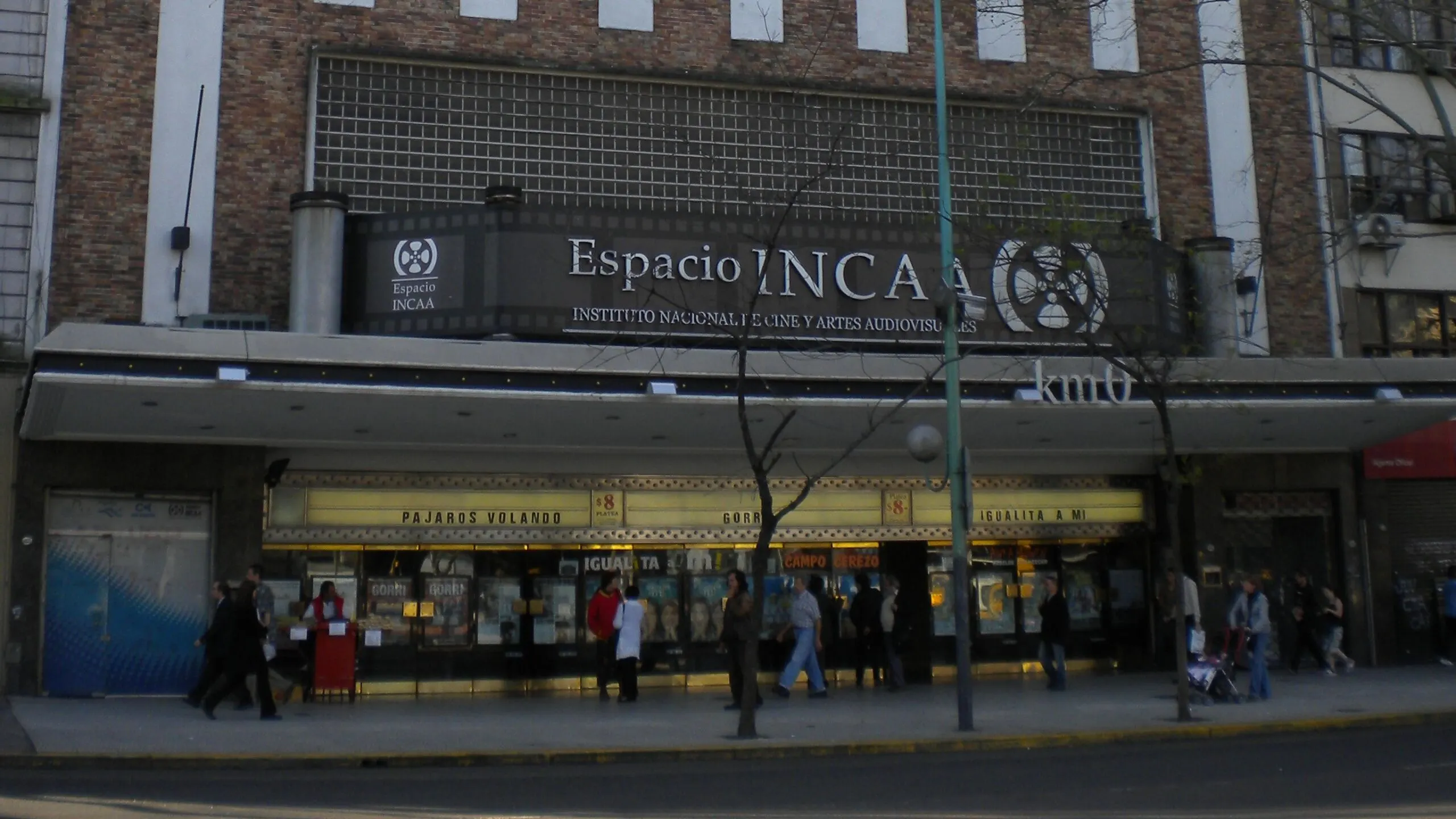

Argentina’s film institute, the Instituto Nacional de Cine y Artes Audiovisuales (INCAA), would receive ARS68.8bn ($43.5m) in income and spend ARS69.2bn ($44m) in 2027 under the government’s 2027 budget bill, according to the Ministry of Economy’s annex for state bodies outside the central administration. It is the last budget year before the law removes the institute’s own film taxes on 1 January 2028.
The institute’s own accounts for 2025, published on its transparency page, show that it left most of last year’s money unspent. INCAA took in ARS61.0bn in current income in 2025 and spent ARS26.3bn, or 43%, by FilmBunch’s calculation. Transfers, the line that records payments to outside recipients such as production subsidies, came to ARS6.6bn, about 11% of income and roughly half of what the institute paid in salaries (ARS12.3bn). It ended the year with a surplus of ARS34.6bn and added ARS34.1bn to its cash holdings.
Key facts
- 2027 budget bill: INCAA income ARS68.8bn ($43.5m), spending ARS69.2bn ($44m), transfers ARS41.0bn ($25.9m)
- 2025 accounts: income ARS61.0bn, spending ARS26.3bn (43%), transfers ARS6.6bn, surplus ARS34.6bn
- From 1 January 2028, Law 27.802 (article 214) repeals INCAA’s ticket, video and broadcast levies; it will be funded only by the yearly budget
- The Chamber of Deputies is due to vote on the 2027 budget on 25 November
- Filmmakers are staging “24 horas por el cine argentino”, 36 free screenings from 20 to 23 November, from Jujuy to Ushuaia and one in Mexico City
What the 2027 bill gives INCAA
The bill’s annex puts INCAA’s tax income for 2027 at ARS64.2bn, 93% of its total income, with ARS3.3bn from interest. On the spending side it plans ARS41.0bn in transfers, ARS11.9bn in salaries, ARS13.9bn in goods and services and ARS2.4bn in capital investment. It projects a small deficit of ARS408m, to be met from the institute’s financial reserves.
The 2026 budget law, number 27.798, gave the institute ARS47.7bn in income and ARS22.9bn in transfers, according to the annex INCAA publishes. All figures are in nominal pesos, and Argentina’s inflation makes year-on-year comparisons misleading, so FilmBunch has not converted the 2025 and 2026 figures to dollars.
INCAA’s tax income comes from a 10% levy on cinema tickets, a 10% levy on the sale and rental of recorded video and a 25% share of the broadcasting levy, according to the institute’s own description of its funding. Article 214 of Law 27.802, the labour modernisation law, repeals those three sources from 1 January 2028. After that date, the article says, INCAA “will be financed exclusively” by what each year’s national budget assigns it.
The politics
La Nación reported on 17 November that the government had secured a majority committee report on the bill in the Chamber of Deputies’ budget committee, with 27 signatures, after concessions to allied blocs. The floor vote is scheduled for 25 November. The Senate would then have to pass it.
In October, the Espacio Audiovisual Nacional, a group of industry associations, asked for articles 214 and 215 of the labour law to be repealed, EscribiendoCine reported. A cross-party bill filed in the Chamber on 26 October, file 5782-D-2026, seeks to protect the earmarked funding for film and public broadcasting by amending the labour law and the film law. It has been sent to the labour, culture and budget committees and has no committee report yet.
This weekend, directors and film workers are holding “24 horas por el cine argentino”, a 24-hour YouTube broadcast from 19:00 on 20 November with free screenings in cinemas, film clubs, libraries and a gym. The programme lists 36 screenings from Jujuy to Ushuaia, with one stop abroad in Mexico City, according to Cineteca. “There is an attack on culture, on our stories, on our regions,” the director Ana García Blaya, one of the organisers, told Ámbito.
Elsewhere in Latin America, Guatemala has passed its first film law, with a fund attached, and Argentine producers also compete for regional co-production money through Ibermedia. At home, INCAA also organises the Mar del Plata festival.
Our reading
The 2025 accounts matter more than the 2027 headline figure. An institute that collected ARS61bn and paid out ARS6.6bn in transfers built a large cash cushion, and producers will ask whether the ARS41bn planned for 2027 transfers is actually paid. From 2028, the money will depend on Congress each year rather than on cinema tickets and broadcast levies.
The next evidence is the Deputies vote on 25 November, any change to the INCAA line in the Senate, INCAA’s 2026 execution figures when they are published, and whether bill 5782-D-2026 reaches the floor.
Sources
- Ministerio de Economía, Presupuesto 2027, Planilla Anexa al Art. 58, Otros entes del Estado nacional (INCAA column)
- INCAA, Presupuesto Nacional 2026, Ley 27.798, Planilla Anexa al Art. 60, Otros entes (xlsx)
- INCAA, Ejecución presupuestaria al 31 de diciembre de 2025, cuenta AIF base devengado (xlsx)
- INCAA, Transparencia: Presupuestos
- INCAA, ¿Cómo nos financiamos?
- Ley 27.802 de Modernización Laboral, artículo 214 (official text)
- Expediente 5782-D-2026, Cámara de Diputados bill record (filed 26 October 2026; committees: Legislación del Trabajo, Cultura, Presupuesto y Hacienda), via Dequesetrata
- La Nación, Presupuesto 2027: el Gobierno obtuvo el aval para debatir el proyecto en Diputados, 17 November 2026
- EscribiendoCine, Financiamiento del INCAA: el EAN exige derogar dos artículos de la reforma laboral, 19 October 2026
- Ámbito, 24 horas por el Cine Argentino, 19 November 2026
- Cineteca, 24 horas por el cine argentino: programación y sedes, 20 November 2026
- xe.com mid-market rate, 20 November 2026 (USD 1 = ARS1,579.69)