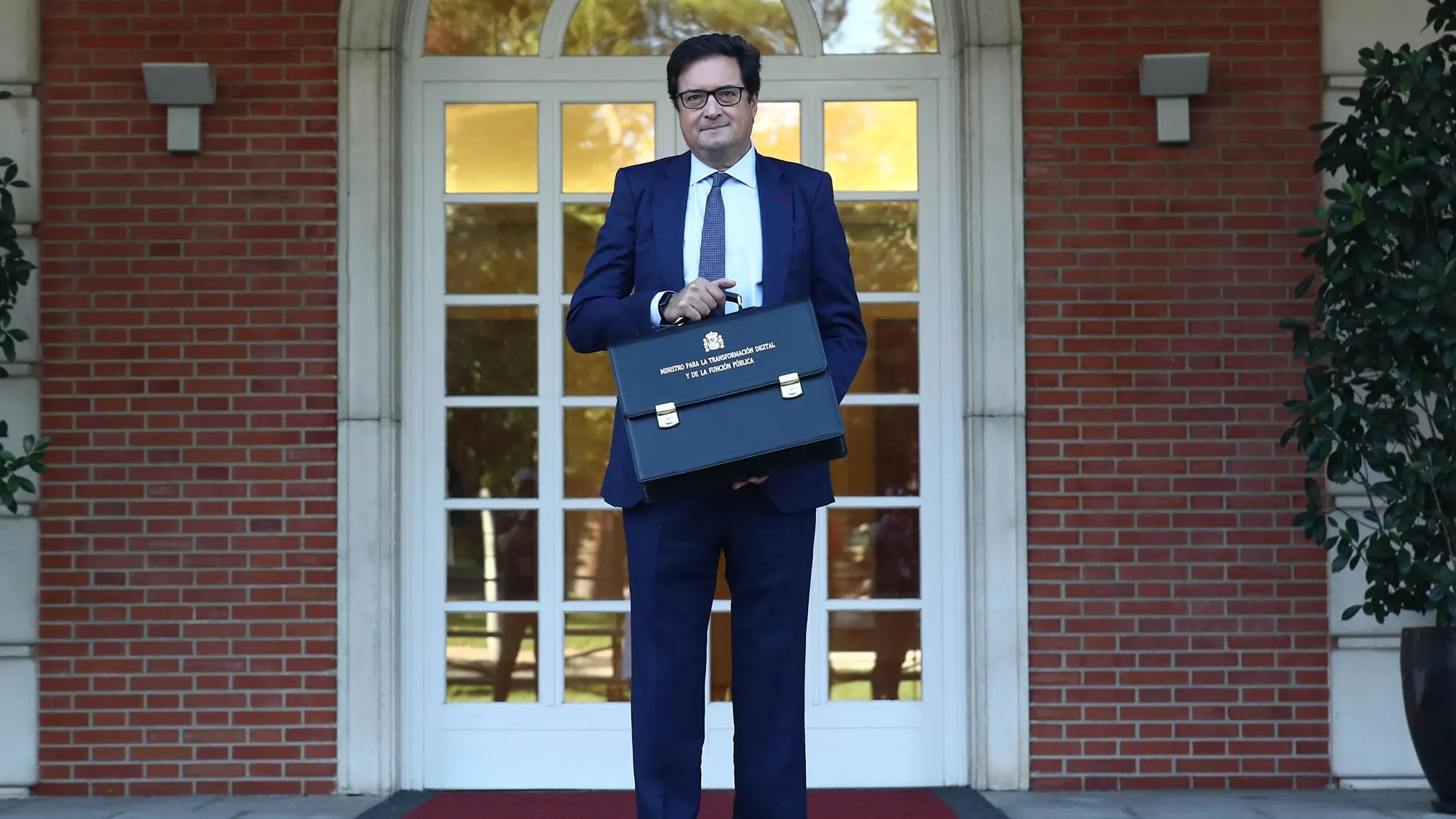

Spain’s Council of Ministers has approved a royal decree that sets out how streaming services must meet their 30% quota for European films and series, how they must give those works space on their home pages, and how their investment in European production will be counted. The government approved it on Tuesday 10 November, on a proposal from the Ministry for Digital Transformation and the Civil Service and the Ministry of Culture.
The quotas themselves are not new. They were written into Spain’s 2022 General Audiovisual Communication Law, which carried the EU’s 2018 audiovisual media services directive into Spanish law. What the decree adds is the rulebook: what counts as a title, which languages count towards which share, what qualifies as investment and when providers must report. Enforcement stays with the competition regulator, the CNMC. The ministry’s announcement gives the headline numbers; the draft Spain notified to the European Commission in December 2025 shows the detail.
Key facts
- Streamers: at least 30% of catalogue titles must be European works, and at least half of those in Spanish or another official language of Spain
- Prominence: a dedicated section, home-page placement, search tools or advertising for European works
- Broadcasters: at least 51% of annual airtime for European works, and 10% for independent producers
- Investment: 5% of eligible revenue for private providers, 6% for the public broadcaster RTVE
- Thresholds: wider duties above €50m of eligible revenue, narrower ones from €10m to €50m, an exemption below €10m
What the ministry announced
Linear channels must give at least 51% of their annual airtime to European works, at least half of it in Spanish or another official language. At least 10% of airtime must go to works by independent producers, half of them made in the previous five years. On-demand services must keep 30% of their catalogues European, again with at least half in Spain’s official languages, and with specific shares for the co-official languages such as Catalan, Basque and Galician.
The investment duty can be met through cinema films, television films, series, documentaries and animation. It also applies to services established in other EU countries that target Spanish viewers, which is how the big US streamers are caught. Netflix, for instance, serves Spain from the Netherlands, and the CNMC already checks its spending each year under the 2022 law. In the regulator’s report on 2023, services based elsewhere in the EU, namely Netflix, Amazon, Disney and HBO Max, provided 37.67% of all the European-works financing it counted. Providers will report each year to the CNMC on quotas, prominence, investment, the works funded and their eligible revenue, and the regulator will publish an annual report with input from the ICAA, Spain’s film institute.
How the counting works
The draft notified to Brussels under EU procedure 2025/0745/ES spells out the detail. The approved text, which had not appeared in Spain’s official gazette, the BOE, by 12 November, may differ on some points.
- A film or documentary counts as one catalogue title; each season of a series counts as one title.
- For national on-demand services, at least 40% of the Spanish-language half must be in the co-official languages, weighted by population, with at least 10% for each language. The regulator can relax that share where too few works exist in a language.
- Services with less than 1% of their market’s audience are exempt from the catalogue quota, as are providers with annual income below €2m.
- Providers with €50m or more of eligible revenue must put at least 70% of their investment into works by independent producers in Spain’s official languages. Within that share, 15% goes to the co-official languages and 30% to works directed or written exclusively by women. At least 40% of the total must go to cinema films by independent producers.
- Buying finished films and series can cover at most 10% of the larger providers’ obligation, plus another 15% if the works are in a co-official language or made exclusively by women. For providers with €10m to €50m of revenue, the cap is 30%.
- Quota and prominence reports are due by 1 February each year, and investment reports by 1 April.
Our reading
The decree splits the market in two. Catalogue quotas and prominence follow the country where a service is established, so under the draft they bind Spanish-based services such as Movistar Plus+, while Netflix, Prime Video and Disney+, which the CNMC lists as established elsewhere in the EU, answer to their home countries’ quota rules instead. What reaches every large streamer is the money. The 40% cinema floor, the independent-producer share and the co-official language minimums decide which Spanish producers get commissioned, and buying finished films cannot stand in for much of it.
Even for Spanish services, the prominence duty is lighter than it sounds: each service picks its own measures from a list that includes a dedicated section or ordinary advertising. That money arrives alongside public funding such as the ICAA’s short-film aid, and in a market where BBC Studios has just added BBC Player to Prime Video. A catalogue share does not guarantee viewing, as the European Audiovisual Observatory showed this week with documentaries, which make up 19% of cinema releases but 0.6% of tickets. The next evidence is the final text in the BOE and, after that, the CNMC’s first annual report under the new rules.
Sources
- Ministerio para la Transformación Digital y de la Función Pública, El Consejo de Ministros aprueba el Real decreto que desarrolla el régimen de promoción de la obra audiovisual europea y de la diversidad lingüística (10 November 2026, Spanish)
- European Commission, TRIS notification 2025/0745/ES, draft royal decree on the obligation to promote European audiovisual works and linguistic diversity (received 12 December 2025; English text)
- European Commission, TRIS notification 2025/0745/ES, notification details (standstill to 16 March 2026)
- Europa Press, El Gobierno obliga a las plataformas a destacar la obra europea en portada (10 November 2026, Spanish)
- Advanced Television, Spain: streamers must give greater prominence to European content (12 November 2026)
- CNMC, Informe sobre el cumplimiento en el ejercicio 2023 de la obligación de financiación anticipada de la producción europea (Spanish)
- CNMC, resolution on Netflix International B.V.'s 2024 European-works investment (Spanish)