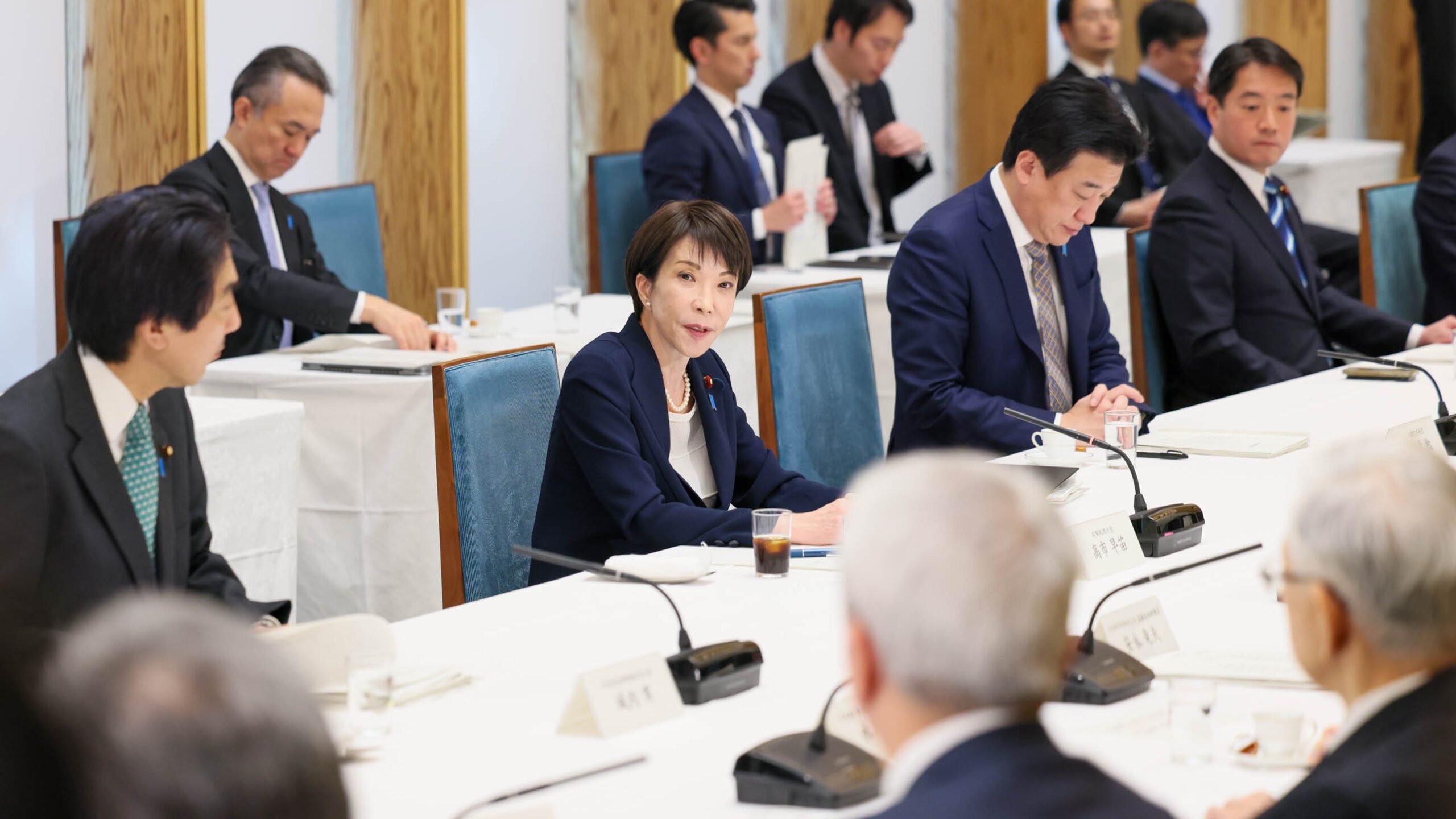

Japan’s prime minister Sanae Takaichi promised state backing for Japanese film in a video message to the opening ceremony of the 39th Tokyo International Film Festival on Monday 26 October, restating the government’s target of lifting overseas sales of Japanese content to ¥20tn ($127bn) by 2033, per Deadline and Screen.
Key facts
- Pledge: “large-scale, long-term” state support for Japanese film, including production funding and attracting foreign shoots to Japan.
- Target: ¥20tn ($127bn) in overseas content sales by 2033, a goal first set in the government’s 2024 New Cool Japan Strategy, against about ¥6.1tn ($39bn) now, per Ryosei Akazawa, head of the Ministry of Economy, Trade and Industry (METI).
- Budget: ministries have requested about ¥250bn ($1.6bn) for content in fiscal 2027, per Variety and the Cabinet Office; METI’s own content programme accounts for ¥165bn ($1.05bn) of it.
- Festival: 26 October–4 November in Tokyo, with 204 films from 112 countries and regions, per TIFF.
- Market: TIFFCOM runs 28–30 October.
The money matters more than the message. The budget request behind the pledge gives producers, sales agents and foreign productions weighing a Japan shoot a figure to watch, though it is not yet a budget.
What Takaichi pledged
Takaichi said her cabinet has placed content, film included, among the 17 strategic sectors of its Japan Growth Strategy. To reach the 2033 target, she said, the government would draw foreign productions to Japan and fund Japanese films that can find audiences abroad. She did not put a sum on the support.
The government’s intellectual property strategy headquarters set the ¥20tn goal in its New Cool Japan Strategy in June 2024, before Takaichi took office. It covers all Japanese content, including anime, games and manga, so film’s share of it is not set out.
The budget behind it
Akazawa told the ceremony that about ¥250bn has been requested for the 2027 fiscal year to support investment in content, Deadline, Screen and Variety reported. Deadline and Screen attribute the whole sum to his ministry, METI. Variety reports it as a request across ministries, which matches the roughly ¥250bn total for all ministries’ content requests that Hirohiko Nakahara, head of the Cabinet Office’s intellectual property strategy secretariat, gave Keidanren in September, per Keidanren Times. Screen reported that Akazawa sent a video message; Deadline and Japan’s Movie Walker Press say he spoke on stage, before Takaichi’s video was shown.
METI’s own share is smaller. Its summary of its 2027 request lists ¥173bn ($1.1bn) for content and related industries, of which ¥165bn goes to its content industry growth investment programme. That programme had ¥550m in the 2026 initial budget and ¥35bn in the 2025 supplementary budget. The summary has no ¥250bn line; the rest of that figure sits with other ministries. Dollar figures here use the European Central Bank’s reference rates for 26 October, about ¥157 to the dollar.
The festival around it
The festival opened with Takahisa Zeze’s Sukiyaki, billed by TIFF as its Asian premiere (Screen called it a world premiere), a musical drama about the three men behind the song that topped the US Billboard chart for three weeks in 1963. The centrepiece is Takashi Yamazaki’s Godzilla Minus Zero, a Toho release that TIFF says is the first Japanese production shot for Imax. It screens on 1 November, two days before its Japanese release.
TIFF counts 204 films this year, up from 184 in 2025, with 15 in the main competition. TIFFCOM, the festival’s market, follows Busan’s Asian Contents & Film Market on the autumn festival and market circuit.
Our reading
Japan’s export target is an industrial number, and the government is now treating it like one. A ¥165bn line for content investment, against ¥550m in this year’s initial budget and ¥35bn from last year’s supplementary budget, would make the state a large financier of Japanese production and its sale abroad, if the Diet passes it.
For foreign producers, the promise to draw shoots to Japan means little until the rebate rate, the cap and the spending threshold are known. For Japanese studios, the test is whether public money reaches live action that does not yet travel, as well as the anime and franchise titles that already sell.
The next evidence comes in December, when the cabinet’s draft budget shows how much of METI’s request survived, and at TIFFCOM this week, where buyers will show whether Japanese live action is in demand at current prices.
Sources
- Deadline
- Screen
- Tokyo International Film Festival: messages from the prime minister and ministers (Japanese)
- Government of Japan, Public Relations Office: prime minister’s video message to the 39th TIFF
- METI fiscal 2027 budget request summary (Japanese; copy published by MEXT)
- Tokyo International Film Festival: opening, closing and centrepiece films
- Tokyo International Film Festival: full line-up announcement
- Variety
- Keidanren Times, 8 October 2026: Cabinet Office, METI and Agency for Cultural Affairs briefing on content (Japanese)
- Movie Walker Press: opening ceremony report (Japanese)
- Cabinet Office: New Cool Japan Strategy, June 2024 (Japanese)
- European Central Bank euro foreign exchange reference rates