
Amazon made two statements about Prime Video this week that point the same way: one about the money the service makes, one about where the next budget goes. On 28 October Amazon MGM Studios told TIFFCOM in Tokyo it would double its investment in Japanese originals, and a day later Andy Jassy, Amazon’s chief executive, told analysts that Prime Video is “now profitable in its own right”, according to Variety’s report of the earnings call. The link between those claims is advertising, and Amazon drew it itself when it brought ads to Prime Video in Japan.
Key facts
- Jassy said on 29 October that Prime Video is profitable; Amazon publishes no separate revenue or profit figure for it
- Video and music expense: $5.9bn in July–September 2026, up about 7%; $18.8bn over nine months, up about 20%
- Advertising services revenue: $19.6bn in the third quarter, up 11%
- Amazon MGM Studios says it is doubling investment in Japanese originals, from a base it has not disclosed
- Japanese anime earned 57.1% of its 2025 market revenue outside Japan, the industry association says
The profit claim and the ad line
Start with what can be checked. Amazon’s third-quarter earnings release put advertising services at $19.6bn, against $17.7bn a year earlier. That is growth of 11%, or 12% at constant exchange rates, down from 22–26% on that basis in each of the previous four quarters, according to the same release. Amazon put the slowdown mainly down to the timing of Prime Day and expects growth in the high teens in the fourth quarter. The line covers video ads on Prime Video but also the sponsored listings on Amazon’s shops, so it cannot isolate the streamer. Subscription services, which bundle Prime fees with digital video subscriptions, music and books, rose 11% to $14.0bn.
The quarterly filing gives the cost side. Video and music expense came to $5.9bn in the quarter, up from $5.5bn, and $18.8bn over nine months, up from $15.7bn. Most of this year’s increase arrived in the first half. Capitalised video and music content rose to $22.5bn on 30 September from $21.3bn at the end of 2025. As our report on the results noted, none of these numbers lets an outsider test the profitability claim.
What Amazon has said plainly is why it switched ads on. In October 2024 Amazon Ads announced that Prime Video ads would come to Brazil, India, Japan, the Netherlands and New Zealand in 2025, and put the average monthly reach of its ad-supported audience at more than 200 million worldwide. In Japan, ads began on 8 April 2025, with an ad-free option at ¥390 (about $2.50) a month, CNET Japan reported. Yen figures in this piece are converted at the European Central Bank rate of 31 December 2025, about ¥157 to the dollar. Amazon’s notice to Japanese members explained the change as a way to keep investing in compelling content and to raise that investment over the long term. That is a company tying an ad tier directly to a bigger content budget in a named market.

Japan as the test bed
Eighteen months after the ads arrived, the studio raised its Japanese budget. Buddy Marini, head of Amazon MGM Studios Japan, told a TIFFCOM session that the first aim remains pleasing audiences at home, and that the larger budget is meant to bring production up to a standard that holds up worldwide, Variety reported. He called the studio’s development method reverse engineering, with creative staff working closely with screenwriters so that scripts hold up from a global perspective.
The slate shows what that means in practice. As we reported from Tokyo, Amazon is co-producing a live-action The Apothecary Diaries with Toho for Prime Video in 2028, based on light novels that Screen says have sold more than 57 million copies in 16 languages. Its earlier film The Silent Service: Battle of the Arctic took ¥1.15bn ($7.3m) in Japanese cinemas in 2025, according to the producers’ association Eiren, in a Toho release.
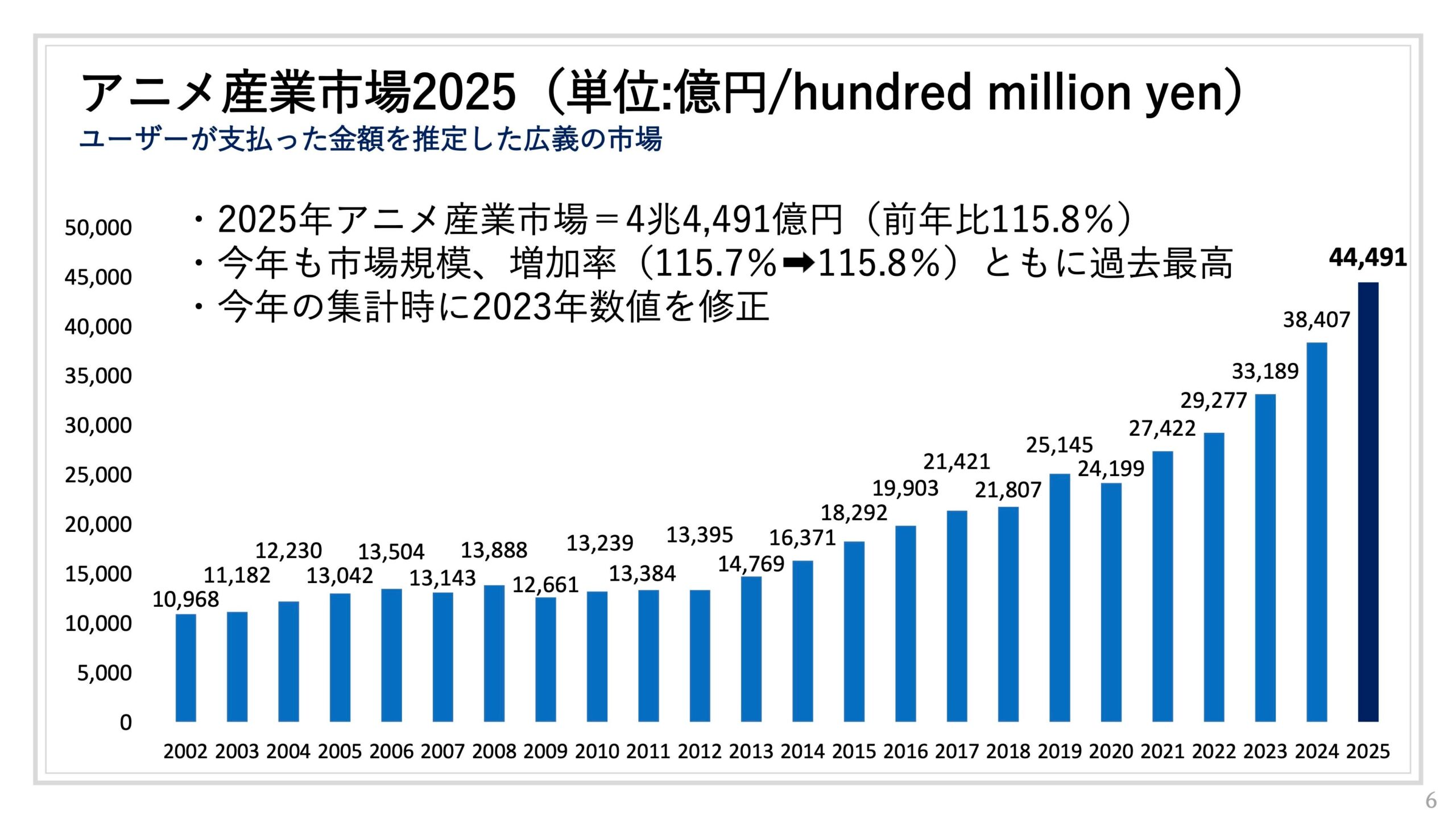
The export case is strong on paper. The Association of Japanese Animations put the 2025 anime market at ¥4.45tn ($28.4bn), up 15.8%, with ¥2.54tn ($16.2bn) earned outside Japan. That is 57.1% of the total, up from 56.5% in 2024, as our report on the figures set out. The government wants overseas content sales to reach ¥20tn ($128bn) by 2033, a target Sanae Takaichi cited at the Tokyo festival. Sellers are building the plumbing too: the Japan IP Market returns to Cannes on 14–15 May 2027.
Netflix got there first
Amazon is following a rival rather than opening a market. Netflix’s third-quarter letter to shareholders said Plastic Beauty is on track to become its most-watched series ever in Japan, and that non-English titles now account for more than a third of viewing, against under 10% a decade ago. The same letter carries a warning for anyone counting on ad money to pay for local drama. Netflix now expects 2026 ad revenue of about $2.7bn, down from about $3bn previously, citing a slightly slower than expected rollout of some ad product capabilities. That is a forecast, not a result, but it shows how quickly ad plans can slip.
The case against
There are good reasons to doubt that Japan is a turning point. The profit claim carries no number, and the ad line that is meant to fund the change mixes shop listings with video. “Doubling” means little without a base. Battle of the Arctic placed 35th of the 38 Japanese films that passed ¥1bn ($6.4m) in 2025, Eiren’s list shows, and The Apothecary Diaries will not stream until 2028. Much of Amazon’s video money also goes to sport: Thursday Night Football averaged 17.7 million viewers over its first six games this season, Nielsen says, and the second season of NBA on Prime launched in more than 200 countries, Amazon says.
Set against that, the slowdown in content spending supports the reading. With the quarterly rise down to about 7%, a bigger Japanese budget is a decision about where a flatter total goes, which makes it a signal of priority.
Our reading
Our finding: the evidence supports a narrow version of the thesis. Amazon has publicly tied Prime Video’s ad tier in Japan to higher content spending, and its studio there is now spending more on IP with an existing readership and a local studio partner. Whether ad revenue is actually paying for it cannot be shown from what Amazon discloses, so treat the link as stated intent backed by one budget decision. The same playbook is visible in Germany, where Prime Video has hired Sasha Bühler to run local originals.
Next milestone: Amazon’s fourth-quarter results in early 2027, and whether they put any figure on Prime Video; then the Japan IP Market in Cannes in May.
What it means for filmmakers and sellers
For Japanese producers, the opening is for adaptations with a proven readership and an established studio alongside. Amazon has gone to Toho twice, for The Silent Service in cinemas and The Apothecary Diaries on the service, which suggests it wants partners who can carry the domestic side while Prime Video handles the rest of the world. Producers should expect script notes aimed at viewers outside Japan early in development; that is how Marini described the method.
For rights holders and sales agents, the AJA data are the pitch: more than half of anime revenue already comes from abroad, so a streamer offering worldwide release is buying reach the IP has partly proved. The trade-off is time: a 2028 release for a project announced in 2026 ties up rights for years, so licence length and any holdbacks on Japanese cinema or television are worth settling before signing.
For producers outside Japan, the question to put to Amazon’s local teams is the same one Tokyo is answering: how much of the budget depends on ads, and in which markets.
Sources
- Amazon.com, Inc., Q3 2026 earnings release (Form 8-K, exhibit 99.1)
- Amazon.com, Inc., Form 10-Q for the quarter ended 30 September 2026
- Amazon Japan, notice to Prime members on Prime Video ads
- Amazon Ads, unBoxed 2024 announcement on Prime Video advertising
- Association of Japanese Animations, 2025 anime industry market release
- Netflix, Q3 2026 letter to shareholders
- Variety (Jassy earnings-call remarks)
- Variety (Buddy Marini at TIFFCOM)
- Screen International (Marini at TIFFCOM; The Apothecary Diaries sales)
- Eiren (Motion Picture Producers Association of Japan), 2025 films grossing ¥1bn or more
- CNET Japan (start date and price of the ad-free option)