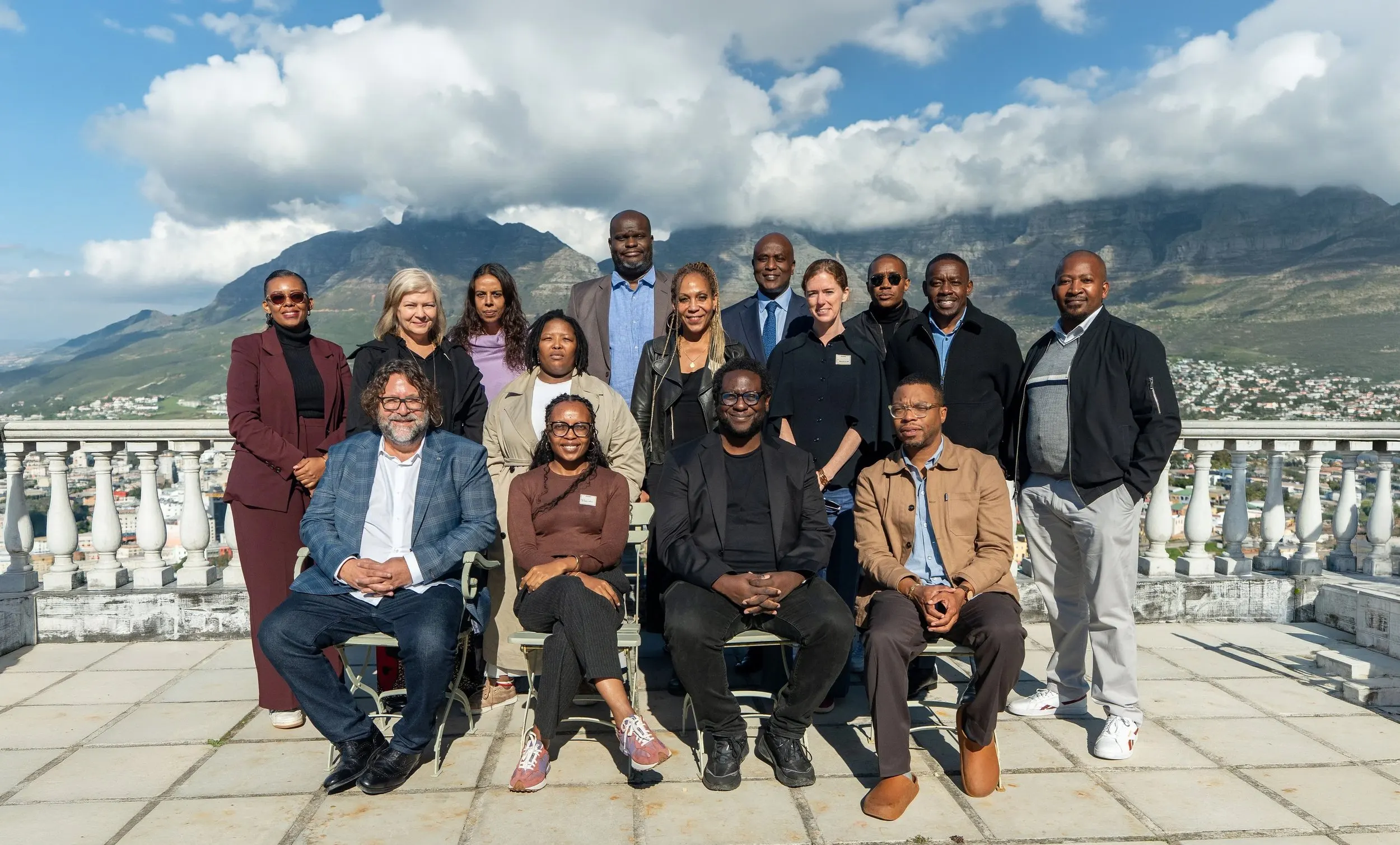
Twelve African producers pitched their projects to Nigerian banks, private equity firms and public film funds in Lagos at the second African Film Investor Roundtable (AFIR), the Lagos newspaper Punch reported on 15 November. The investors included Sterling Bank, the investment bank Chapel Hill Denham, TrustBanc, MBO Capital, Kuramo Capital and South Africa’s state-owned Industrial Development Corporation (IDC). No deals or sums were announced.
The meetings closed this year’s African Producers Accelerator (APA), run by the Cape Town production company Big World Cinema, and moved the investor conversation to Nigeria for the first time. The pitch the organisers are making is specific: African money should not only back African films but own them. Their Lagos page points to My Father’s Shadow and Clarissa, both Nigerian films that reached Cannes this year with African financing.
Key facts
- Event: African Film Investor Roundtable and African Producers Accelerator investor meetings, Lagos, held with Afreximbank’s CANEX WKND, November 2026
- Producers: 12, from Nigeria, South Africa, Ghana, Angola and Sudan; six from the 2026 accelerator cohort and six alumni of its first edition
- Investors named: Sterling Bank, Chapel Hill Denham, TrustBanc, MBO Capital, Kuramo Capital, CANEX Creations, South Africa’s IDC and National Film and Video Foundation, HEVA Fund
- No investments, amounts or signed deals were announced
- Next: AFIR brings five African investors to the Atlas Workshops at the Marrakech International Film Festival, 23–27 November, according to Punch
Who pitched
Six producers came from the accelerator’s 2026 cohort, chosen from 267 applications in 31 countries, Variety reported when the selection was announced at Cannes in May. They are South Africa’s Babalwa Baartman, producer of the Toronto horror Good Madam, and David Franciscus, the genre producer behind Street Trash; Nigeria’s Mimi Bartels, whose credits include the Netflix acquisitions Adire and Kambili: The Whole 30 Yards, and Abba T. Makama, director of The Lost Okoroshi; Ghana’s Kofi Owusu-Afriyie, whose debut feature The Fisherman premiered at Venice in 2024; and Sudan’s Khalid Awad, a producer of Goodbye Julia.
The other six are alumni of the first edition. They include Funmbi Ogunbanwo, who produced My Father’s Shadow, the first Nigerian film selected for Cannes, and Josh Olaoluwa, producer of the Kenyan-Nigerian One Woman One Bra, alongside South Africa’s Neo Baloyi, Annemarie du Plessis and Zoe Ramushu and Angola’s Jorge Cohen.
Before Lagos, the producers spent three days, 2–4 November, in a lab on intellectual property, international sales, casting and acquisitions, Punch said. The tutors included Sébastien Chesneau of the Paris sales company Cercamon, the producer Johnathan Dorfman and Erica Motley Dupuis of Impact X Capital.
The investors
Alongside the one-to-one meetings, the investors held a closed roundtable on the African film market and on investing together. Besides the banks and private equity houses, Punch listed CANEX Creations Inc., the IDC, South Africa’s National Film and Video Foundation (NFVF) and the Nairobi-based HEVA Fund, which co-hosted the roundtable with Big World Cinema.
Clarissa shows what the organisers mean. According to Punch, the film was financed by African investors including CANEX, MBO Capital and Chapel Hill Denham, all of them represented in Lagos, and Neon is due to release it in the US in December. AFIR’s backers for the Lagos edition were CANEX, the Bertha Foundation, the Ford Foundation’s JustFilms, the NFVF and Africa-Europe Partnerships for Culture, with Oxbelly as programming partner.
“For the first time, there is a critical mass of African investors who understand film and are backing it with confidence,” said Steven Markovitz, the accelerator’s executive director and AFIR co-chair. For the producers, the difference is in who sits across the table. “Meeting investors who are serious about African film, and who already understand how a film makes its money back, changes the conversation for a producer,” Olaoluwa told Punch.
What is not known
Neither Punch nor the organisers named any project that secured money, and no sums were disclosed. Nor is it clear how much any of the institutions has committed to film so far. The date is also unclear. Punch placed the sessions during CANEX WKND “on November 12”, but Afreximbank’s event site gives CANEX WKND’s dates as 5–8 November, and AFIR describes its own gathering as two days of meetings without dates. FilmBunch reported on the CANEX opening at the time.
The roundtable began in Cape Town in July, when six new producers and five alumni pitched to investors, Deadline reported. Its next stop is the Atlas Workshops at the Marrakech International Film Festival, where AFIR says the five investors will meet sales agents, distributors, programmers and Arab and African producers. The festival, whose jury is led this year by Marion Cotillard, opens on 20 November.
Our reading
The names on the investor list matter more than the format. Sterling Bank and Chapel Hill Denham are mainstream Nigerian finance houses, and the IDC is a long-standing state backer of South African film. Putting them in a room with producers who hold Cannes, Venice and Netflix credits is how a market for local film equity begins, and Clarissa gives them a live case to watch when Neon opens it in December. The evidence that the model works will be a named project closing finance with one of these institutions; Marrakech, later this month, is the next place one could be announced.
Sources
- Punch, African film industry woos investors in Lagos, 15 November 2026
- African Film Investor Roundtable, AFIR Lagos 2026
- African Film Investor Roundtable, AFIR Marrakech 2026
- African Film Investor Roundtable, About
- CANEX WKND 2026, official event site (dates 5–8 November 2026)
- HEVA Fund, contact page (Nairobi, Kenya)
- Variety, African Producers Accelerator announces participants of 2026 edition, 15 May 2026
- Deadline, Inaugural African Film Investor Roundtable unfolds in Cape Town, July 2026