
California’s governor, Gavin Newsom, proposed on Monday 2 November that the state lift its film and television tax credit from $750m a year to at least $1bn. Last year he more than doubled it from $330m. The plan, set out in a release from his office, would for the first time let above-the-line pay qualify, raise the money set aside for independent films to $100m a year, add a 5% bonus for companies that commit to two or more productions in the state and extend the programme to 2040.
Key facts
- Proposal: annual allocation up from $750m to at least $1bn, announced 2 November 2026; a proposal, with no bill text or legislative author named yet
- New eligibility: above-the-line spending and compensation would become qualified expenditure, “subject to appropriate funding caps”
- Independent films: $100m a year, up $26m on the current set-aside
- Duration: sunset extended from five years to ten, with the credit running through 2040; a 5% credit boost for companies committing to at least two distinct qualifying productions
- Context: FilmLA counted 4,171 on-location shoot days in Greater Los Angeles in July–September 2026, down 4.8% on a year earlier
The proposal matters to anyone budgeting a US shoot. California already runs the largest capped film and TV credit in the country, by the governor’s office’s description, and the current programme does not count above-the-line costs, the fees of stars, directors, writers and producers, as qualified spending. Bringing that spend inside the credit, even under a cap, would change the arithmetic for features and series with high talent costs.
What is in the plan
The release lists five changes. The headline one is money: the annual pot would rise to “over $1 billion” from the $750m agreed in the 2025 budget, which itself replaced a $330m cap. The second is above-the-line eligibility, covering both above-the-line expenditure and compensation, “subject to appropriate funding caps”. The release gives no figure for that cap.
The third is time. The sunset would move from five years to ten, which the governor’s office says would give producers more predictability for long-term investment; the current five-year package runs through 2030. The fourth is a 5% boost in credits for companies that commit to at least two distinct qualifying productions in California. The fifth is a larger independent film allocation, up $26m to $100m a year.
The release does not say how the extra credit would be paid for, when a bill would be introduced or who in the legislature would carry it. Newsom again pressed Congress to pass MPTERA, the federal Motion Picture, Television, and Entertainment Revitalization Act, before 2026 is out. The federal bill, introduced on 24 September in both chambers, would give a 20% base credit on qualifying US production pay for film, TV and visual effects work, and Newsom’s office says such a credit would stack with state programmes.
What the first year produced
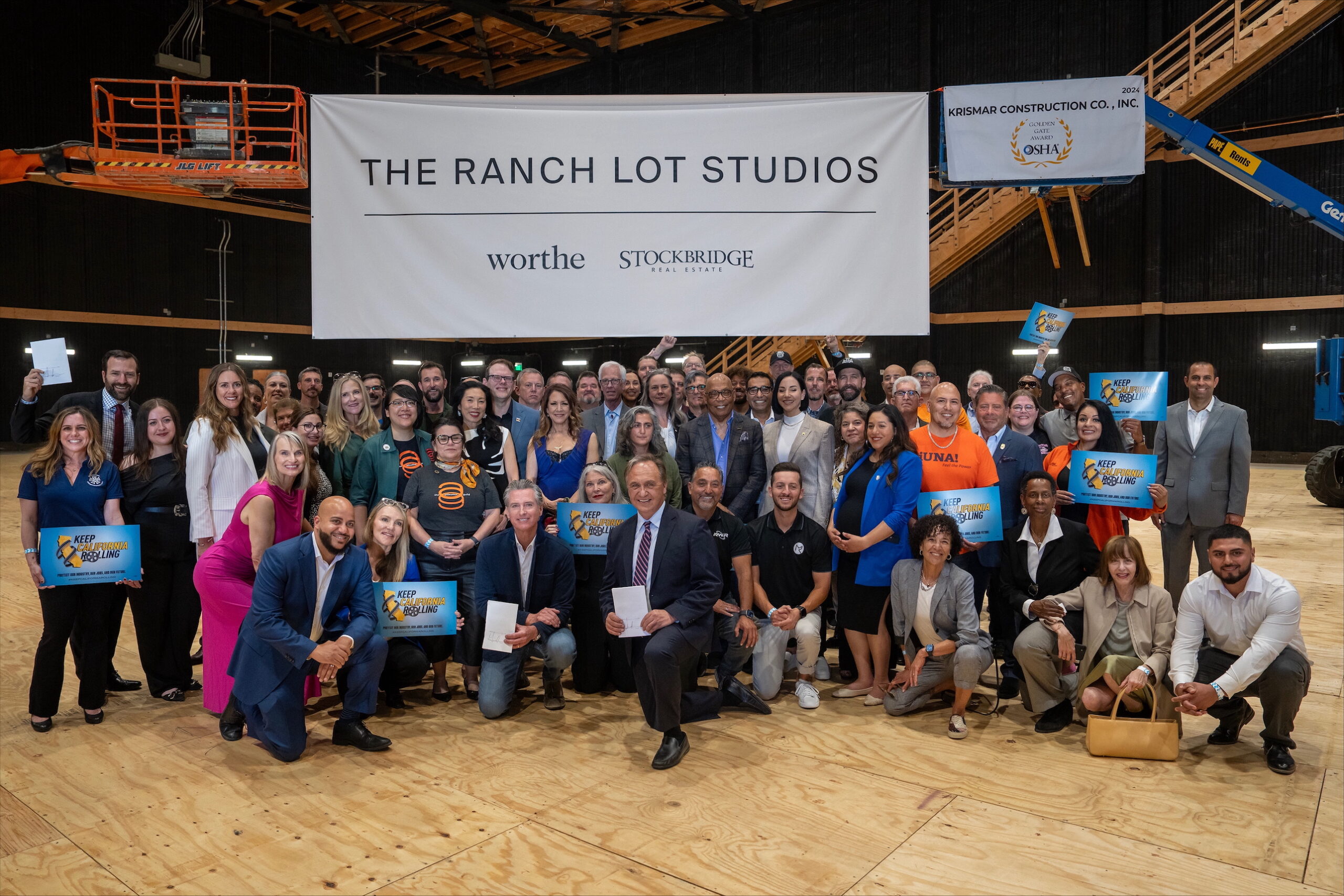
The 2025 expansion took effect with the programme’s fourth version on 1 July 2025, when credits also became refundable, and Assembly Bill 1138, which modernised the rules, was signed on 3 July. According to the governor’s office, the first year brought an 82% rise in applications, $8.25bn in direct production spending to date (including $5.3bn in qualified expenditure and $3.2bn in qualified wages), more than 43,000 cast and crew jobs and 261,000 background performer days. It also reports more than 8,600 California filming days, 1,823 of them outside the Los Angeles studio zone, with film shoot days up 52% and TV shoot days up more than 7% year on year.
Los Angeles’s own permit data tells a more mixed story. FilmLA’s third-quarter report, published on 21 October, counted 4,171 on-location shoot days in Greater Los Angeles from July to September, against 4,380 a year earlier. Incentive-backed projects made up 40.3% of scripted on-location filming, nearly double their share a year before. Feature film shoot days rose 2.1% to 533, TV comedy days more than doubled to 192, and TV drama fell 9.4% to 494. FilmLA’s figures cover location permits only, not soundstage work.
The governor’s office also credits the programme with 21 Emmys across six shows at this year’s ceremony, including best drama series for The Pitt, and says Fallout, which moved to California for its second season, won for its costumes.
Who backed it
Colleen Bell, director of the California Film Commission, which runs the programme, said the credit had become “one of our most important tools to increase production in California”. Dee Dee Myers, who heads the state’s business and economic development office, said the expansion would make California “more competitive for the productions, talent, and investment that drive this industry”. Assemblymember Rick Chavez Zbur, the lead author of AB 1138, said the 2025 changes had brought back “tens of thousands of jobs in its first year”.
Variety reported that an Assembly committee heard testimony last week on removing the $750m cap, allowing above-the-line costs, widening eligibility and extending the sunset, with union leaders and the Motion Picture Association arguing that the state must do more to compete with other states.
Other incentive stories this autumn: Japan’s producers asking for a lower spend floor, Québec’s SODEC advancing up to 95% of a tax credit and the Baltic rebates on show in Tallinn.
Our reading
Beyond the extra $250m or more a year, the proposal changes what the credit covers and for how long: above-the-line costs, a ten-year horizon and a 5% bonus for slate commitments. The number that decides what the first of those is worth, the above-the-line cap, is not in the release.
FilmLA’s third quarter shows both sides of the current scheme: incentive-backed projects more than doubled their local shoot days to 505, yet total on-location filming still fell. What to watch is the bill text, the size of that cap and who in the legislature takes it up.
Sources
- Office of the Governor of California, “Governor Newsom proposes historic $1 billion California film and television tax credit”, 2 November 2026
- Office of the Governor of California, “Governor Newsom marks historic expansion of California’s Film and Television Tax Credit Program”, 2 July 2025
- California Legislature, AB 1138 bill history (chaptered 3 July 2025)
- FilmLA Research, Q3 2026 on-location filming report, 21 October 2026 (PDF)
- Variety, “Gavin Newsom Proposes Expanding California’s Movie and TV Tax Credit to at Least $1 Billion”, 2 November 2026
- Congress.gov, H.R. 10582, Motion Picture, Television, and Entertainment Revitalization Act (introduced 24 September 2026)
- Office of the Governor of California, “Governor Newsom signs legislation 7.3.25”, 3 July 2025