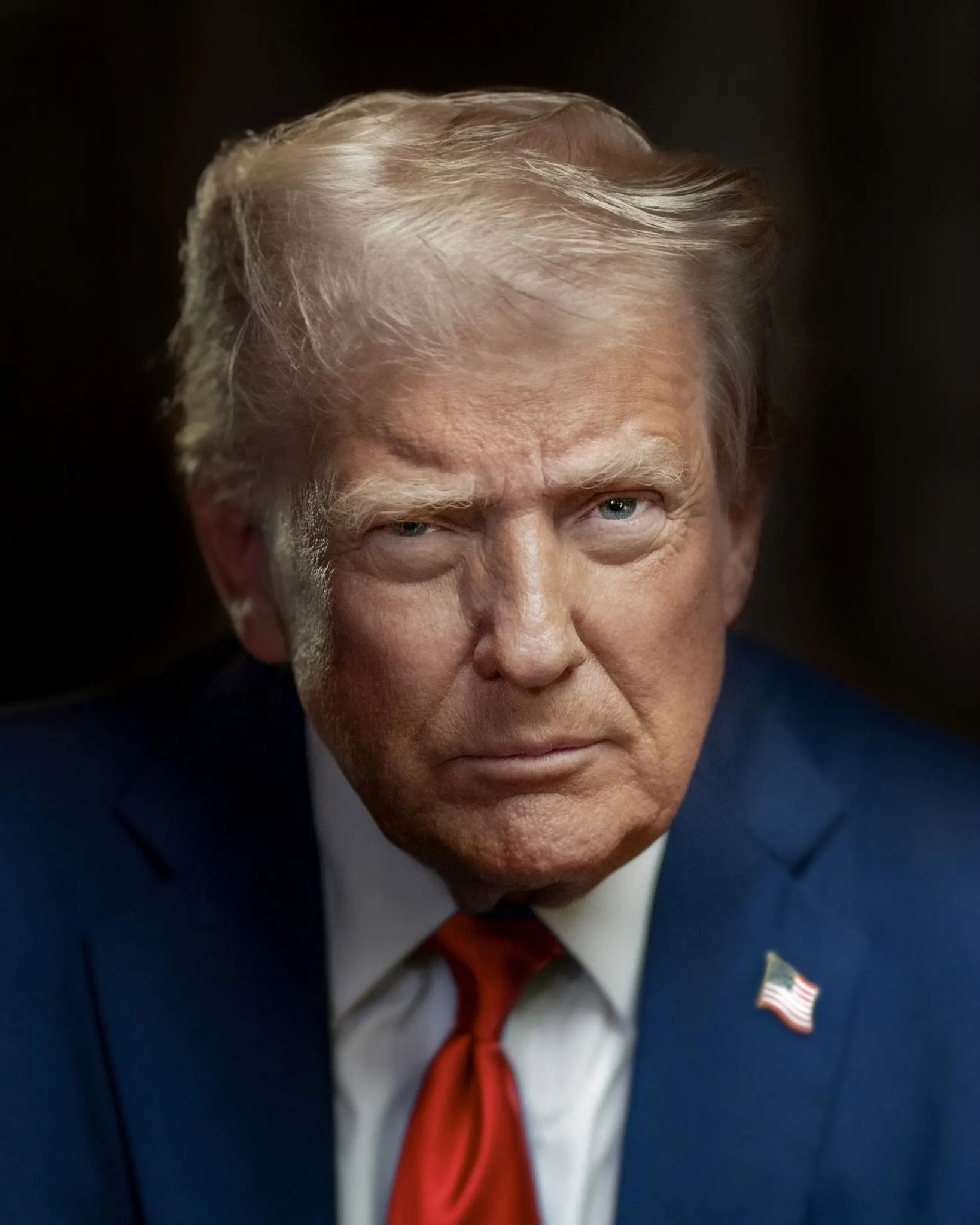

President Donald Trump has urged Congress to pass a federal film and TV tax credit, the production incentive Hollywood’s studios and unions have spent the autumn lobbying for. In a Truth Social post on Friday 13 November he said he was working with senators and representatives from both parties on the Motion Picture, Television, and Entertainment Revitalization Act, called it “already very actively negotiated” and said meetings were being set up with the leaders of both parties “in order to, GET THIS DONE!”
The bill would give productions a credit of 20% on their US labour costs, rising to a maximum of 30% with bonuses. What it does not yet have is momentum in Congress. It was introduced in both chambers on 24 September and, according to Congress.gov, has not moved since: the Senate version sits with the Finance Committee and the House version with Ways and Means, with no hearing or vote on either.
Key facts
- Bill: Motion Picture, Television, and Entertainment Revitalization Act (S. 5552 in the Senate, H.R. 10582 in the House), introduced 24 September 2026
- Credit: 20% of qualifying US labour costs, up to 30% with bonuses; projects must cost more than $1m and shoot at least 75% of principal photography days in the US
- Support: 78 lawmakers, counting the two sponsors and 76 cosponsors (63 in the House, 13 in the Senate), up from 10 cosponsors at introduction, by FilmBunch’s count of Congress.gov records
- Status: in committee in both chambers, with no action recorded since 24 September
- Cost: no Joint Committee on Taxation estimate yet; the Cato Institute puts it at $33bn–$49bn, Deadline reported
What Trump said
Trump posted while the actor Jon Voight, his special ambassador to Hollywood, was at the White House urging him to push the credit during the lame-duck session, Variety reported. “Hollywood, and so many other places, have been virtually ’emptied out’ by the Tax Incentives, and much more, given by other Countries,” he wrote, adding that the industry “has largely moved to Canada, the United Kingdom, Australia, and other countries”. He said the cost would be “made up tenfold” in tax receipts, and made his case to Democrats on the grounds that “so much of the money being lost to other countries is coming out of the Blue States”.
He named 13 senators, from the lead sponsor, Tim Scott of South Carolina, to Adam Schiff of California, whom he introduced with “believe it or not”. Schiff replied on X that Congress “shouldn’t wait until January”, according to Deadline. Laura Friedman, a Democratic co-author in the House, wrote that “there’s no excuse to wait.”
The hurry is about the calendar. Democrats took control of both chambers in this month’s midterms, and Republicans have a long list of priorities for the weeks before the new Congress is sworn in. Supporters hope to attach the credit to year-end funding legislation, Deadline reported, but that bill may turn out to be a short-term extension, or fail altogether. Variety cited a Politico report in which Don Beyer, a Democratic congressman from Virginia, put the chances of passing any tax bill in the lame duck at “pretty low”.
What the bill does
FilmBunch read the Senate text. The credit covers feature films, television pilots and television seasons of at least four episodes. It counts pay for actors, directors, producers and crew, including pre- and post-production staff, but excludes residuals and profit participations. The text sets no limit on how much of a star’s or director’s fee can qualify, and no annual ceiling on the cost to the Treasury. California, by contrast, caps its programme at a fixed sum each year.
Each of four bonuses adds five percentage points: shooting in rural opportunity zones or disaster areas, being an independent producer not owned by a listed company, filming in 10 or more states, and increasing the number of productions made in the US relative to those previously made abroad. However many apply, the credit stops at 30%. Post-production and visual effects work also qualifies on its own when at least 75% of it is done in the US, even if the shoot was not.
Two provisions matter most for financing. The credit can be sold for cash to another taxpayer, so a producer without a large tax bill can still use it. And it would sit on top of state incentives rather than replace them, The Hollywood Reporter noted, much as national and regional schemes combine in several of the countries that have drawn work away from the US. It would apply only to productions that start principal photography in tax years beginning after 31 December 2026.
Who is on the list
Every one of the 12 senators Trump named besides Scott is a cosponsor. The only Senate cosponsor he left out is Andy Kim of New Jersey. Support has grown since the vote: 16 lawmakers have signed on since the 3 November midterms, four of them senators (Thom Tillis, Chris Coons, Katie Britt and Dick Durbin).
In the House, Trump named Jason Smith of Missouri, who chairs Ways and Means, the committee that holds the bill. Smith is not among its 63 House cosponsors.
The bill is backed by the Motion Picture Association, the Directors Guild, SAG-AFTRA, both Writers Guilds, IATSE, the Teamsters and the Independent Film and Television Alliance. In the sponsors’ launch statement, MPA chairman Charles Rivkin said it “could inject $250 billion into the country’s economy” and deliver nearly 145,000 jobs a year. Those figures come from an Olsberg SPI study commissioned by the MPA, which assumed the US share of projected global production would reach 65%. No independent estimate has yet been published.
Our reading
Few bills have a Republican president, Hollywood’s most prominent Democrats and every major union and studio lobby on the same side. What this one lacks is a vehicle, a cost score and time. Without a Joint Committee on Taxation estimate, an uncapped credit is hard to fold into a year-end package, and the chairman whose committee has to move it has not signed on.
For producers deciding where to shoot in 2027, nothing changes until a bill passes, and the competition is not standing still. California has proposed raising its credit to at least $1bn a year, and Canada this month divided a C$600m ($425m) audiovisual package among its funds. Where a film is shot also shapes how it is sold, as our analysis of AFM 2026 deals shows. The next evidence is the Joint Committee on Taxation’s score and whether the credit appears in the year-end funding text. Earlier coverage is on our production incentives page.
Sources
- Deadline, Donald Trump urges Congress to pass federal film & TV tax incentive amid worries bill will languish, 13 November 2026 (quotes Trump's Truth Social post in full)
- Variety, Amid flight halt, Trump meets with Jon Voight to talk US film incentive, 13 November 2026
- The Hollywood Reporter, Trump says federal film tax credit is gaining momentum, 13 November 2026
- GovInfo, S. 5552 (IS), Motion Picture, Television, and Entertainment Revitalization Act, introduced 24 September 2026 (bill text)
- GovInfo, H.R. 10582 (IH), Motion Picture, Television, and Entertainment Revitalization Act, introduced 24 September 2026
- Sen. Adam Schiff, press release on the bill's introduction, 24 September 2026
- What Moved in Congress, S. 5552 status and cosponsors (Congress.gov data), read 14 November 2026
- What Moved in Congress, H.R. 10582 status and cosponsors (Congress.gov data), read 14 November 2026
- Congress.gov, S. 5552 and H.R. 10582 actions and cosponsors (Congress.gov API), read 14 November 2026
- Motion Picture Association, release on the Olsberg SPI study and the US Film & TV Production Coalition, 15 September 2026