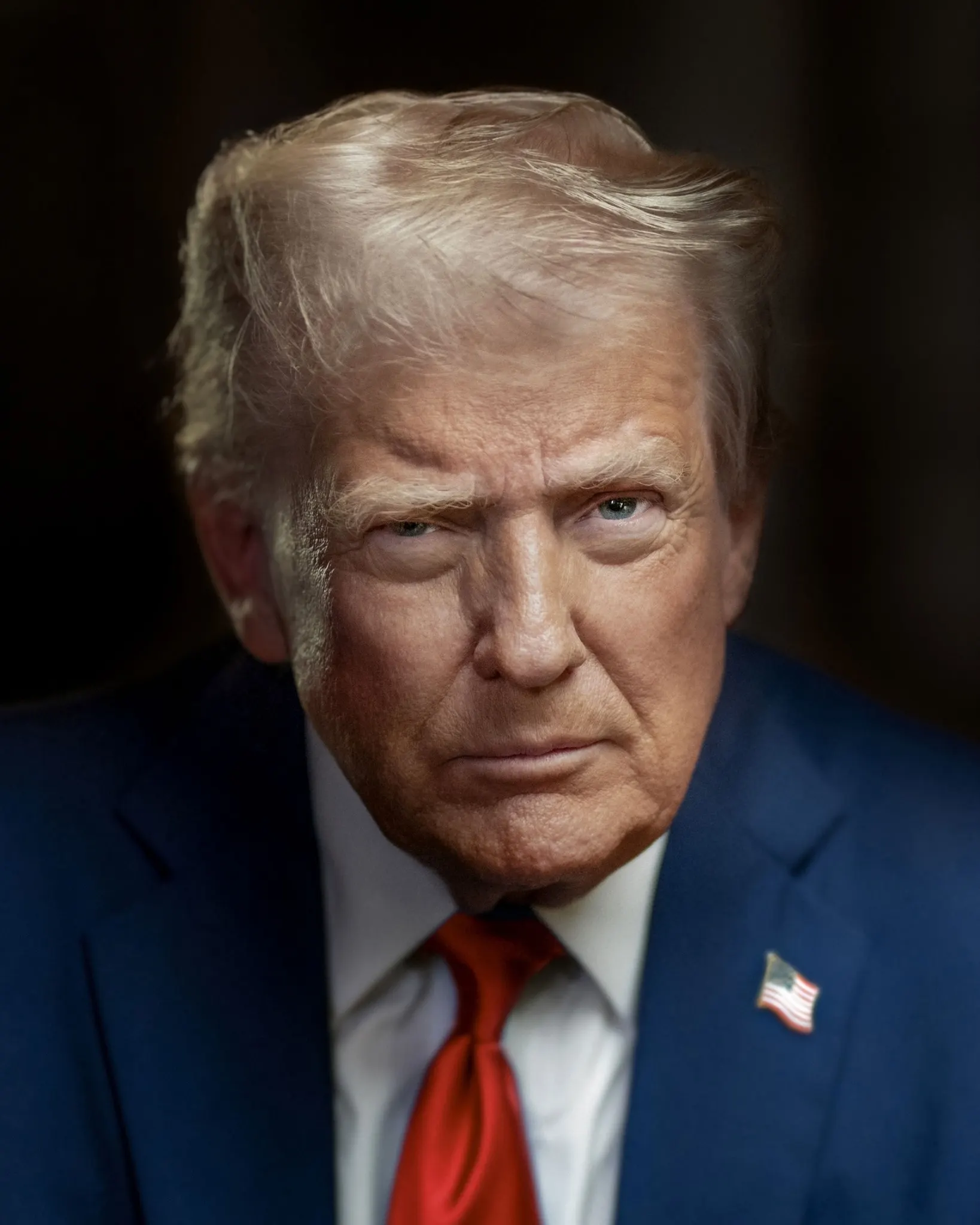

President Donald Trump said on Friday that a proposed 20% federal film and television tax credit “is going to happen”. The bill behind it, the Motion Picture, Television, and Entertainment Revitalization Act, now has 96 sponsors and cosponsors in Congress, almost evenly split between the parties, Congress.gov records show.
“It has unbelievable support,” Trump told a White House news conference, Deadline and The Hill reported, naming Senator Adam Schiff of California, a Democrat and longtime opponent, as a backer. He praised the UK’s “very good package” and said the bill might grow: “We’re thinking about adding certain other elements, like for instance theaters,” he said, according to Variety. Deadline took that to mean live theatre; Variety linked it to cinema owners, who want a separate credit for renovations. The bill text covers neither.
The support is broad, but the bill has not moved, and any bill not passed when the 119th Congress ends in early January lapses.
Key facts
- A credit of 20% of US pay for cast and crew, directors and producers, rising to a maximum of 30% with bonuses
- 96 members of Congress back it: 14 senators (7 Republicans, 7 Democrats) and 82 representatives (40 Republicans, 41 Democrats, 1 independent)
- Support rose from 78 on 16 November; 18 House members signed on between 17 and 19 November, 9 from each party
- Neither the Senate Finance nor the House Ways and Means committee has acted since 24 September, and no official cost estimate is listed
- The credit would apply to productions starting principal photography in tax years beginning after 31 December 2026
Who backs the bill
Senator Tim Scott, a South Carolina Republican, introduced S.5552 on 24 September with Schiff, John Cornyn of Texas and Raphael Warnock of Georgia; Representative Nathaniel Moran, a Texas Republican, filed the matching House bill, H.R.10582, the same day. The Senate list now divides 7 to 7 by party after Thom Tillis, Chris Coons, Katie Britt and Dick Durbin joined on 10 and 12 November. The 82 House backers make up nearly a fifth of the chamber; 18 of the 81 cosponsors are from California, 14 of them Democrats. When FilmBunch last counted, on 16 November, the total was 78.
A 19 November release from Representative Laura Friedman, one of the House authors, added the AFL-CIO and the American Hotel and Lodging Association to endorsers including the Motion Picture Association and the main Hollywood unions.
What the federal film tax credit would pay
The credit covers US pay for cast and crew on feature films, TV pilots and seasons of at least four episodes. A production must cost more than $1m and shoot at least 75% of its principal photography days in the US. Residuals do not count; news, sport and talk shows are excluded.
Four bonuses add 5 percentage points each, up to 30%: shooting at least 30% of days in a rural opportunity zone or a disaster area; being an independent producer (not listed, and not majority-owned by a listed company); producing in at least 10 states with $10m of pay in each; and raising US output relative to work abroad. US visual-effects and post-production on productions shot mainly abroad can claim 20%, or 25% with a bonus. Credits can be sold to another taxpayer. The text sets no annual or per-production cap and no expiry date.
The UK scheme Trump praised works differently. Its audio-visual expenditure credit pays 34% for most film and TV, 39% for animation and children’s programmes and 53% for independent films on up to £15m ($20m) of costs, according to GOV.UK. It counts all qualifying spending rather than pay alone, capped at 80% of core costs.
Our reading
Without a committee vote or a cost estimate, the credit’s fate rests with whoever assembles a year-end funding or tax package. The missing cap is the feature to watch. Germany’s new incentive, which runs on a fixed annual budget, stopped taking applications for early-2027 shoots after three days. An open-ended federal credit would avoid that rationing, which is also why its cost will draw scrutiny. It would also sit alongside state schemes that are still taking shape, such as New Mexico’s proposed $150m film loan fund.
The next signals would be a Joint Committee on Taxation score, a committee markup, or the text appearing in a year-end bill.
Sources
- Deadline, Donald Trump touts bipartisan support for federal film and TV incentive, 20 November 2026
- The Hill, Trump opens door to deals with Democrats on healthcare, Hollywood, college sports, 20 November 2026
- GovInfo, S. 5552 (introduced in Senate), Motion Picture, Television, and Entertainment Revitalization Act, 24 September 2026
- Congress.gov, S.5552 bill record (sponsor, committee, latest action)
- Congress.gov, H.R.10582 bill record (sponsor, committee, cosponsors)
- Congress.gov API v3, cosponsors of S.5552 and H.R.10582, read 20 November 2026 21:05 Rome
- Rep. Laura Friedman, press release on new House and Senate cosponsors, 19 November 2026
- Variety, Trump suggests theaters might be added to federal film credit bill, 20 November 2026
- GOV.UK, Claiming Audio-Visual Expenditure Credits for Corporation Tax