
Screen Flanders is closing on 1 January 2027 after 15 years in which the Flemish government invested €67m ($73.3m) across 344 productions and reported more than €471m ($515m) in regional audiovisual spending, about €7.03 for every euro invested (FilmBunch calculation). In its final round on 23 November, the economic fund awarded €1.575m ($1.72m) to eight projects, half of them foreign-led co-productions, and projected €7.76 of Flemish spending per euro. Set beside this month’s figures from other Belgian and German regional funds, the closure shows two things: why Belgian funds report spend ratios more than twice those of their German peers, and why neither figure measures new economic activity.
Key facts
- Closure: Flanders ends Screen Flanders from 1 January 2027, withdrawing its €3.5m ($3.83m) annual budget as a saving, VLAIO announced on 6 October.
- Final round: €1.575m ($1.72m) across eight titles on 23 November (€50,000 to €350,000 each), with more than €12.2m ($13.3m) in expected Flemish spend, Screen Flanders said.
- Foreign-led share: four of the final eight projects are minority Belgian co-productions led from Germany, France and the Netherlands.
- Regional peers: Wallonia’s Wallimage (€7.63 per euro in 2025) and Brussels’ screen.brussels (€9.75 over 2016–2025) stay open; German funds NRW (€3.23) and MOIN (€2.94) report lower ratios on different terms.
- Counterweight: self-reported ratios count projected eligible spend, overlapping with Belgium’s federal tax shelter, rather than net new activity.
Screen Flanders annual record, 2021–2026 Projected regional spend fell back to €28.3m as 2026 funding returned to €3.5m Expected eligible spend in Flanders (€m); 2027 allocation drops to €0 Figures are expected eligible Flemish spend at award, not settled final accounts. 2026 combines Call 1 (more than €16.1m) and Call 2 (more than €12.2m). Sources: Screen Flanders 2021–2025 chart (2 October 2026); 2025 Call 2, 2026 Call 1 and Call 2 announcements. Compiled by FilmBunch.See the data
Year Regional spend 2021 €36.4m 2022 €37.2m 2023 €42.9m 2024 €42.5m 2025 €40.2m 2026 €28.3m+
How Screen Flanders worked, and why Flanders cut it
Set up by the Flemish government in late 2012 and now run by the enterprise agency VLAIO with the Flanders Audiovisual Fund (VAF), Screen Flanders was an economic incentive rather than a cultural grant. Belgian producers could apply twice a year for up to €400,000 ($438,000) in recoverable advances, repayable pro rata from first-euro net receipts, provided the project spent at least €250,000 ($273,000) of eligible money in Flanders and passed a cultural test, according to the scheme’s criteria.
From 2021 to 2025, annual commitments ran at €4.46m to €5.00m ($4.88m–$5.47m), above the €3.5m base budget. In 2025 that included €1.4m ($1.53m) added by Economy Minister Matthias Diependaele to the second call, announced on 1 December, to reach €4.90m ($5.36m) across 22 projects and €40.2m ($44.0m) in projected spend, or €8.21 per euro, per Screen Flanders’ 2025 results.
In 2026, funding reverted to its €3.50m ($3.83m) base budget: €1.925m ($2.11m) across 15 projects in May and €1.575m ($1.72m) across eight in November. On 2 October, Screen Flanders said it had been told that week that the €3.5m budget would be withdrawn from 1 January 2027. The same round of Flemish savings cuts subsidies for Dutch-language culture in Brussels municipalities by 30% and ends Flemish grants to Bozar, according to BRUZZ figures compiled by Governance Brussels. Awarded tranches will still be paid and repayment reporting remains due, VLAIO said, while the Flanders Audiovisual Fund (VAF) continues separately. In Screen Flanders’ 2 October statement, VAF chief executive Karla Puttemans said the fund had been “a key driver in attracting international co-productions” and in drawing on the Belgian tax shelter, and that VAF deeply regretted the decision.
Who loses out: the final eight and cross-border co-productions
The 23 November list shows how far that reach extended. Screen Flanders funded five drama series, two features and one animated series at an average of €196,875 ($215,000), near its 15-year average of about €194,800 (FilmBunch calculation from €67m across 344 titles).
Half the final eight are minority co-productions initiated outside Belgium. It’s All for the Children (Es geht um die Kinder), from Germany’s 307 Production with ARD and Brussels-based Velvet Films, schedules 40 of 44 shooting days in Flanders with a mostly Flemish crew. Hold on Gaston!, a French-led animated series (48 11-minute episodes and two 22-minute specials) from Dandelooo, sends half its animation to Flemish co-producer Vivi Film via Studio Souza in Brussels and Creature in Ghent, plus dubbing at Option Media in Mechelen.
Germany’s Elsani Film leads the four-part Reykjavik Confessions with ARD Degeto, WDR and Iceland’s Sagafilm alongside Flemish co-producer Potemkino Port and Flemish actors Filip Peeters and Koen De Bouw. Dutch producer Topkapi Films leads Paula van der Oest’s Sisters in Wartime (’t Hooge Nest) with the Flemish company The Reunion and Bulgaria’s Agitrop; September Film will release it in Belgian and Dutch cinemas before it moves to Netflix.
 © Dandelooo, Vivi Film. Courtesy of Dandelooo
Three of the four majority Flemish projects also bring in Dutch partners: Dispute (Dingie with RTL/Videoland), Dead End 2 (Caviar with Fiction Valley) and It’s Going to Be Spectacular. I Promise. (Eyeworks Film & TV Drama with Phanta Film). Only Paradiso (Eyeworks with Beside Productions) is wholly Belgian. Domestic features can still seek cultural backing from VAF, which supports It’s Going to Be Spectacular. I Promise., but foreign producers lose the one regional tool tied directly to spending with Flemish crews, animation studios and post-production houses.
Regional fund spend ratios Minimum required spend vs reported return per €1 of public support Multiple of fund support spent in the region (x); measurement basis differs between countries Reported spend ratioMinimum required Wallimage (Wallonia)2025 Bilan (projected) Screen Flanders15-year total (projected) Filmstiftung NRW2025 P I production MOIN (Hamburg/SH)2025 settled accounts Not directly like-for-like: Belgian ratios track projected eligible spend at award (and overlap with the Belgian Tax Shelter), whereas MOIN measures settled final accounts. All reflect eligible spend, not net new activity. Sources: Screen Flanders, Wallimage, Filmstiftung NRW and MOIN guidelines and reports. Compiled by FilmBunch.See the data
Regional fund Reported spend ratio Minimum required Wallimage (Wallonia) (2025 Bilan (projected)) 7.63x 1.50x Screen Flanders (15-year total (projected)) 7.03x 1.00x Filmstiftung NRW (2025 P I production) 3.23x 1.50x MOIN (Hamburg/SH) (2025 settled accounts) 2.94x 1.50x
What Belgium’s €7-to-€10 ratios hide, and how German funds compare
Belgium’s other two regional economic funds stay open. Wallonia’s Wallimage invested €3.416m ($3.74m) across 28 live-action works in 2025 for €26.055m ($28.5m) in expected Walloon spending, or €7.63 per euro, its 2025 annual review shows. In July 2026, its 130th session put €1.337m ($1.46m) into 12 projects for at least €10.126m ($11.1m) in Walloon spend, or €7.57 per euro, Wallimage reported.
Brussels’ screen.brussels, which runs three sessions a year, invested nearly €3m ($3.28m) in 26 projects in 2025 for €27.3m ($29.9m) in expected Brussels spending, and averaged €9.75 per euro over 2016–2025, per a Brussels government release. Its 2027 deadlines are already set, starting on 22 January.
| Regional fund | Latest period / round | Funding awarded | Minimum rule | Reported return | Basis of ratio |
|---|---|---|---|---|---|
| Screen Flanders (Belgium) | 23 Nov 2026 / 15-yr total | €1.575m (8) / €67m (344) | 1.00x | €7.76 / €7.03 per €1 | Projected eligible spend |
| Wallimage (Belgium) | Jul 2026 (S130) / 2025 | €1.337m (12) / €3.416m (28) | 1.50x | €7.57 / €7.63 per €1 | Projected eligible spend |
| screen.brussels (Belgium) | 2025 / 2016–2025 avg | ~€2.9m (26 projects) | 1.00x | €9.41 / €9.75 per €1 | Projected eligible spend |
| Filmstiftung NRW (Germany) | 16 Nov 2026 / 2025 P I | €5.40m (16) / ~€27.5m P I | 1.50x | €3.23 per €1 (2025 P I) | Reported P I production spend |
| MOIN (Germany) | 5 Nov 2026 / 2025 settled | €4.92m (31) / €7.6m settled | 1.50x | €2.94 per €1 (settled) | Audited final accounts |
German regional funds report lower returns. On 16 November, Film- und Medienstiftung NRW awarded about €5.4m ($5.91m) across 16 projects (summing to €5,404,880 across features, documentaries, series, distribution and two cinema upgrades). Its 2025 annual report records €88.77m in regional spend on about €27.5m of primary production awards, a 323% “NRW-Effekt” (€3.23 per euro). MOIN Filmförderung Hamburg Schleswig-Holstein disclosed €4.92m ($5.38m) across 31 projects on 5 November, and its 2025 annual report puts its return at 294% (€2.94 per euro: €22.4m on €7.6m across 60 completed and settled projects).
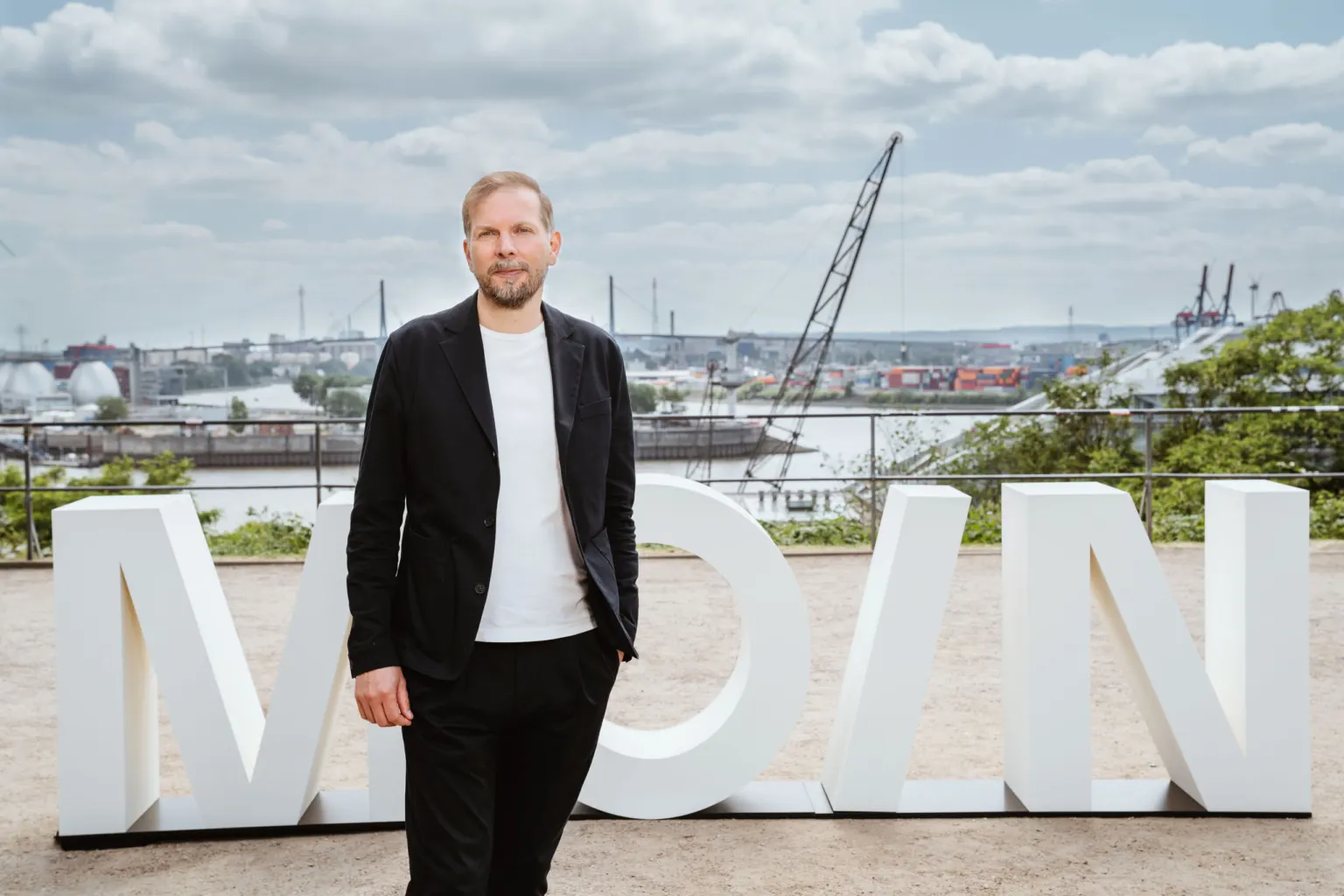 Photo: Jasper Ehrich / MOIN Filmförderung
Three differences explain why Belgian funds report €7–€9.75 where German funds report €3. First, grant size: Screen Flanders capped awards at €400,000, whereas NRW awarded up to €1.3m to a series (Lynn Is Not Alone) and €1.2m to a feature (Life Began in the Summer) on 16 November. Smaller awards inside multi-million-euro shoots yield larger ratios.
Second, selection rules and tax-shelter stacking. Screen Flanders’ criteria require a 100% minimum spend yet rank projects competitively on higher pledges; screen.brussels gives 75 of 100 points to economic effectiveness, led by the spend ratio. Screen Flanders excludes VAF-backed costs from its eligible base while explicitly allowing costs proved for Belgium’s federal tax shelter. German Länder funds allow cross-regional stacking (Mohammad Rasoulof’s Grey Matter received €550,000 from MOIN and €300,000 from NRW in November) but audit each state’s spend separately under June 2026 interstate Regionaleffekt rules. Third, Screen Flanders and Wallimage publish expected spend at selection, whereas MOIN reports audited final accounts.
Closing for savings vs pausing for systems
Across Europe, November’s fund changes point in different directions. MOIN’s budget rose by €5m to €21.2m in 2025, while Norway’s film institute (NFI) is pausing new applications to 16 schemes for 11 weeks from 15 December to 1 March 2027 to rebuild its portal with the help of a NOK15.2m ($1.55m) digitalisation grant; decisions and payments continue during the pause. Elsewhere, capacity has shifted through arrears or new commitments, from South Africa’s ZAR255m ($14.6m) rebate backlog to Canada’s C$600m ($418m) audiovisual package.
 Photo: Norsk filminstitutt
The case for the cut deserves a hearing. Self-reported eligible spending is not new economic activity. A domestic series made for Flemish platforms, such as Dead End 2, would probably shoot much of its work in Flanders with or without a regional advance. Where the same invoices also count towards Belgium’s federal tax shelter, crediting the whole local spend to a €196,875 Flemish award overstates what the Flemish money achieved on its own. Projected figures at selection also say nothing about crews pulled from other work, or about any shortfall between the award estimate and the final accounts. Yet ending Screen Flanders still removes a specific policy tool: VAF backs cultural projects and the tax shelter applies nationwide, leaving Flanders without a dedicated fund to attract foreign-led co-productions while Wallimage and screen.brussels keep theirs.
Our reading
Our finding: Screen Flanders’ €7.03 lifetime ratio and €7.76 final-round claim reflect competitive bidding, small €50,000–€350,000 advances and overlap with Belgium’s federal tax shelter as much as standalone economic pull, whereas German funds, which make larger awards and in MOIN’s case report settled accounts, show about €3 per euro. Abolishing the €3.5m scheme will not halt domestic Flemish production, which keeps VAF and the tax shelter, but it removes Flanders’ dedicated regional co-production lever while Wallonia and Brussels remain open for 2027.
Next milestone: Whether the Flemish Parliament’s final 2027 budget includes any transition measure for VAF before 1 January, and whether foreign-led shoots shift Belgian spending to Brussels (first 2027 deadline 22 January) and Wallonia.
How we compiled this
Screen Flanders data comes from VLAIO’s 6 October closure notice and subsidy database, Screen Flanders’ 2 October chart and its 2025–2026 selection releases. Comparisons use Wallimage’s 2025 review, 2026 rules and Session 130 release; screen.brussels’ rules, 2027 schedule and 2025 review; Film- und Medienstiftung NRW’s 16 November round (€5,404,880 sum), guidelines and 2025 report; and MOIN’s 2025 report, June 2026 Regionaleffekt rules and November 2026 package. All dollar figures use European Central Bank reference rates for 23 November 2026 ($1.0939 to the euro, cross-calculated for the crown, rand and Canadian dollar).
Sources
- VLAIO, Vlaamse Regering beslist om Screen Flanders stop te zetten, 6 October 2026
- VLAIO, Film: steun via Screen Flanders (subsidy database, updated 3 November 2026)
- Screen Flanders, Screen Flanders invests in eight projects in final selection round, 23 November 2026
- Screen Flanders, Statement Screen Flanders (with 2021–2025 chart), 2 October 2026
- Screen Flanders, Criteria and Deadlines 2026
- Screen Flanders, Results Call 2 2025 (1 December 2025) and Call 1 2026 (19 May 2026)
- Governance Brussels / BRUZZ, Culture in Brussels: funding and state of the sector, 30 October 2026
- Wallimage, Bilan de l’année 2025 (PDF) and Session 130 (8 July 2026)
- Wallimage, Règlement Coproductions version 2026 (PDF)
- Minister-President of Brussels-Capital Region (Rudi Vervoort), screen.brussels 2025 annual review, 12 December 2025
- screen.brussels, Sessions (2027 calendar) and Rules for applying
- Film- und Medienstiftung NRW, 5.4 million euros for 16 projects, 16 November 2026
- Film- und Medienstiftung NRW, Jahresbericht 2025 (PDF) and feature-film production guidelines
- MOIN Filmförderung Hamburg Schleswig-Holstein, Jahresbericht 2025 and Länderübergreifendes Merkblatt Regionaleffekt (June 2026)
- European Central Bank, euro foreign exchange reference rates (USD/EUR, 23 November 2026: 1.0939)